
These are the best lemon bars, made with just 6 ingredients. A buttery shortbread crust infused with lemon zest gets topped with a thick, creamy lemon curd filling and a dusting of powdered sugar. If you love citrus in every shape and form, these are for you.
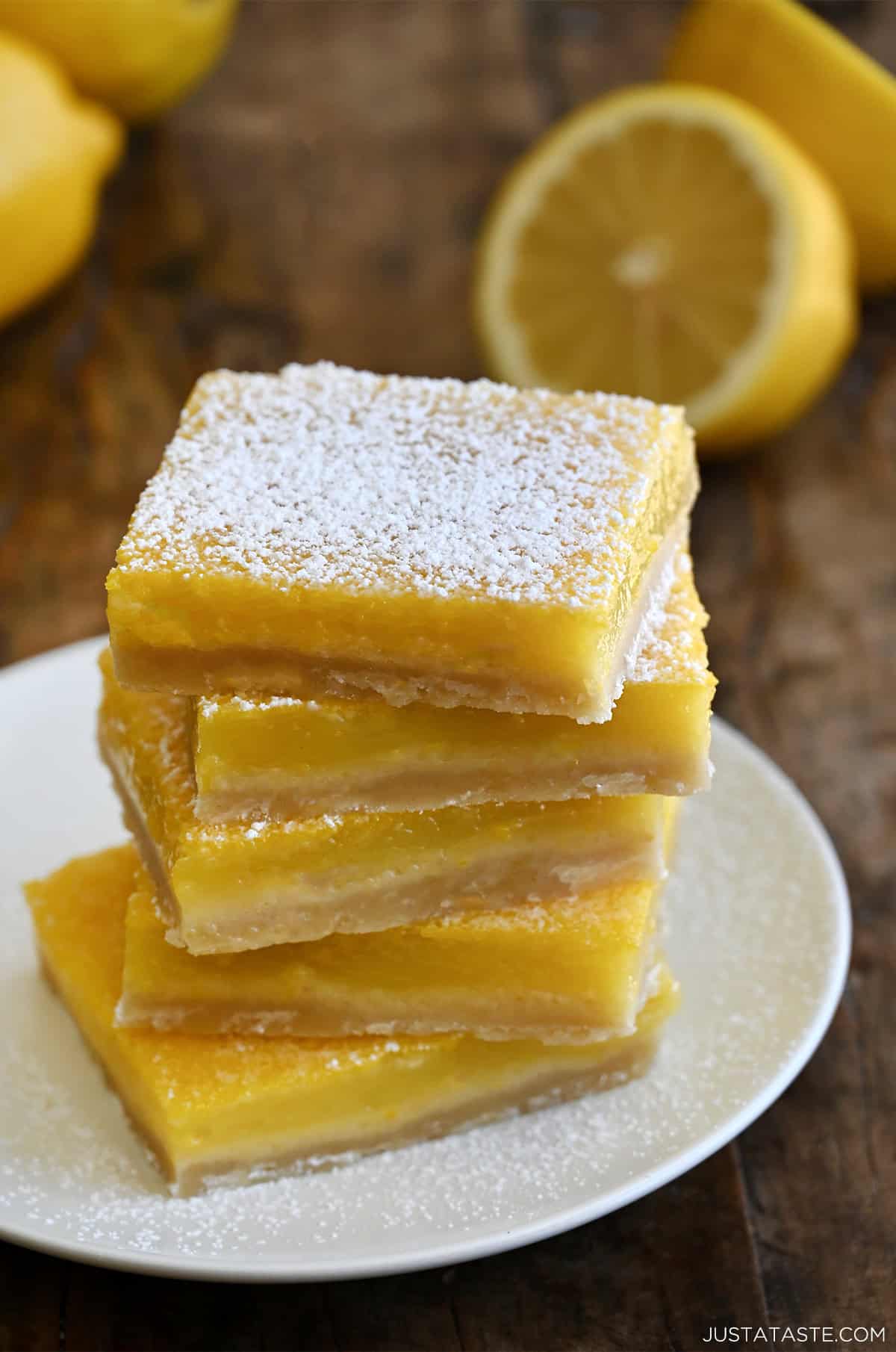
Table of Contents

We’re big fans of dessert bars around here, and while pecan pie bars and magic cookie bars rule the winter holidays, spring calls for something brighter. Enter: lemon bars.
We start by rubbing lemon zest directly into the sugar, which means even the buttery shortbread crust is infused with bright citrus flavor. I first made these for a casual get-together and let’s just say I barely got a taste before the pan was empty. Consider yourself warned.
- Unsalted butter: Room temp butter creams properly with the sugar and gives the shortbread its tender, crumbly texture. It should feel cool and slightly firm to the touch, not warm or greasy. Pull it out about an hour before you start, or check out my tips on how to soften butter quickly.
- Sugar: Sweetens both the crust and the lemon filling. Don’t try to reduce it in the filling. Less sugar means a filling that’s too wet and never quite firms up.
- Lemon zest + lemon juice: Lemon zest goes in the crust AND the filling, which is what gives every layer bright, punchy citrus flavor. New to zesting? My How to Zest a Lemon guide walks you through exactly how to do it. And since you need the zest for both layers anyway, you’re buying fresh lemons regardless, so skip the bottled juice and squeeze your own. You’ll need about 6 to 8 lemons for 1 cup of juice.
- Vanilla extract: Not many lemon bar recipes include vanilla in the crust, but I love the warmth and depth it gives to the shortbread crust.
- All-purpose flour: Used in both layers. In the crust it provides structure. In the filling it keeps things thick and sliceable rather than loose and custardy.
- Eggs: Six large eggs give the lemon filling almost all of its structure. Room temperature eggs incorporate more smoothly into the batter, which helps the filling set evenly. To bring them to room temp quickly, place them in a bowl of warm water for about 5 minutes.
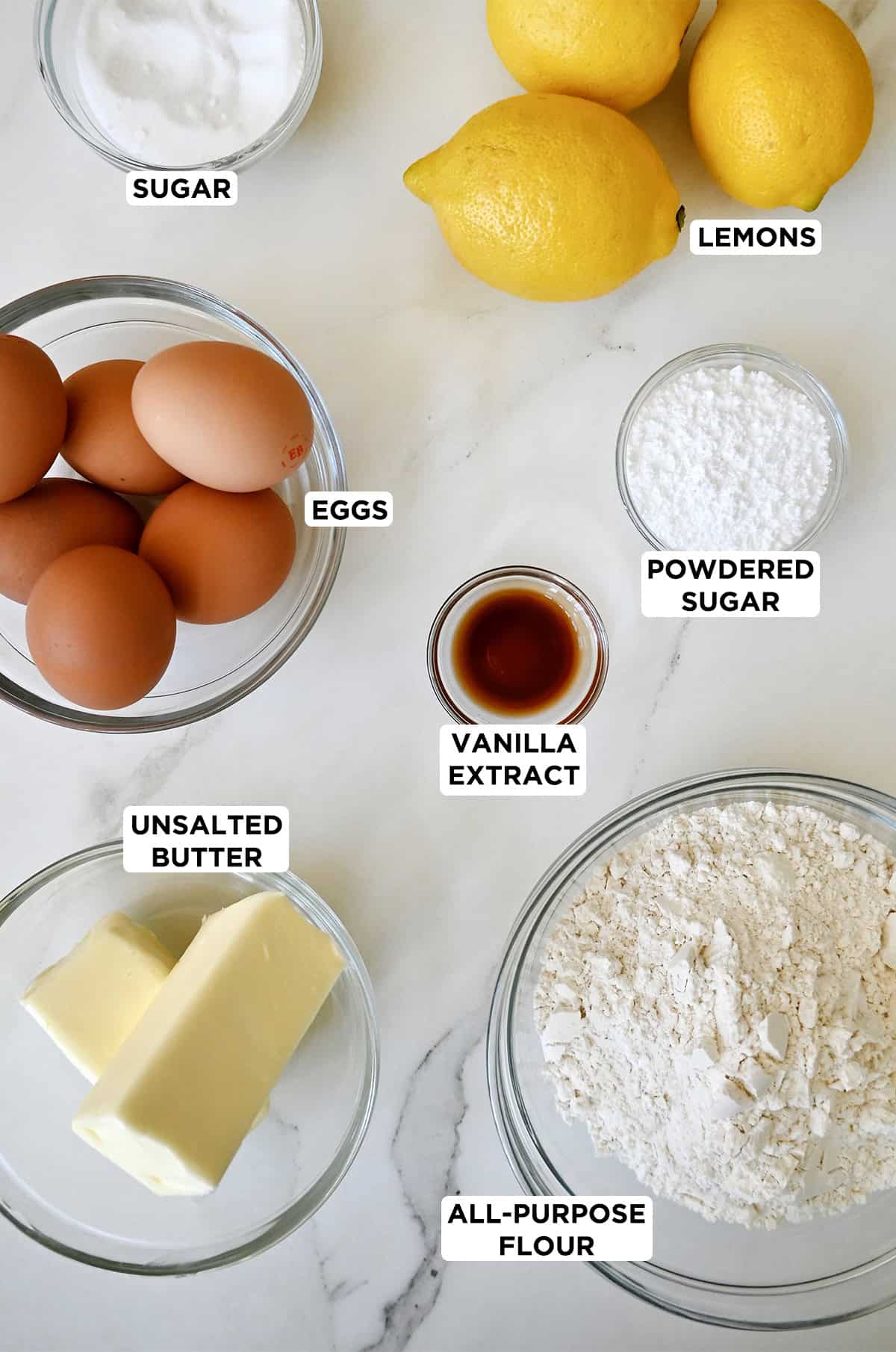
If we’re being technical, there are actually 7 ingredients if you count the powdered sugar dusted on top. Technically optional, but absolutely non-negotiable in my kitchen. I’m calling it a bonus either way.
These lemon bars start with a simple buttery shortbread that comes together in just a few steps.
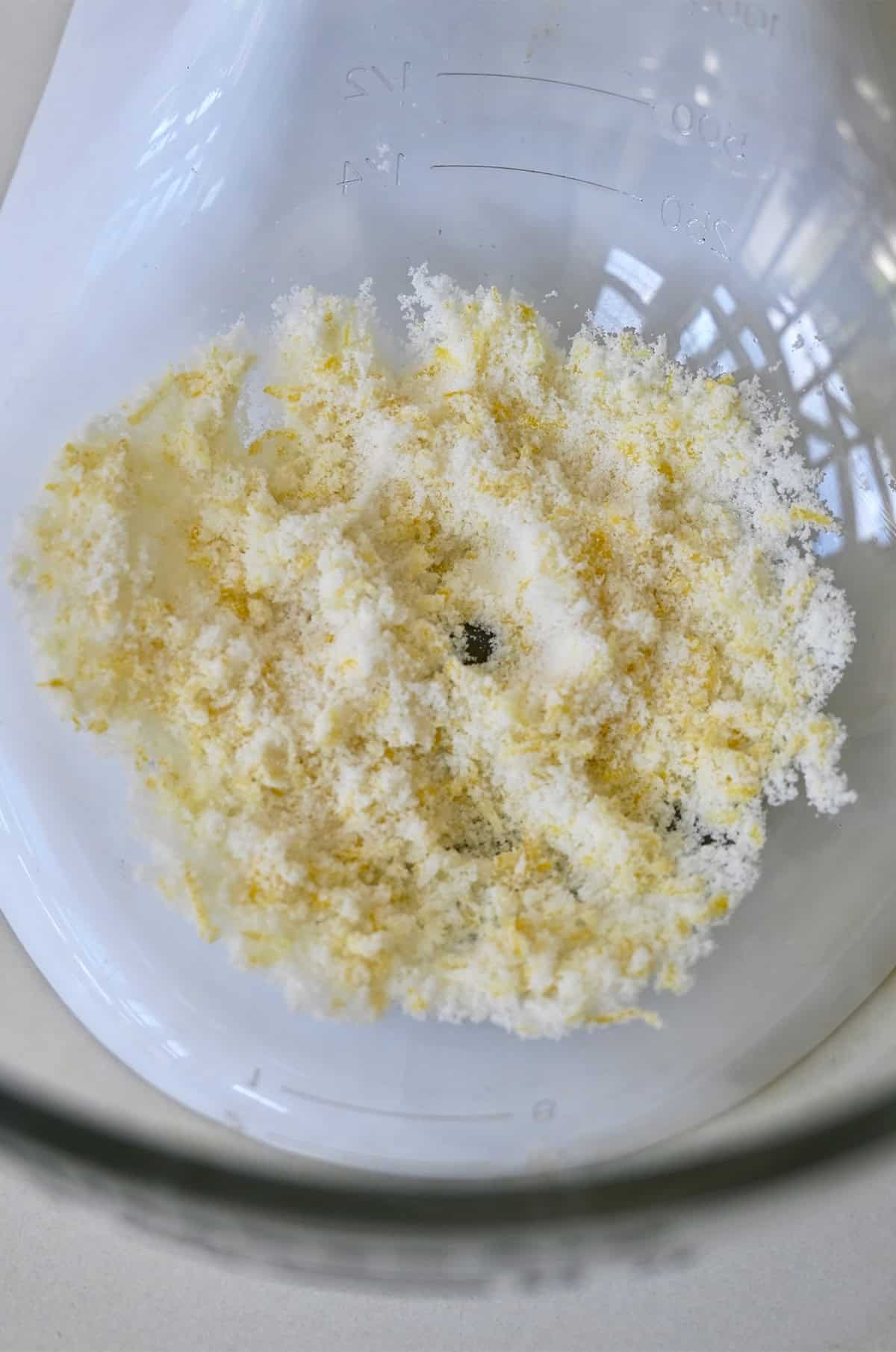
Start by making lemon sugar: use your fingers to rub the lemon zest into the sugar for about 30 seconds until fragrant. This releases the essential oils in the zest and infuses the sugar with real lemon flavor before anything else goes in.
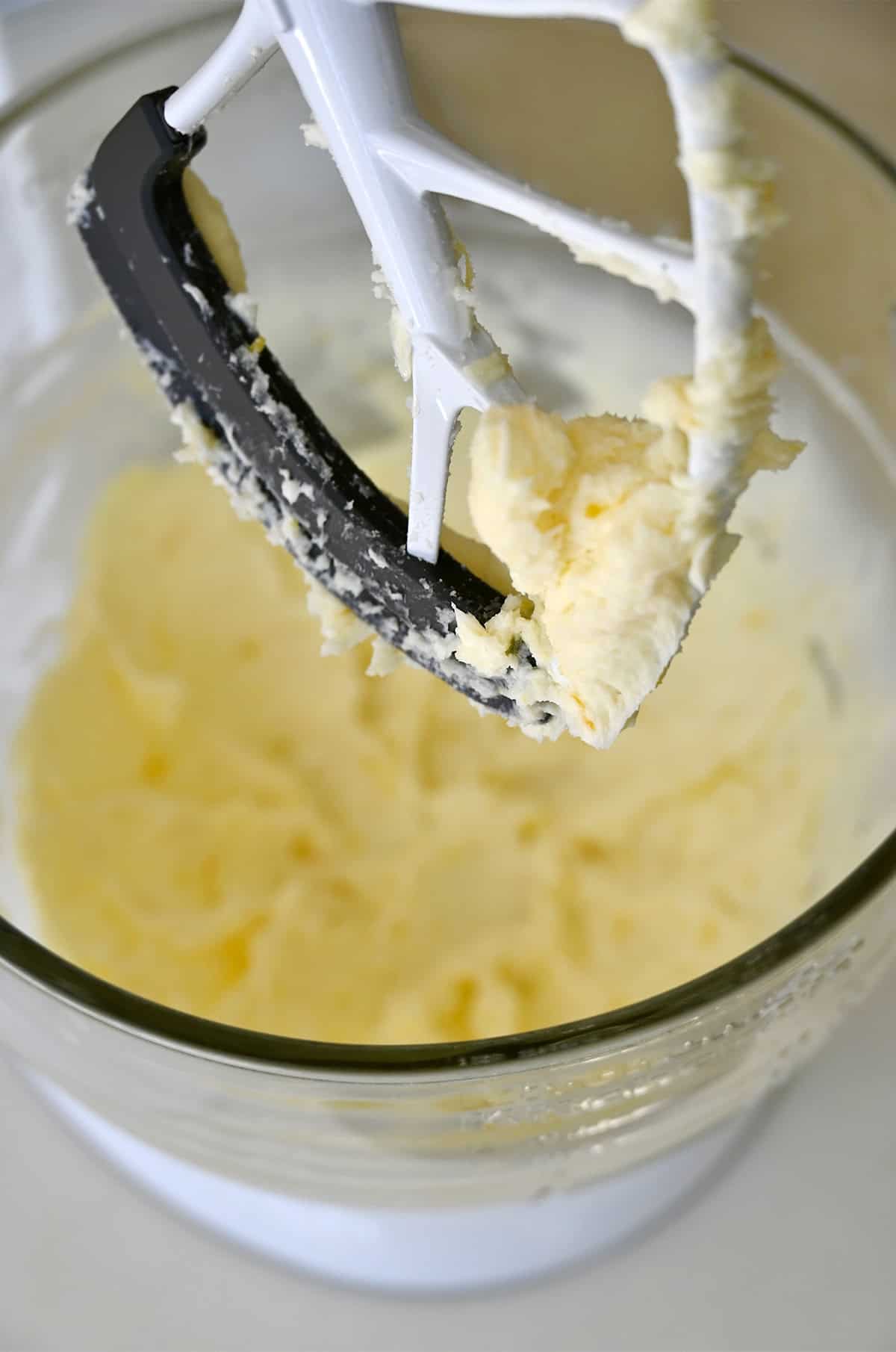
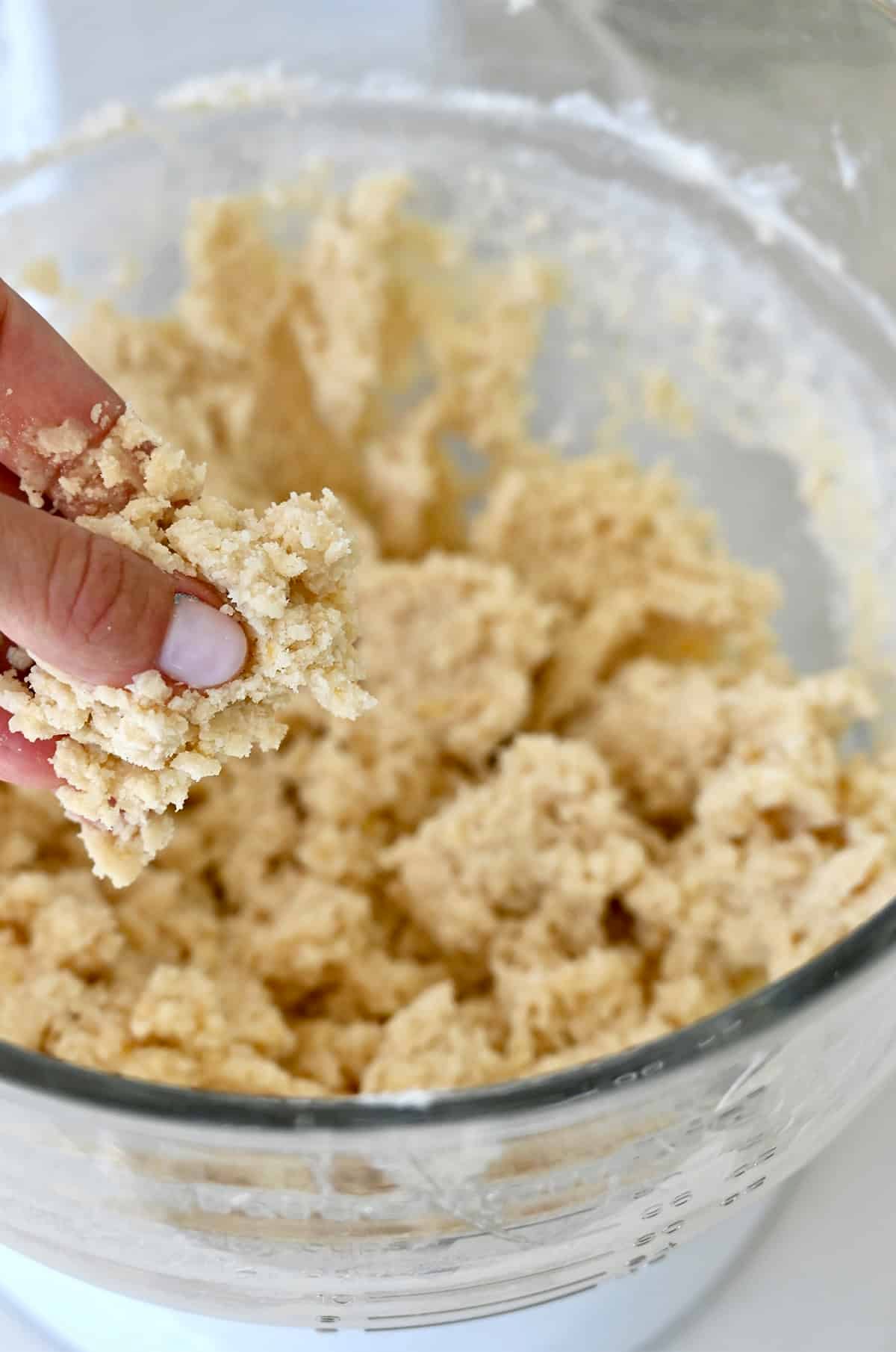
Add the butter and beat until light and fluffy, then mix in the vanilla and flour just until clumps of dough start to form.
The dough will be thick, and should look like this:
Before pressing the dough into the pan, spray the pan with cooking spray, then lay the parchment on top. The spray acts like glue and keeps the paper flat while you press the shortbread in evenly. I like to use all-metal binder clips to secure the parchment overhangs to the sides of the pan so they don’t flop down into the lemon layer while it bakes.
Success tip: Use a glass baking dish. Glass conducts heat more gently and evenly than metal, which means the lemon filling sets at the same rate from edge to center. A metal pan can overbake the edges before the center has a chance to catch up.
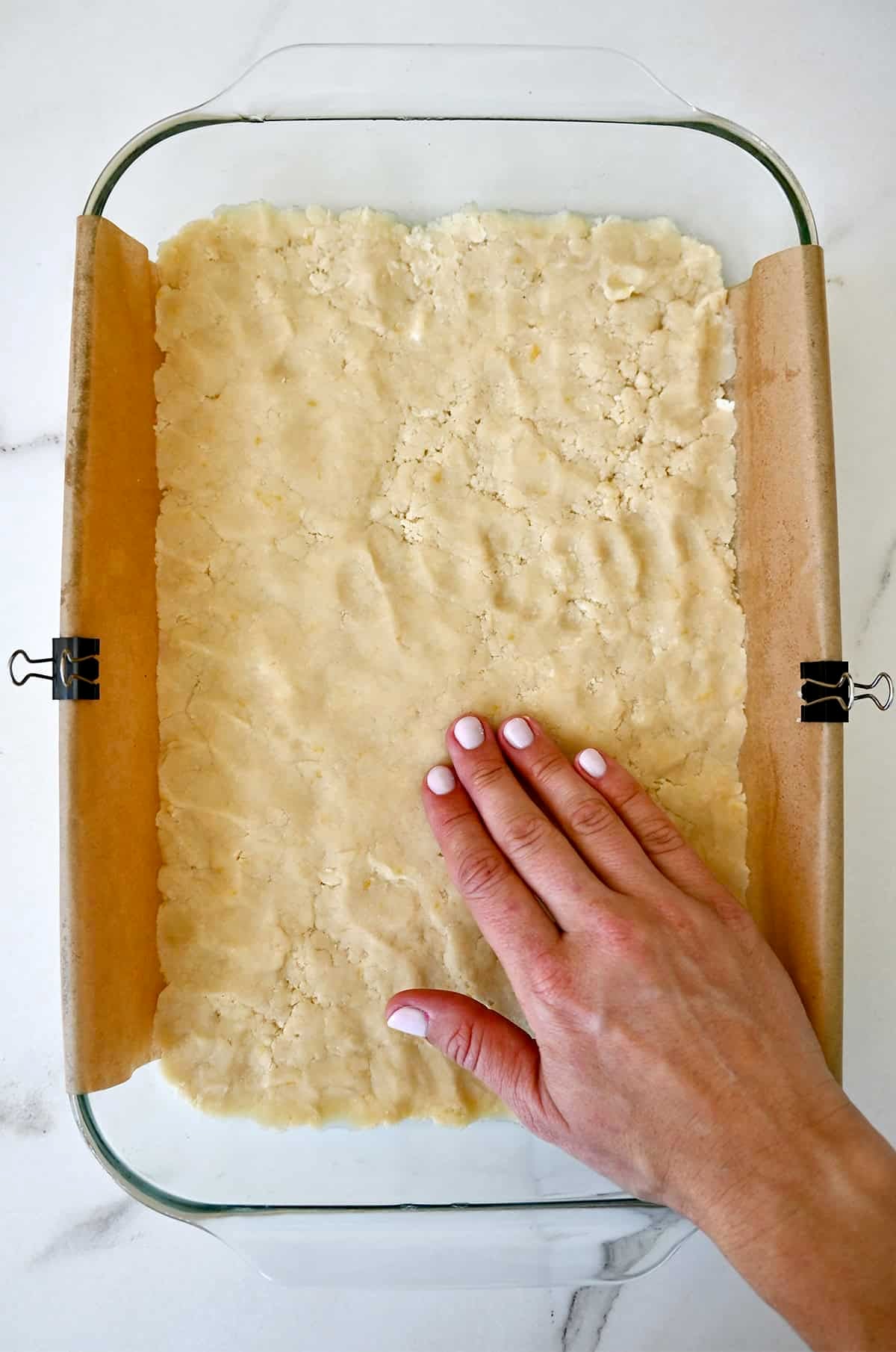
Bake for 20 to 22 minutes until pale golden. Pre-baking the shortbread guarantees it will hold up under the lemon filling.
Success Tips for a Smooth Lemon Curd Filling
While the crust bakes, make the lemon filling.
- Don’t over-whisk. Some surface bubbles on baked lemon bars are completely normal. It’s just air from the eggs, but a dusting of powdered sugar covers them right up. That said, vigorous whisking makes it significantly worse. Whisk just until smooth and stop.
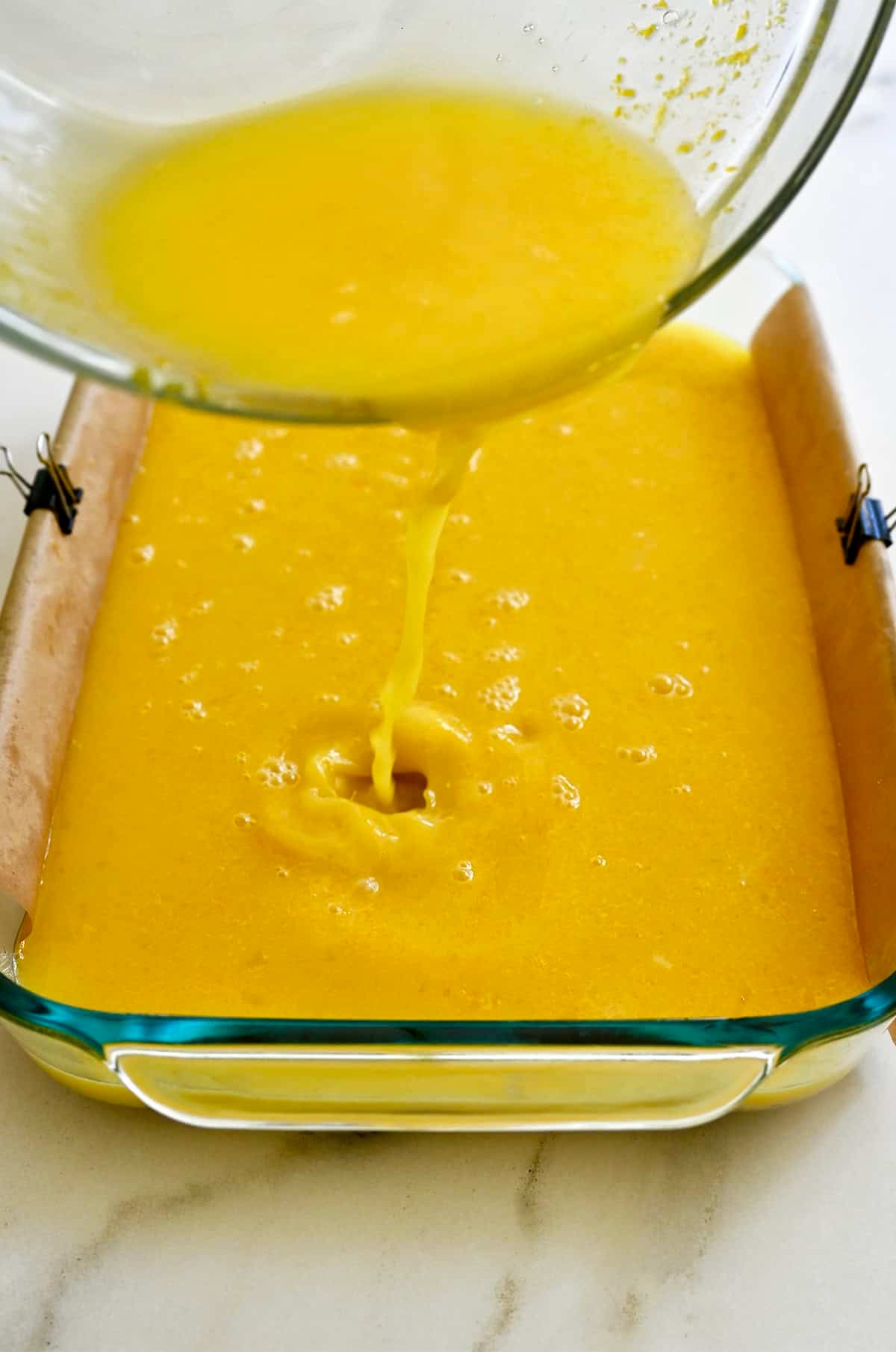
- Pour slowly. Hold the bowl close to the pan and pour in a steady stream rather than dumping from height. Fewer bubbles before it goes in the oven means a smoother top coming out.
As soon as the crust comes out of the oven, pour the filling over it immediately while it’s still hot. Return the pan to the oven and bake another 20 to 24 minutes, until the edges are set and the center has just the faintest jiggle. Think cheesecake, not Jell-O.
Cool, then chill. Let the bars cool completely on a wire rack, about 1 hour, then loosely tent with foil and refrigerate for at least 3 hours. Three hours minimum, but overnight is best for both flavor and clean slices.
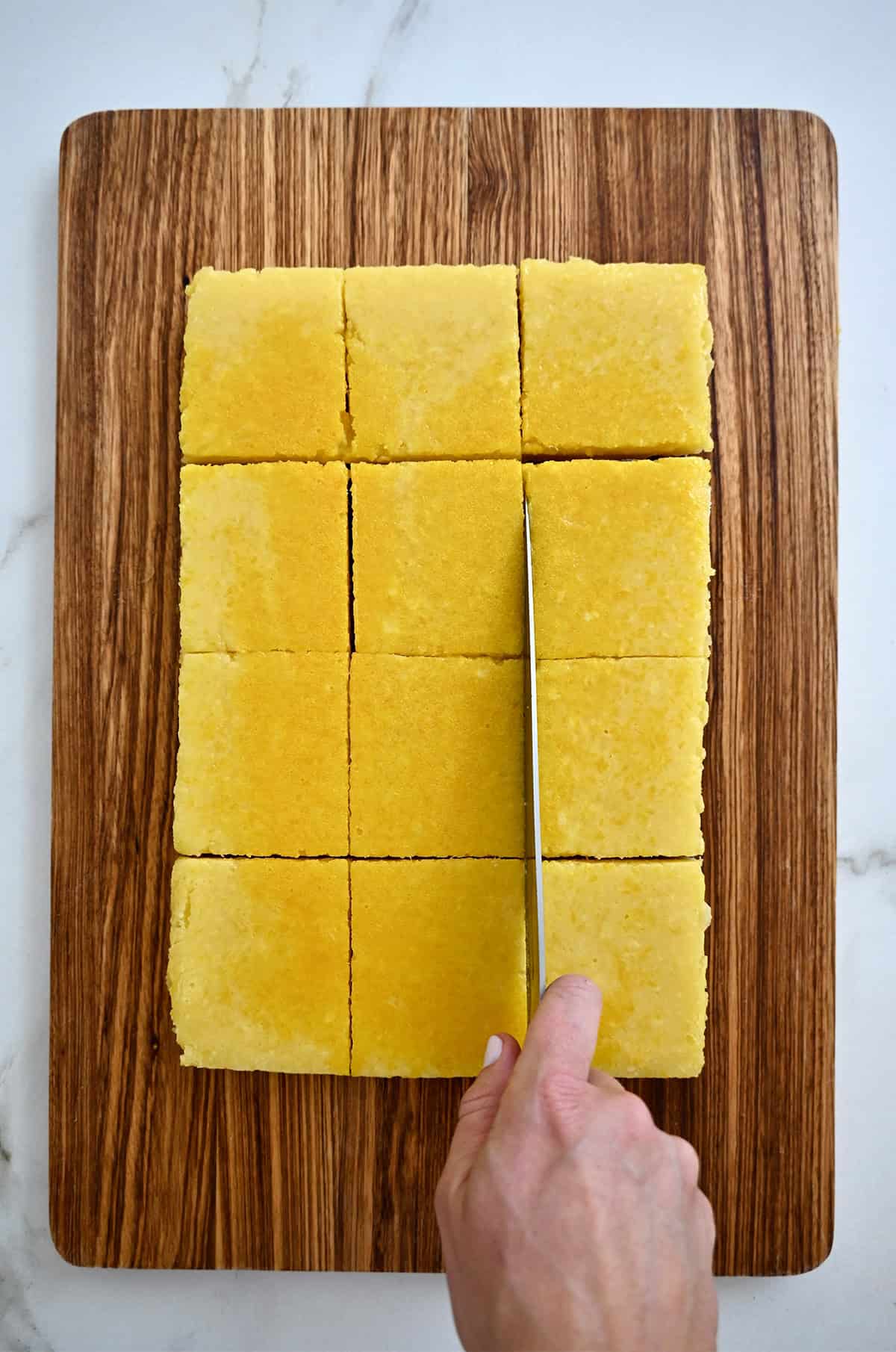
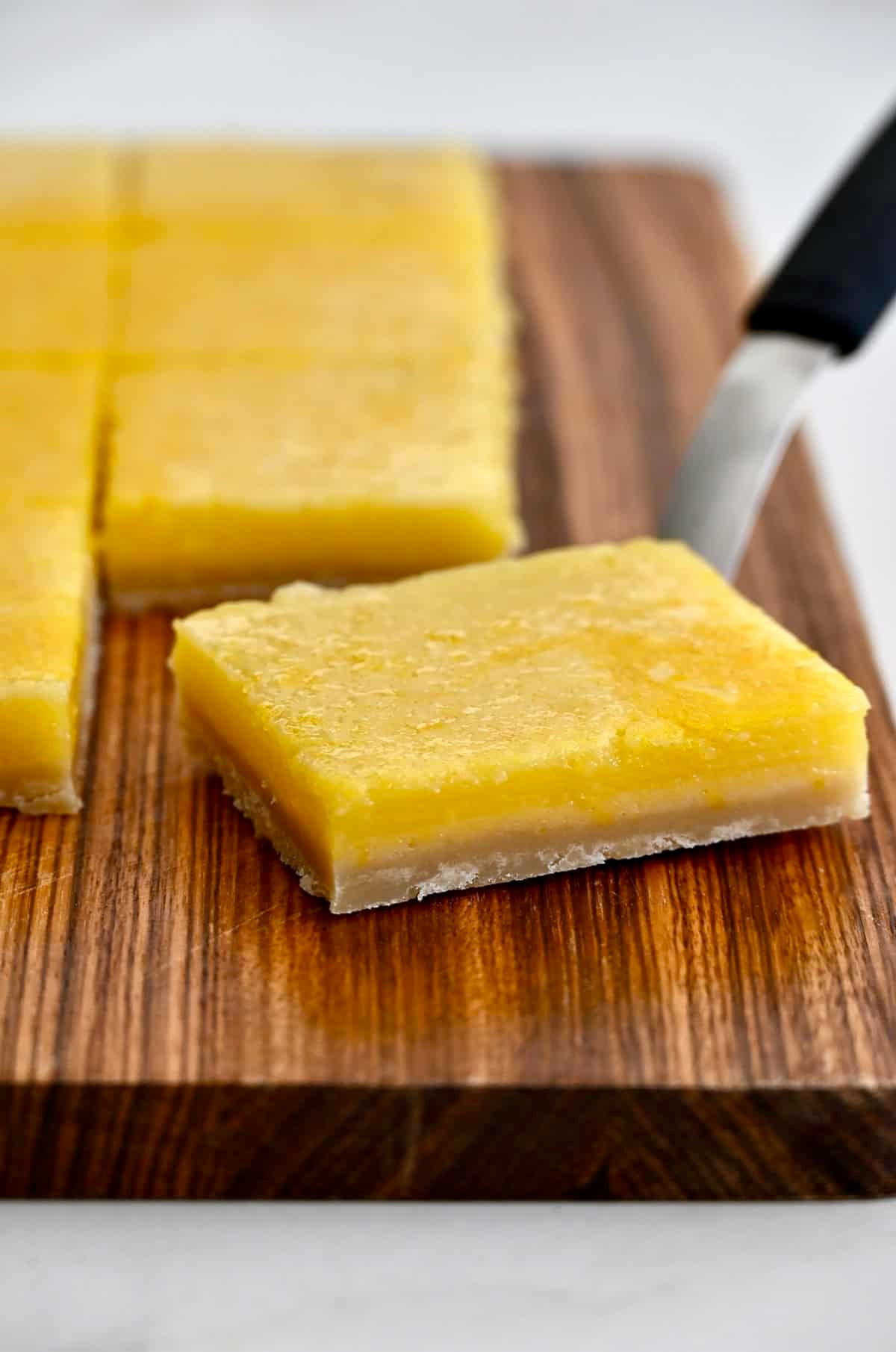
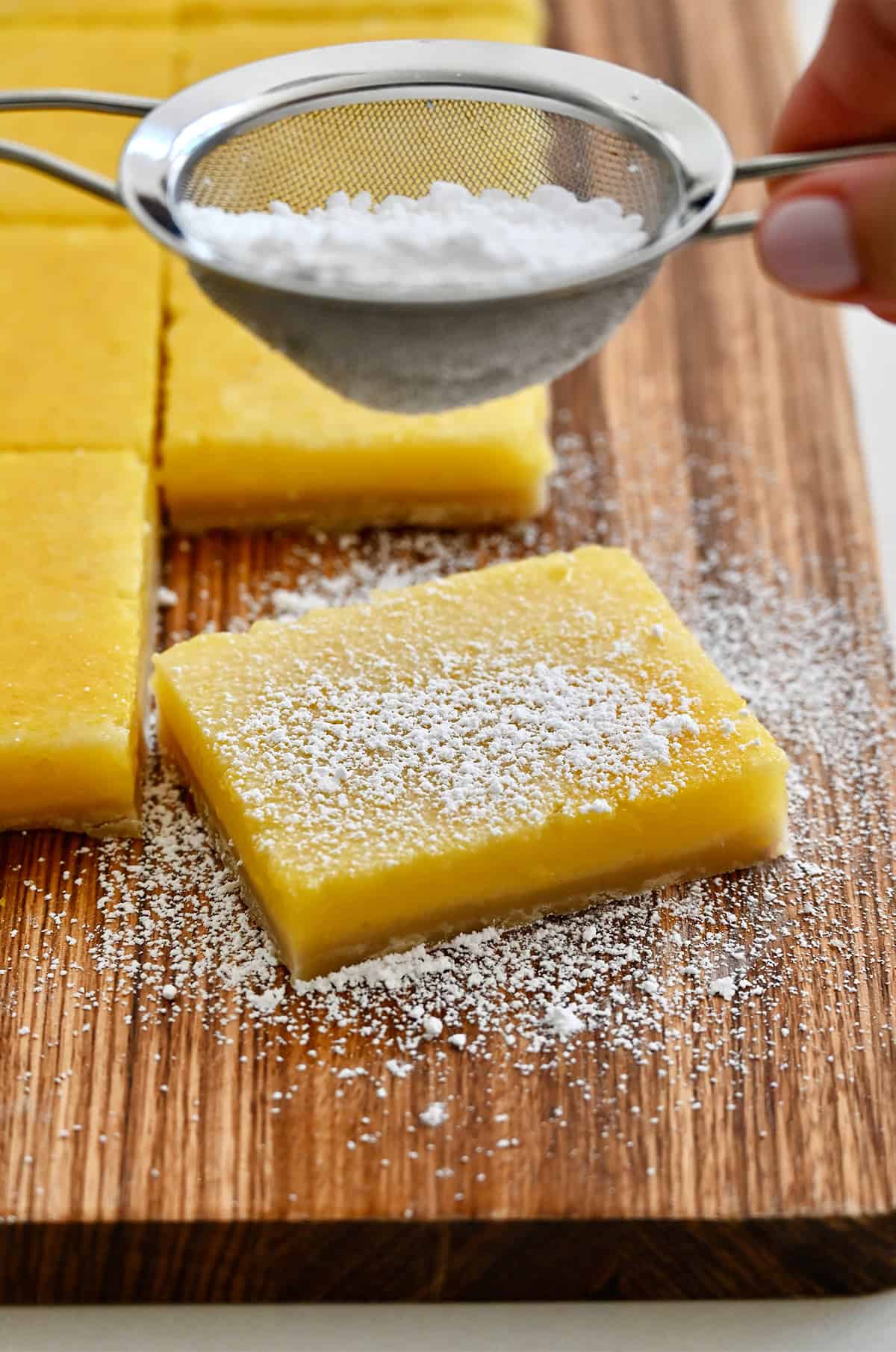
When you’re ready to serve, use the parchment overhangs to lift the slab onto a cutting board. Dust with powdered sugar, then slice with a sharp knife, wiping the blade clean between every cut for the neatest edges. I have a whole post on how to cut brownies cleanly, and the same tips apply here!
FAQs
A few things could be going on: underbaking, not chilling long enough, or reducing the sugar. The filling needs the full amount of sugar to set properly. Cut it back, and it’ll stay loose no matter how long you bake or chill. Make sure the edges are fully set and the center has just a faint jiggle before pulling from the oven, then chill for at least 3 hours before slicing.
Usually one of two things: not enough butter or the crust wasn’t pressed firmly and evenly into the pan. Use your fingers or the flat bottom of a measuring cup to press it into a compact, even layer with no thin spots. A crumbly crust can also mean it was underbaked. It should be pale golden before the filling goes on, not still looking raw and pale white.
Absolutely! Lime juice and zest make a great swap for key lime bars. Blood orange and grapefruit both work well, too. Use the same quantities and follow the recipe exactly as written. I’d love to hear which one you try first!
Totally normal! It’s just air from the eggs rising to the surface during baking. Some batches have it, some don’t. It doesn’t affect the flavor at all, and a generous dusting of powdered sugar covers it right up. That said, gentle whisking and pouring the filling slowly from low over the pan both help minimize it.
If you love lemon desserts as much as I do, try my glazed lemon loaf or lemon blueberry pound cake next. And if you’re deep in spring baking mode (or if Easter is right around the corner), don’t miss my roundup of Easy Spring Dessert Recipes for more ideas, including my mom Noni’s famous coconut cake.
Craving more? Subscribe to Just a Taste to get new recipes, meal plans and a newsletter delivered straight to your inbox! And stay in touch on Facebook, TikTok, Pinterest and Instagram for all of the latest updates.Ingredients
For the crust:
- 1/4 cup sugar
- 2 teaspoons lemon zest
- 1 cup unsalted butter, at room temp
- 1 teaspoon vanilla extract
- 2 cups all-purpose flour
For the filling:
- 6 large eggs, at room temp
- 1 Tablespoon lemon zest
- 1 cup fresh lemon juice
- 2 cups sugar
- 1/3 cup all-purpose flour
- Powdered sugar, for topping (optional)
Instructions
Make the crust:
- Preheat the oven to 325°F. Line a glass 13×9-inch baking pan with parchment paper so that it hangs over the two longer sides.
- Add the sugar and lemon zest to the bowl of a stand mixer. Using your fingers, work the zest into the sugar until it’s well-combined.
- Attach the paddle to the stand mixer then add the butter and beat until it’s light and fluffy, about 2 minutes.
- Mix in the vanilla extract then add the flour and ½ teaspoon kosher salt and beat just until clumps of dough start to form.
- Press the dough into an even layer in the bottom of the pan.
- Bake the crust until it is pale golden, 20 to 22 minutes. While the crust is baking, make the filling.
Make the filling:
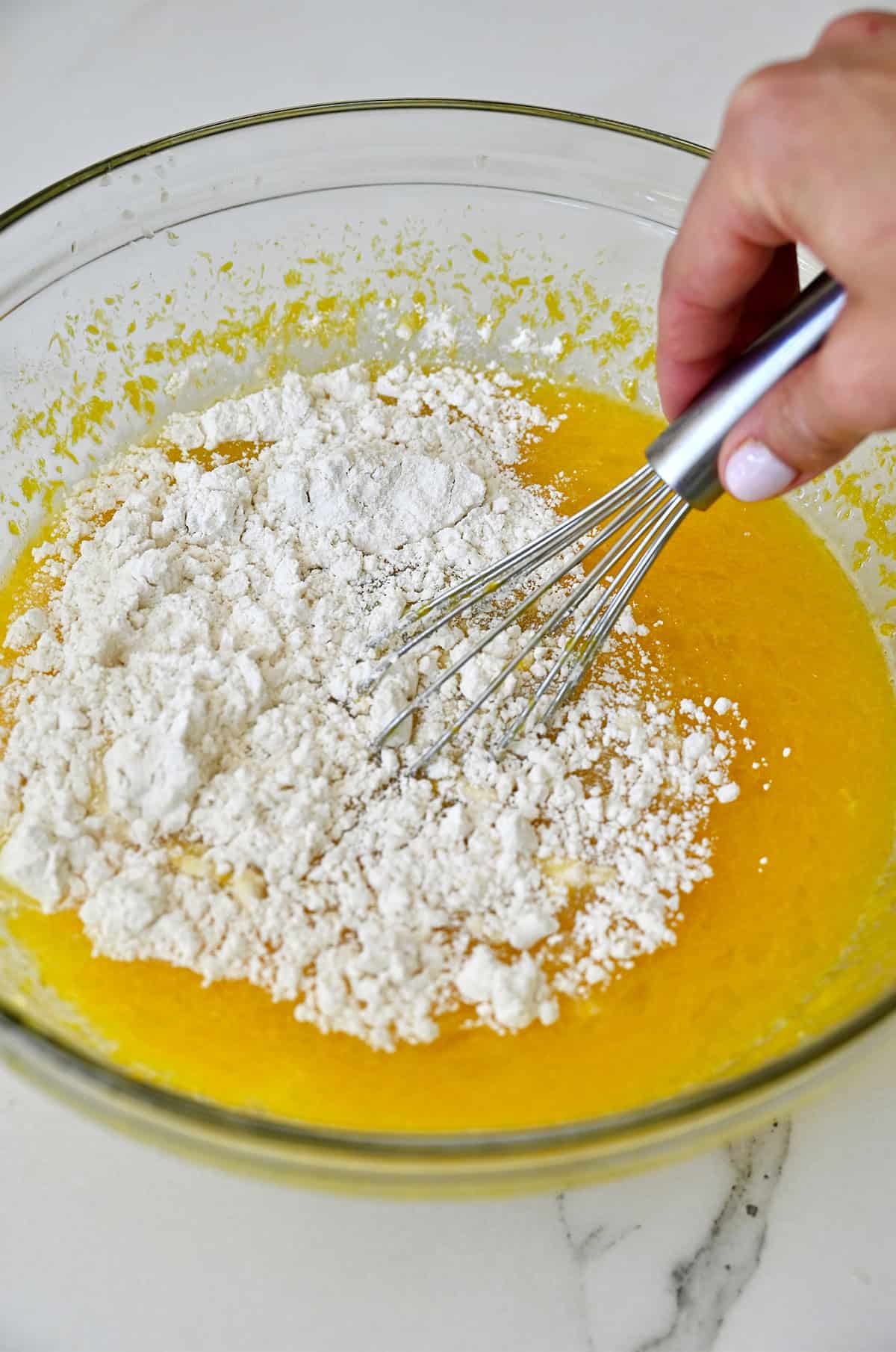
- In a large bowl, whisk together the eggs, lemon zest, lemon juice and sugar until smooth.
- Whisk in the flour. Remove the shortbread crust from the oven then immediately pour the filling on top.
- Return the pan to the oven and continue baking the bars until they are set in the center and no longer jiggly, 20 to 24 minutes.
- Remove the bars from the oven and let them cool on a wire rack for 1 hour (or until room temp). Loosely tent the baking pan with foil, then transfer the pan to the fridge for a minimum of 3 hours and up to overnight.
- When ready to serve, use the parchment paper overhangs to lift the bars out of the pan. Slice them into squares then dust them with powdered sugar (optional) and serve.
Kelly’s Notes
- Glass pan: Use a glass 13×9-inch baking dish, not metal. Glass conducts heat more gently and evenly for the best results.
- Fresh lemon juice: You’ll need about 6 to 8 lemons for 1 cup of juice plus the zest for both layers.
- Make ahead: These are actually better the next day. Bake, cool completely, cover tightly and refrigerate overnight. Dust with powdered sugar right before serving.
- Storage: Store in an airtight container in the refrigerator for up to 5 days. Place a sheet of parchment between layers so they don’t stick together. Bring to room temperature for about 10 minutes before serving for the best texture.
- Freezing: Freeze without the powdered sugar in a single layer until solid, then transfer to a freezer-safe container with parchment between layers for up to 3 months. Thaw overnight in the refrigerator and dust with powdered sugar right before serving.
- ★ Did you make this recipe? Don’t forget to give it a star rating below!
Nutrition
Did you try this recipe?
Leave a comment below with your star rating!
This post may contain affiliate links.