
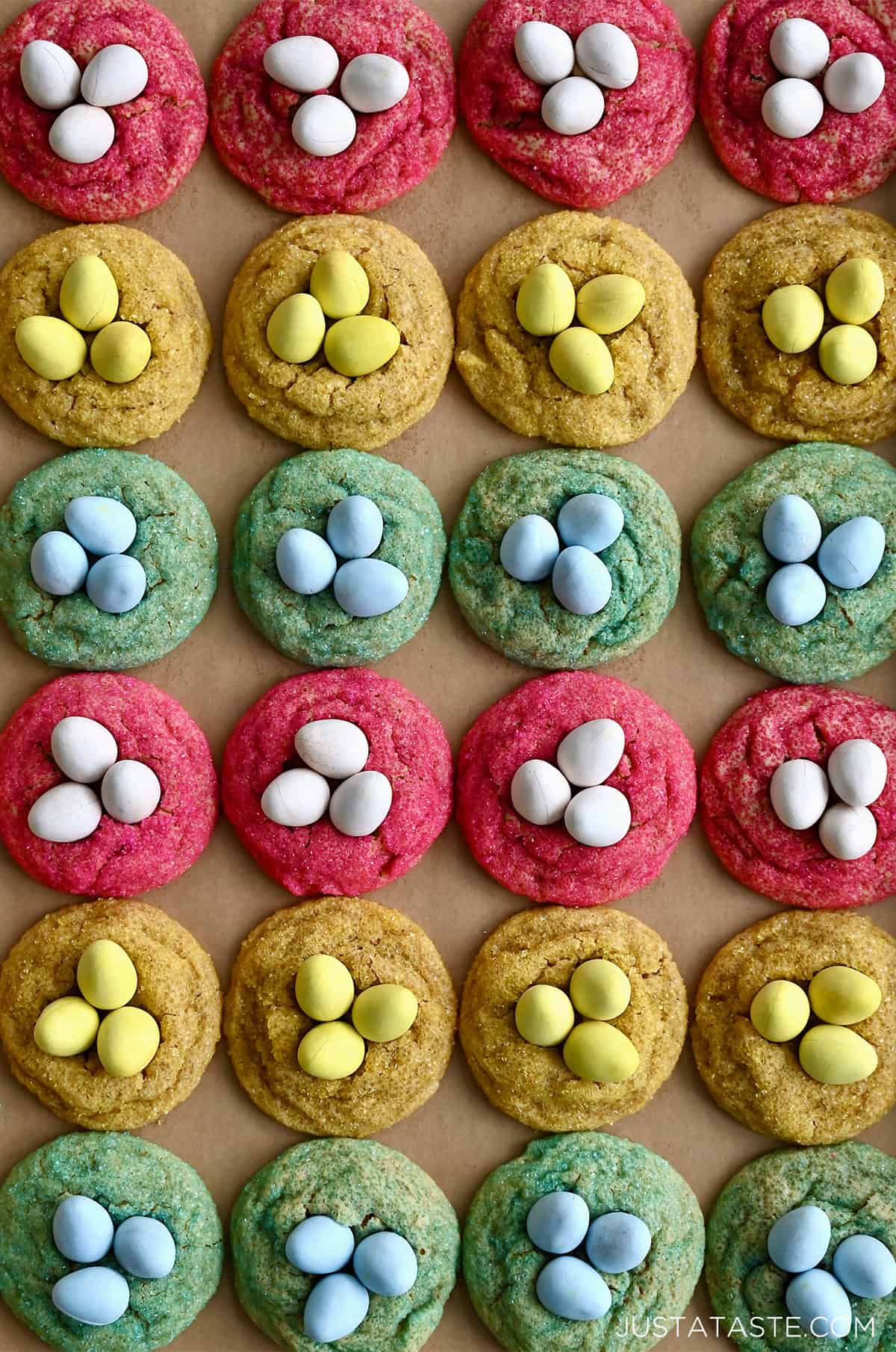
These Cadbury Egg Cookies start with my classic soft-baked peanut butter blossom dough and swap the Hershey’s Kiss for crunchy Cadbury Mini Eggs. Rolled in pastel sanding sugar and packed with peanut butter flavor, they’re perfect for spring parties or tucking into Easter baskets.

Table of Contents

If there’s one thing I’ve learned after approximately 47 batches of peanut butter blossoms since Christmas, it’s this: when you find a dough that works, you run with it.
And now? It’s officially entered its Easter era.
Meet: Cadbury Egg Cookies.
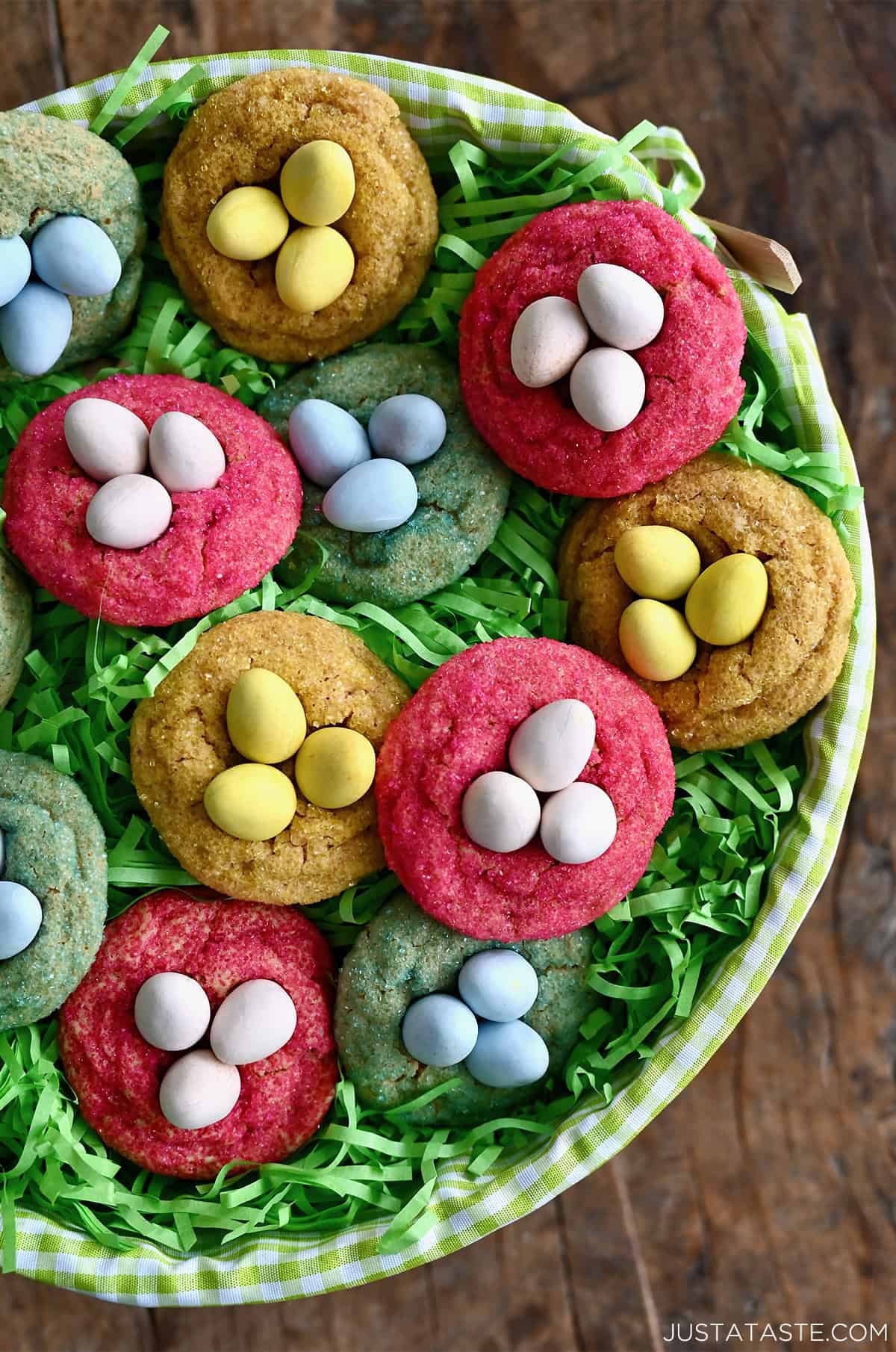
Think of these as a cross between a soft, chewy peanut butter cookie and a classic Bird’s Nest cookie. Gone are the crunchy chow mein noodles coated in melted chocolate. In their place? My favorite peanut butter blossom base, rolled in pastel sanding sugar and topped with a trio of Mini Cadbury Eggs.
The result is a cookie that looks like a sweet little nest but tastes like the ultimate peanut butter dessert.
Spring baking doesn’t get much better than this.
It’s All About the Dough
This peanut butter cookie dough has quickly become one of my favorites. It’s the same base dough as my classic peanut butter blossom cookies and my Valentine’s Day heart cookies, and I keep coming back to it for good reason:
- Big peanut butter flavor
- Extra soft and thick
- No dough chilling required
- A simple, straightforward recipe
If you love peanut butter desserts as much as I do, try my peanut butter balls or peanut butter blondies next. And for a cookie recipe you’ll reach for year-round, my peanut butter chocolate chip cookies never disappoint.
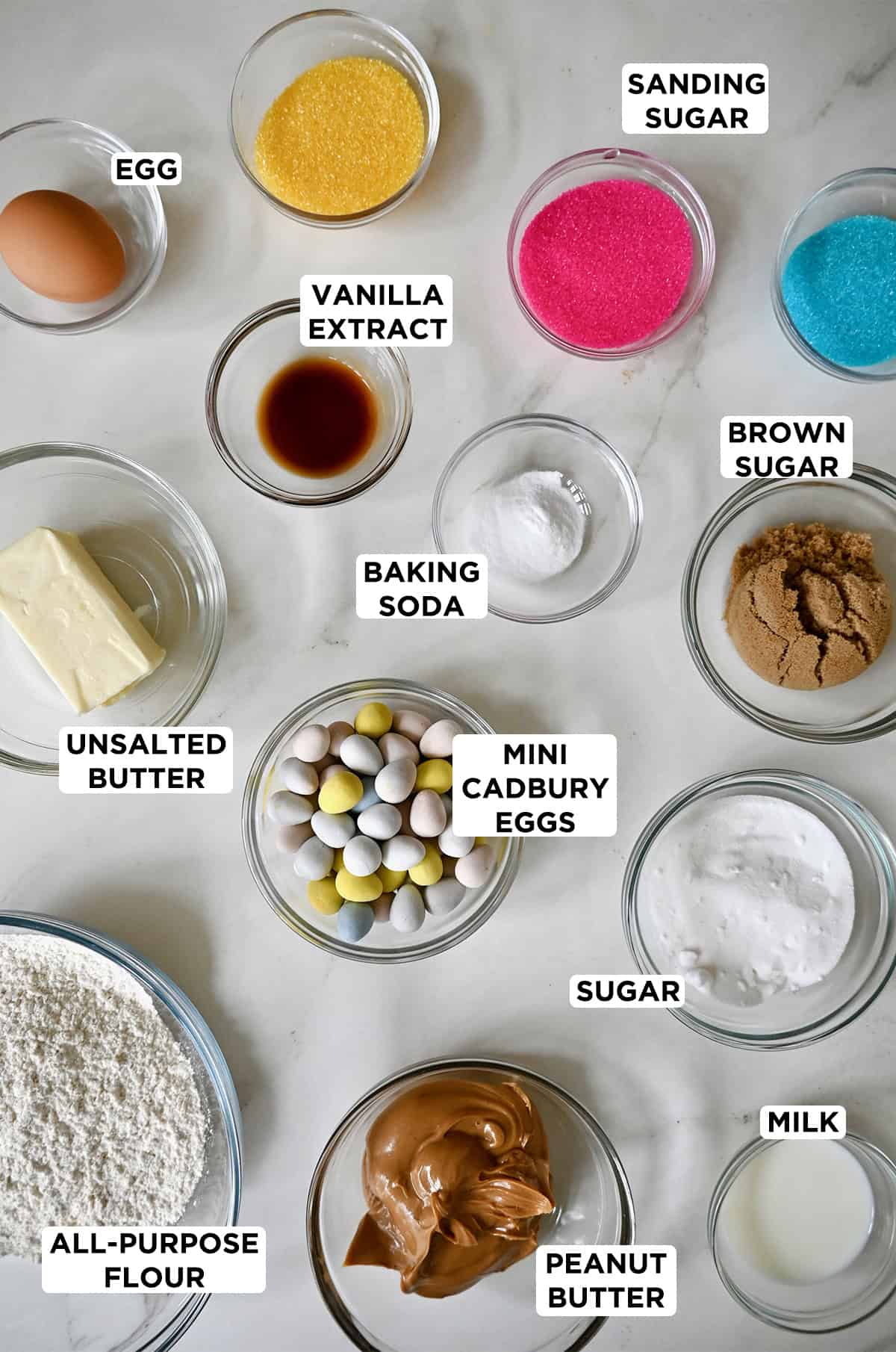
The ingredient list for these Cadbury egg cookies is simple, but choosing the right peanut butter (and understanding a few small details) makes all the difference.
- Peanut butter: Use a commercial brand of creamy peanut butter like Jif or Skippy. Just like most peanut butter-based cookie doughs, including my monster cookies and peanut butter chocolate chip cookies, natural-style peanut butter doesn’t behave the same way. The cookies can turn crumbly or slightly oily because the separated oils throw off the structure. This dough relies on peanut butter for stability, so stick with the classic kind. Crunchy works too, but creamy gives the softest texture.
- Room-temperature butter: Make sure your butter is cool to the touch. Properly room-temp butter creams smoothly with the sugars, creating air pockets that help the cookies rise and stay tender. If you’re unsure what room-temperature butter really means, I have a whole post that explains its importance in baking and how to soften it quickly.
- Milk: Adds just enough moisture to keep the dough soft and pliable without increasing the fat content. It contributes to that extra-chewy texture and helps the cookies stay thick without needing to chill the dough. Use whatever milk you have on hand.
- Cadbury Mini Eggs: If you’ve never had these before, they’re mini milk chocolates coated in a crisp candy shell with the most satisfying crunch. Pressing a few into the tops creates a “nest” look that practically screams spring. You could even nestle a Cadbury Caramel Egg or Reese’s Peanut Butter Egg into the center for an extra gooey twist.
- Colored sanding sugar: I used pink, blue and yellow for a pastel Easter look, but regular ol’ granulated sugar works too.
And if you’re building out your Spring dessert spread, my Easter sugar cookies or carrot cake cupcakes would look adorable on a serving plate next to these.
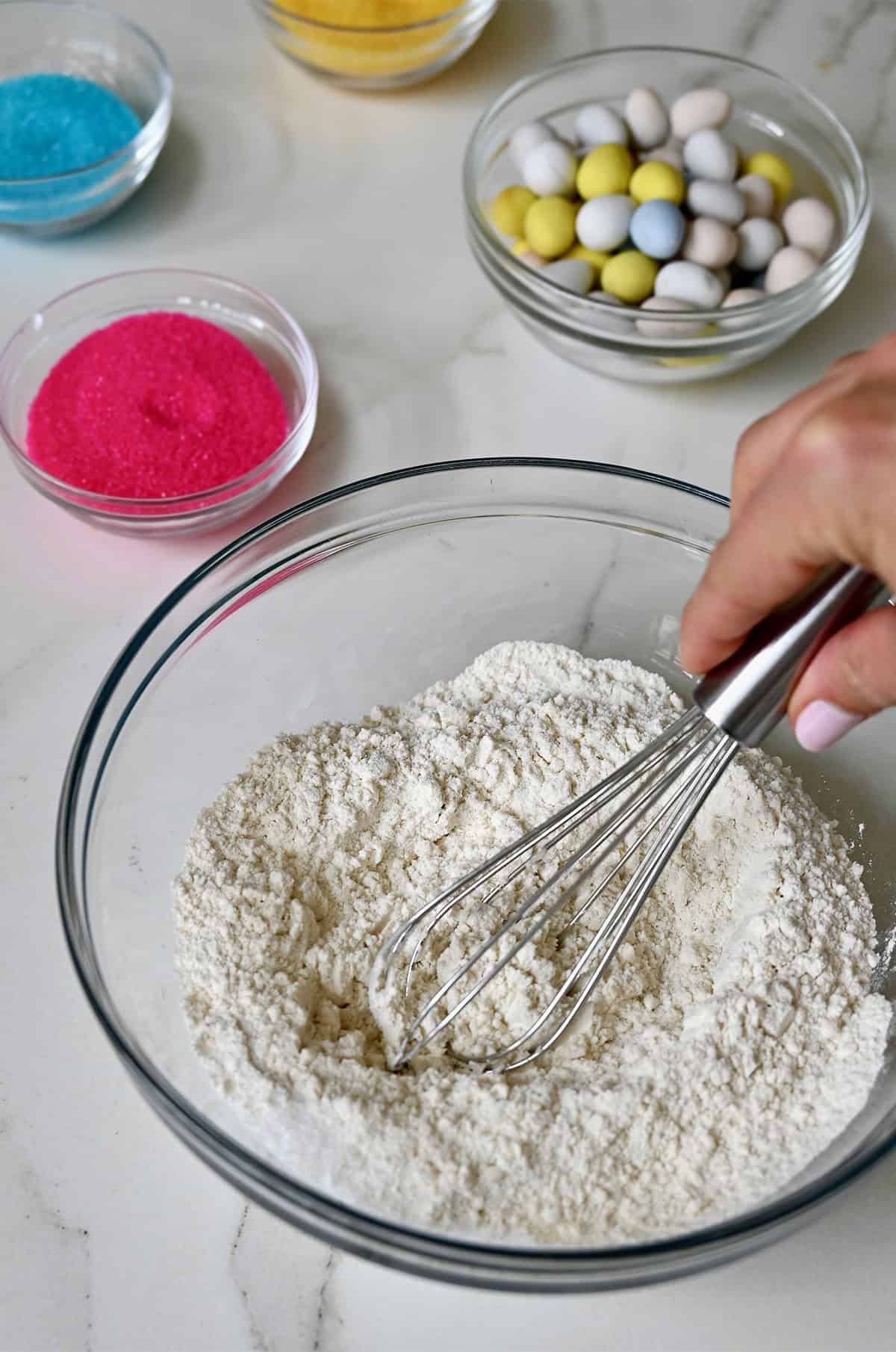
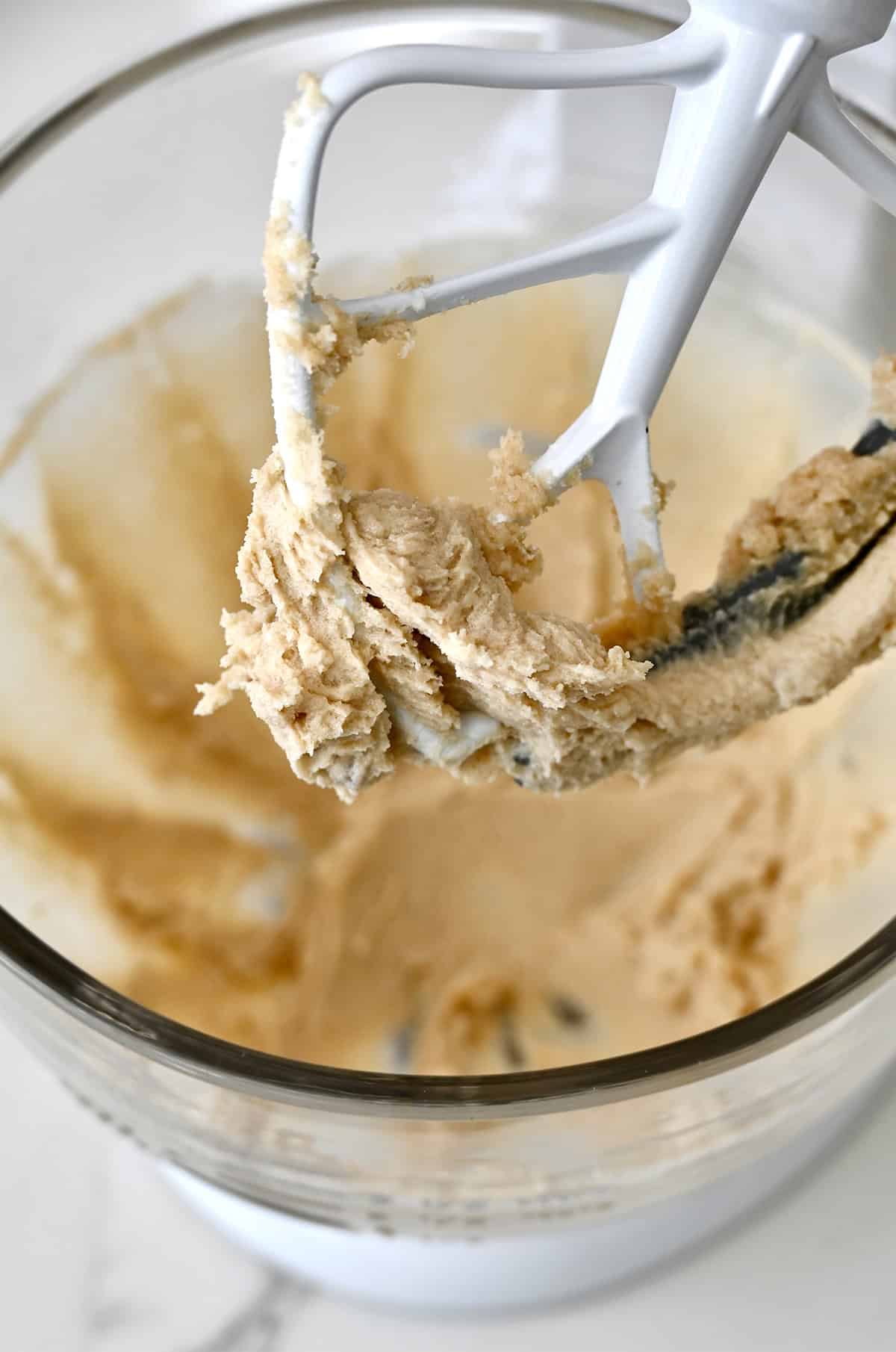
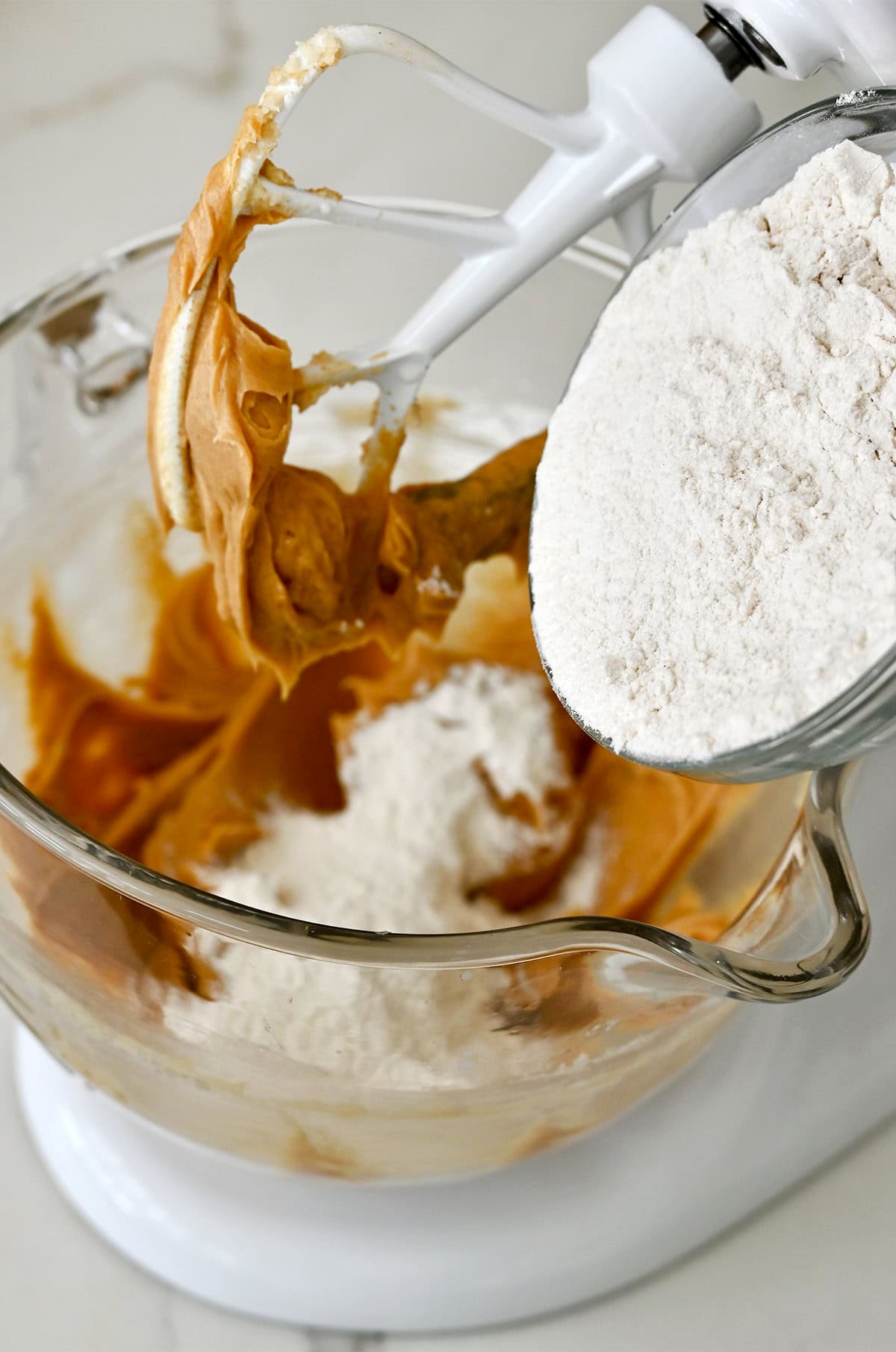
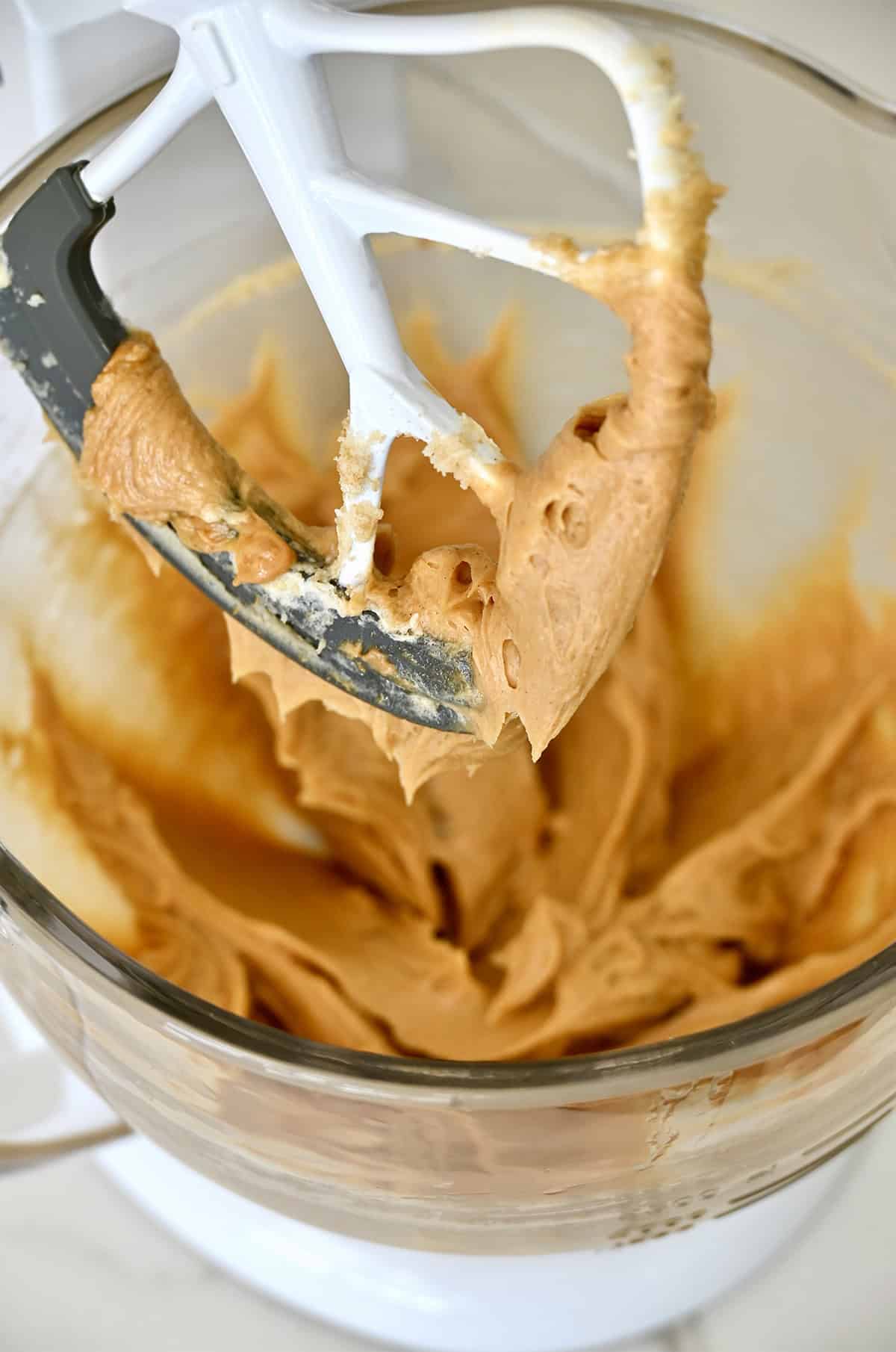
Whisk the dry ingredients together, then cream the butter and sugars until light and fluffy. Beat in the peanut butter, egg, milk and vanilla, then combine the wet and dry ingredients.
The dough will be soft and creamy. That’s exactly what you want. Don’t add extra flour; peanut butter acts almost like a dry ingredient once baked and gives the cookies structure in the oven.
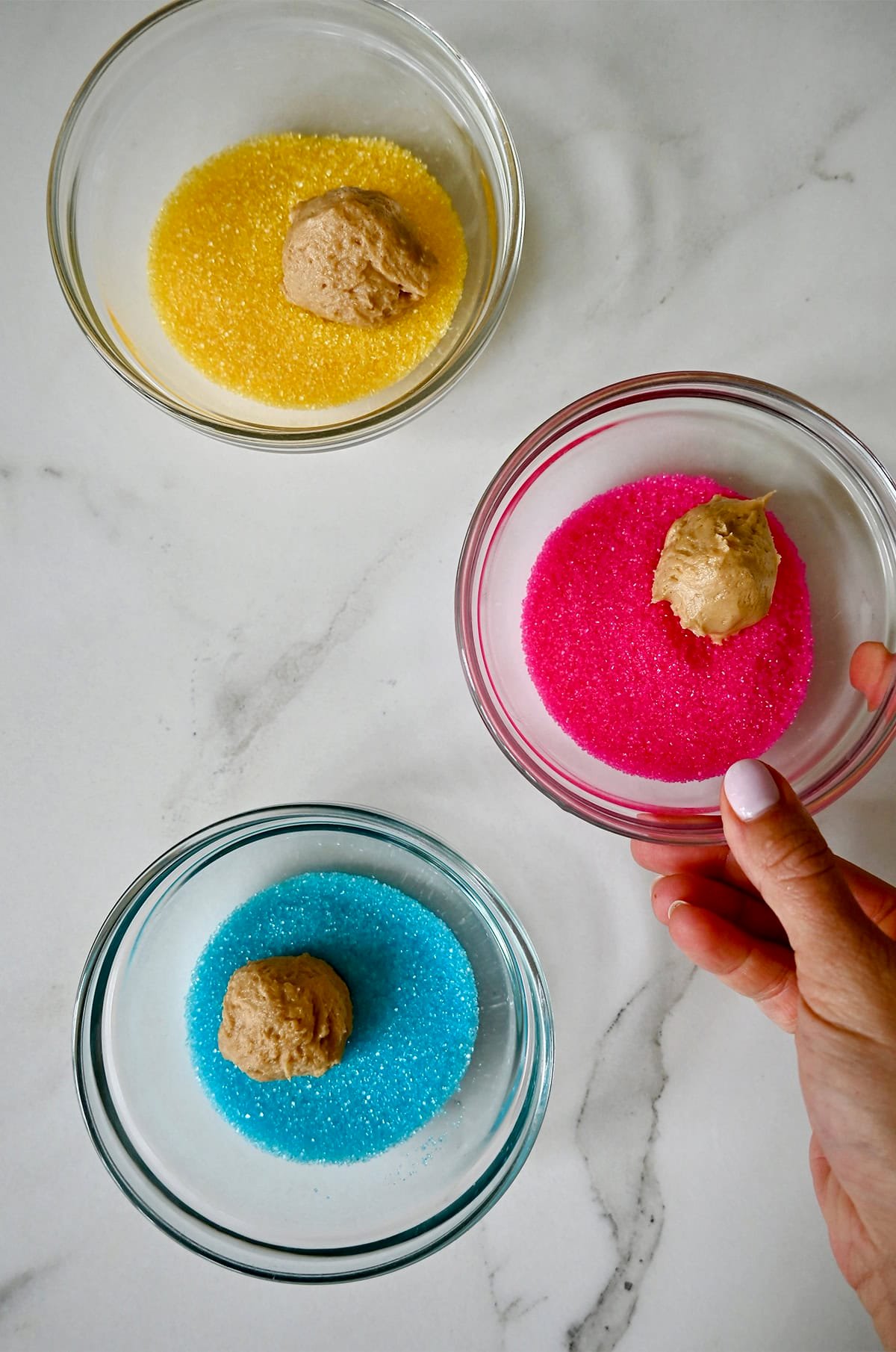
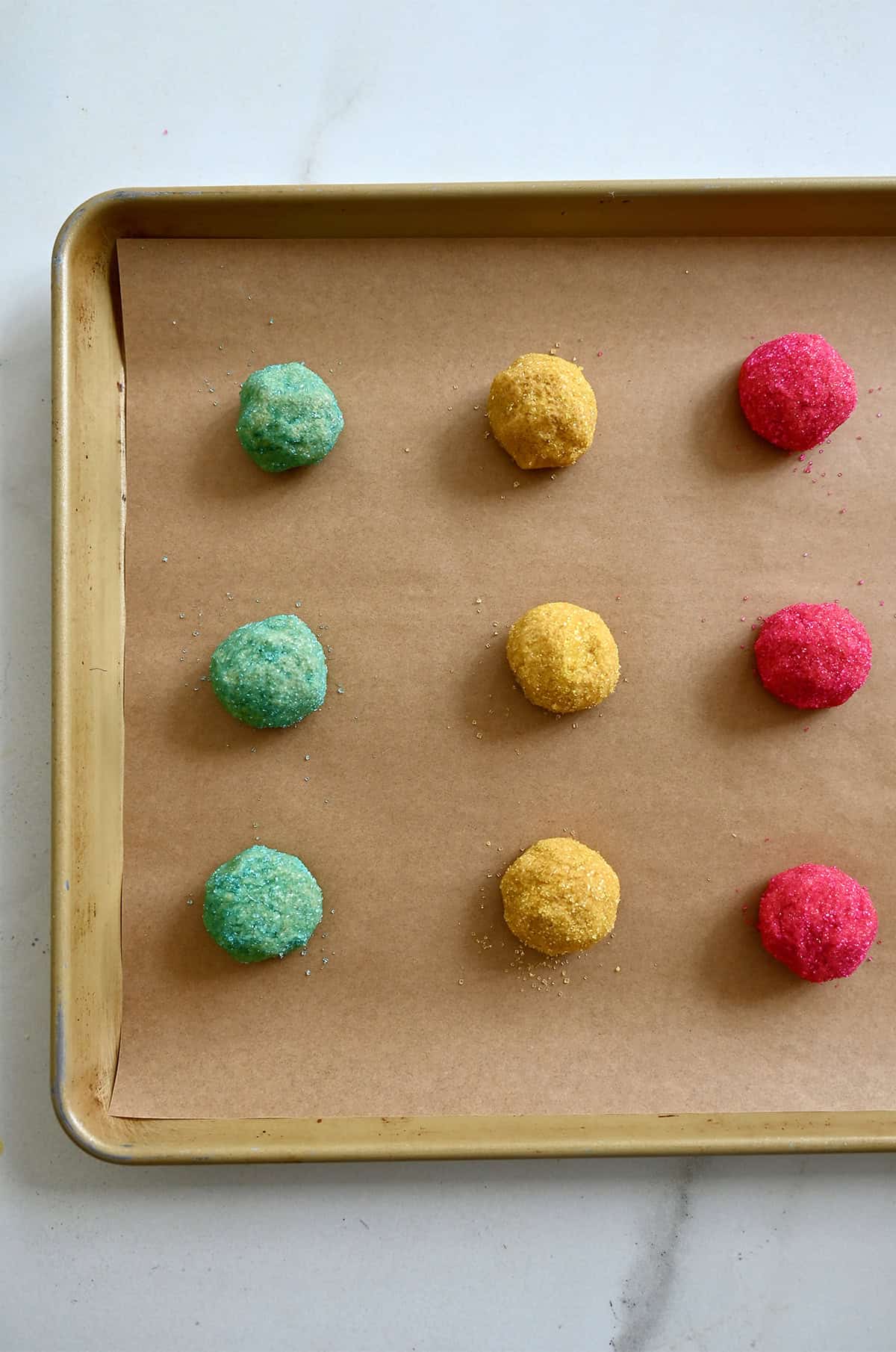
Scoop about 1½ tablespoons of dough per cookie (a medium cookie scoop works perfectly) and roll into balls. Generously roll each dough ball in sanding sugar before placing on the baking sheet.
These cookies only need about 6 to 8 minutes in the oven. Bake just until the edges are set. The centers will look slightly underdone, but they’ll continue to firm up as they cool. If they look fully baked in the oven, they’ll be dry later.
Press in the Mini Chocolate Eggs
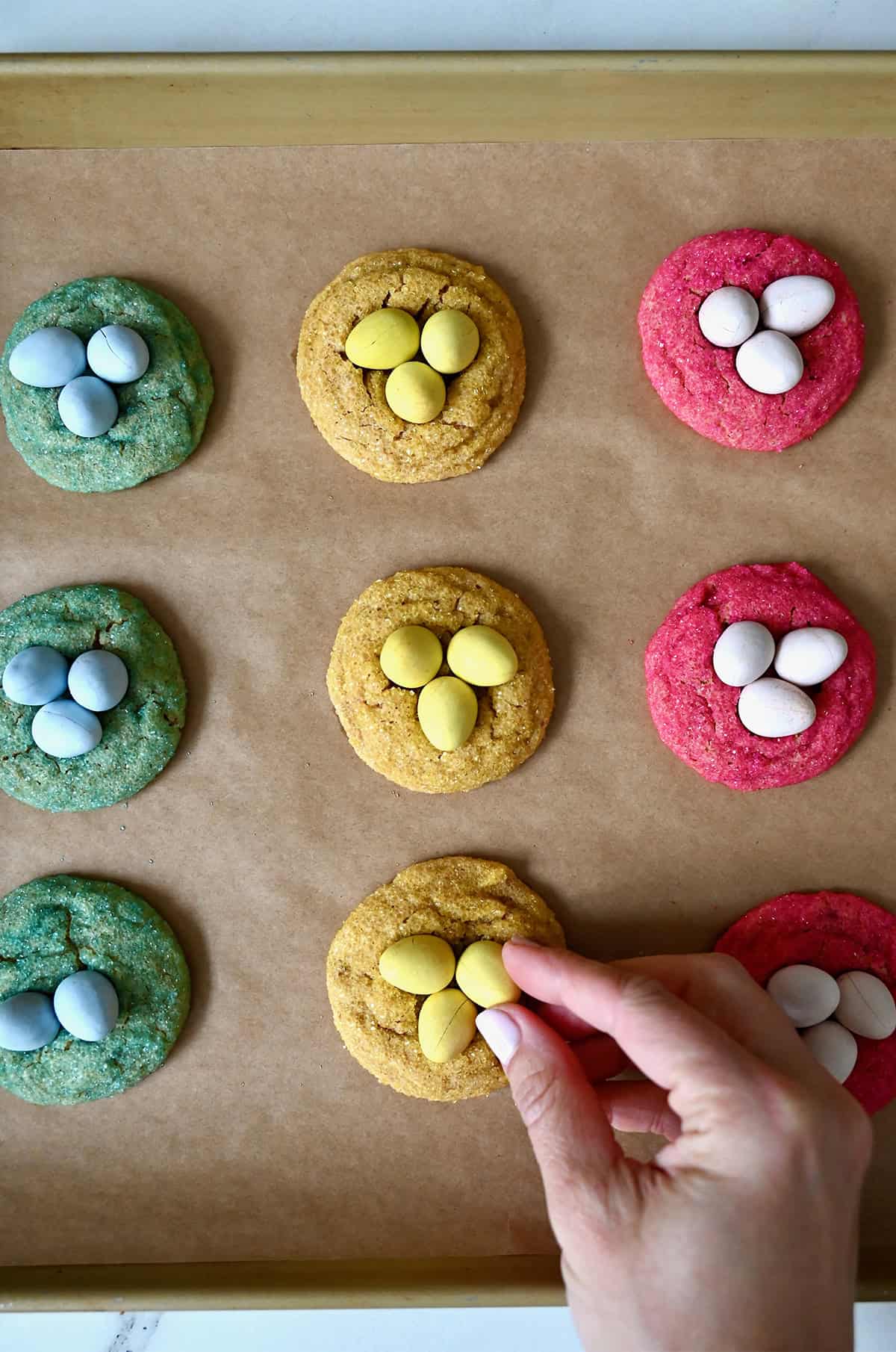
Let the cookies cool on the baking sheet for about 2 minutes before pressing in the Cadbury Mini Eggs.
Too soon and they’ll sink too deep. Too late and they won’t adhere properly. I think three mini chocolates per cookie looks the best.
Let them cool completely… or at least long enough that you don’t burn your fingertips sneaking one.
FAQs
I don’t recommend it for this recipe. Natural-style peanut butter can make the cookies crumbly or oily because the separated oils affect the structure. For the softest, most reliable texture, use a commercial creamy peanut butter like Jif or Skippy.
You have a few options. For a nut-free version, you can try swapping the peanut butter for a nut-free spread such as sunflower seed butter or cookie butter. Keep in mind that I haven’t tested this recipe with those substitutions, so the texture may vary slightly.
If you’d prefer a fully tested nut-free cookie for Easter, try my Easter sugar cookies, carrot cake cookies or bakery-style M&M cookies instead.
The most common causes are natural peanut butter or overbaking. Pull the cookies when the edges are set and the centers still look slightly soft.
Ingredients
For the cookies:
- 1 1/2 cups all-purpose flour
- 1 teaspoon baking soda
- 1/2 cup unsalted butter, at room temp
- 1/3 cup sugar
- 1/3 cup packed light brown sugar
- 1 large egg
- 3/4 cup creamy peanut butter
- 2 Tablespoons whole milk
- 1 teaspoon vanilla extract
- 81 Mini Cadbury Eggs
For the coating:
- 1/4 cup pink sanding sugar
- 1/4 cup blue sanding sugar
- 1/4 cup yellow sanding sugar
Instructions
- Preheat the oven to 350°F. Line two baking sheets with parchment paper.
- In a medium bowl, whisk together the flour, baking soda and salt. Set it aside.
- In the bowl of a stand mixer fitted with the paddle attachment, cream together the butter, sugar and brown sugar until light and fluffy, about 2 minutes. Add the egg then beat in the peanut butter, milk and vanilla extract.
- Add the flour mixture to the stand mixer, beating just until combined.
- Scoop out 1 1/2-tablespoon portions of the dough and roll it into balls.
- Add each of the sanding sugars to individual bowls. Roll a third of the cookie balls into each color of the sanding sugar and arrange them on the baking sheets, spacing them 2 inches apart.
- Bake the cookies until they are set, 6 to 8 minutes, then remove them from the oven and let them cool for 2 minutes.
- Press three Mini Cadbury Eggs into the center of each cookie. Let the cookies finish cooling then serve.
Kelly’s Notes
- For best results, use a no-stir peanut butter like Jif or Skippy. Natural peanut butter can cause the cookies to spread.
- To freeze the dough: Freeze the sugar-coated dough balls in an airtight container or freezer zip-top bag for up to 2 months. When ready to bake, let them sit at room temperature while the oven heats, then bake as directed, adding 1–2 extra minutes if needed.
- To freeze baked cookies: Freeze the cookies in a single layer until solid, then transfer to an airtight container. Thaw at room temperature. (You can freeze them with the Cadbury Mini Eggs on.)
- To store: Store completely cooled cookies in an airtight container at room temperature for up to 1 week.
- ★ Did you make this recipe? Don’t forget to give it a star rating below!
Did you try this recipe?
Leave a comment below with your star rating!
This post may contain affiliate links.