
This easy carne asada starts with a bold, citrusy marinade packed with fresh orange and lime juice, soy sauce and warm spices, then cooks hot and fast for tender, juicy steak with that signature char. No grill required. Use it for tacos, bowls, fries and more.
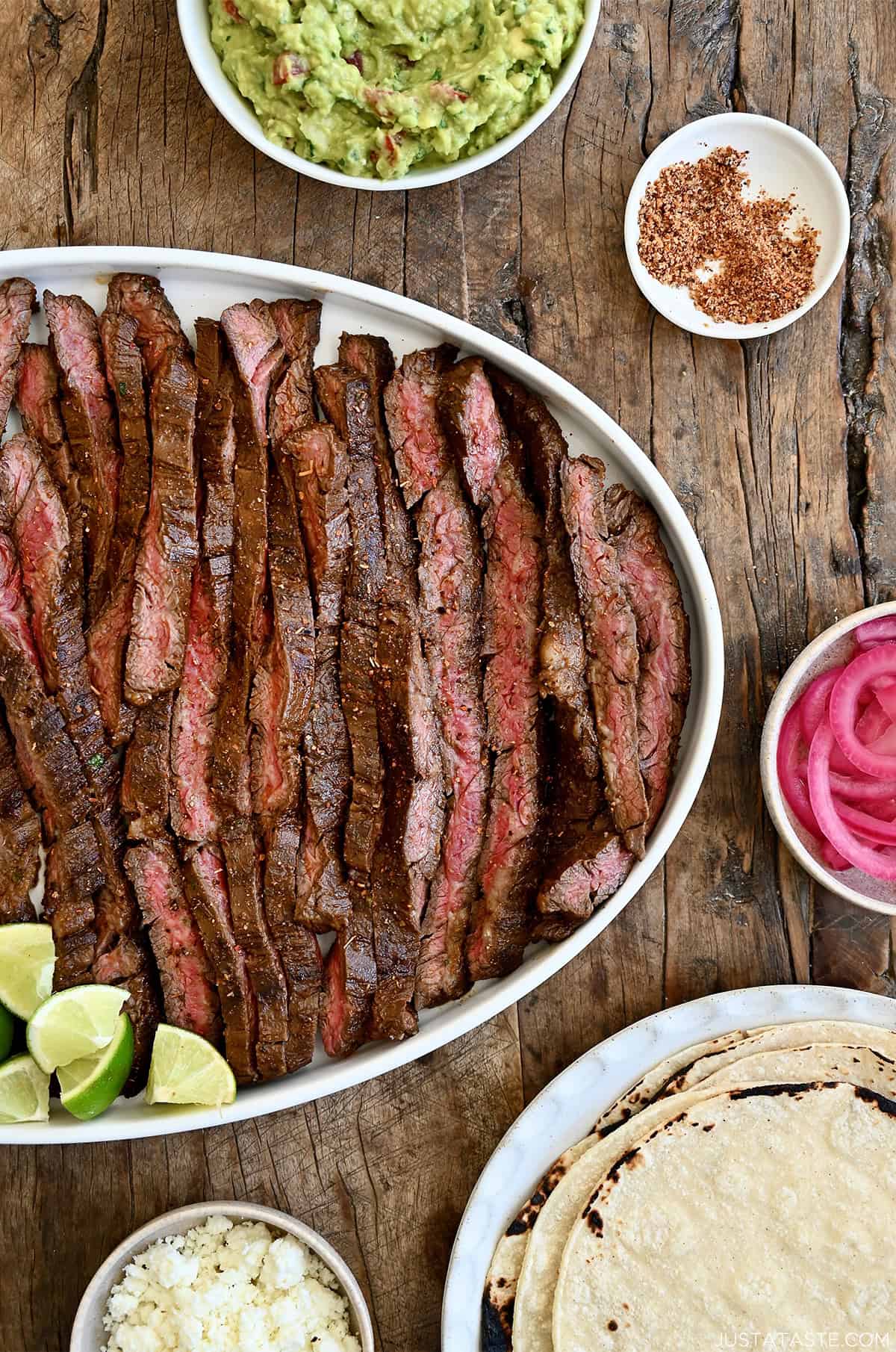
Table of Contents

Carne asada is one of those dishes I could eat every single week and never get tired of. Thin cuts of marinated steak, cooked hot and fast so you get this gorgeous charred crust on the outside and a juicy, tender center? Yes, please!
Carne asada literally means “grilled meat” in Spanish, and while it sounds simple, the magic is in the marinade. Today I’m sharing my go-to recipe: a bold, citrusy marinade packed with fresh orange and lime juice, soy sauce and warm spices that gives the steak incredible depth of flavor. No outdoor grill required.
Best Cut of Meat for Carne Asada
Skirt steak and flank steak are the two cuts you’ll see most often in carne asada recipes. I reach for both cuts regularly, but I prefer skirt steak as it’s the more traditional choice and because it’s well-marbled with fat, it develops those delicious charred, crispy edges on the grill (or grill pan!) while staying incredibly juicy inside. If you can, ask your butcher for outside skirt steak. It’s more tender and flavorful than inside skirt and worth seeking out.
Flank steak is leaner, slightly thicker and a little milder in flavor. It’s a completely worthy substitute and honestly easier to find at most major grocery stores. Flap meat, often labeled as ranchera in Mexican markets, is a thin, well-marbled cut of meat that is another great option if you can find it.
Start with the Marinade
Making the best carne asada at home is a marriage of two things: really good quality beef and a flavorful marinade. Living in San Diego, I have access to some of the best Mexican food on the planet. And that means carne asada at the highest level! I packed this recipe with flavor, balancing bright citrus acidity with savory umami depth and just enough sweetness (hello, orange juice!).
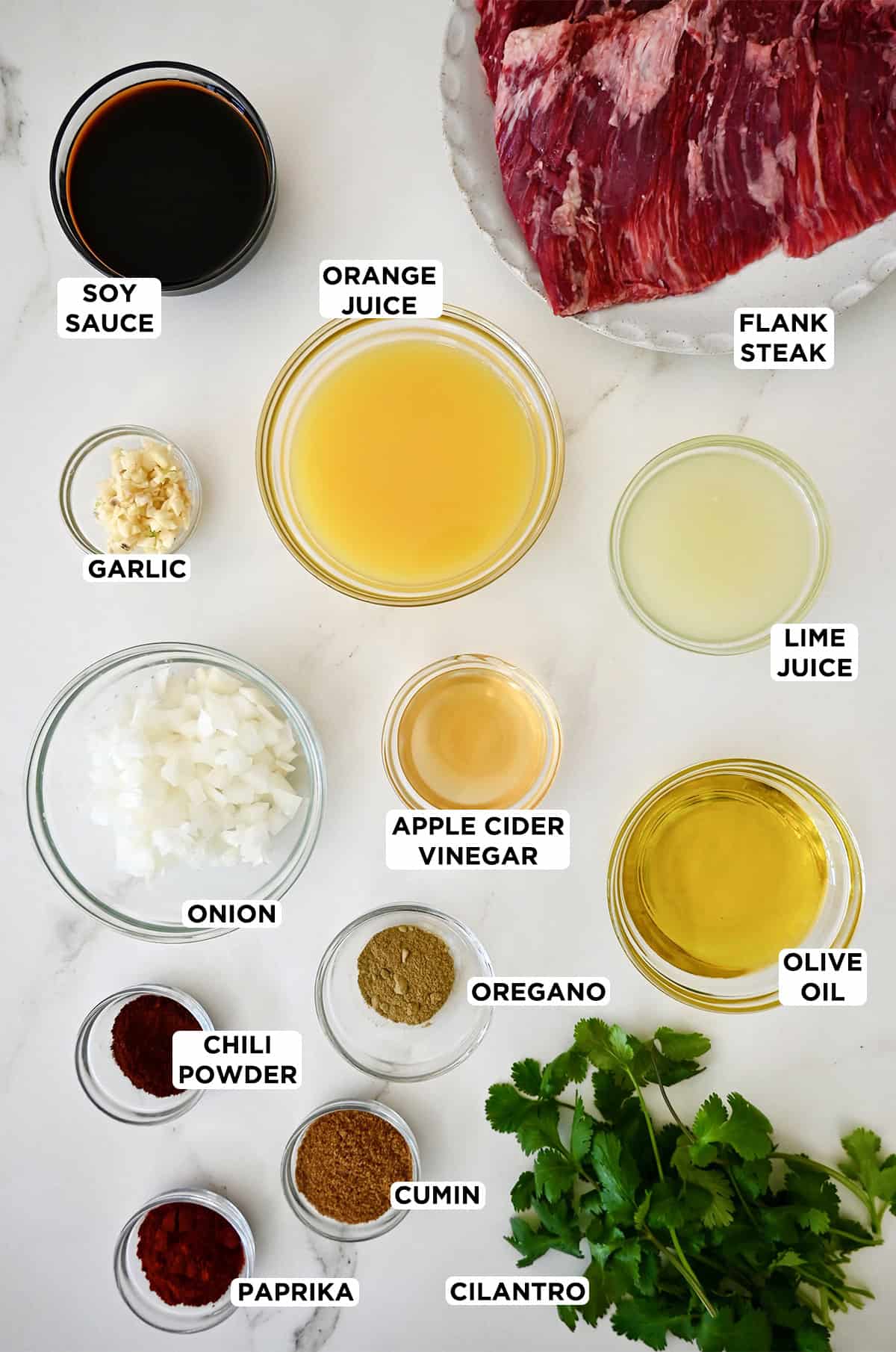
Here’s what you’ll need:
- Fresh orange juice: Adds brightness and sweetness while also helping tenderize the meat. Freshly squeezed is best. You’ll need about 2 medium oranges for 2/3 cup.
- Fresh lime juice: Brightens every other flavor and helps tenderize the meat. You’ll need about 4 to 5 limes for ½ cup. Fresh only here too, please!
- Soy sauce: Just like the legendary flank steak marinade I grew up with, soy sauce is the secret ingredient that makes the whole marinade taste more complex. Tamari or coconut aminos work if that’s what you have on hand.
- Olive oil: Helps prevent the steak from sticking to the pan. Avocado oil is a great swap here.
- Apple cider vinegar: Adds a little extra tang and complexity. White vinegar or even red wine vinegar works just fine.
- Garlic: Fresh cloves are best. Garlic powder won’t give you the same punchy, aromatic flavor here.
- White onion: Adds flavor and a touch of sweetness as the steak marinates. I like to scrape most of it off before cooking so it doesn’t burn.
- Cilantro: Adds a fresh, herby flavor that’s classic in carne asada marinades. If you’re not a fan, swap it for fresh parsley or simply omit it.
- Cumin, paprika, oregano and chili powder: A smoky, earthy spice blend that provides a distinctly Mexican flavor profile.
I like to do all of this in a large bag because it makes cleanup so easy and the bag can be squeezed into a crowded fridge much easier than a bowl! You can also mix everything in a 13×9-inch baking dish since the flank steak is long and thin (the pan is the best shape for marinating because it forces as much marinade as possible into contact with the meat, which means maximum flavor).
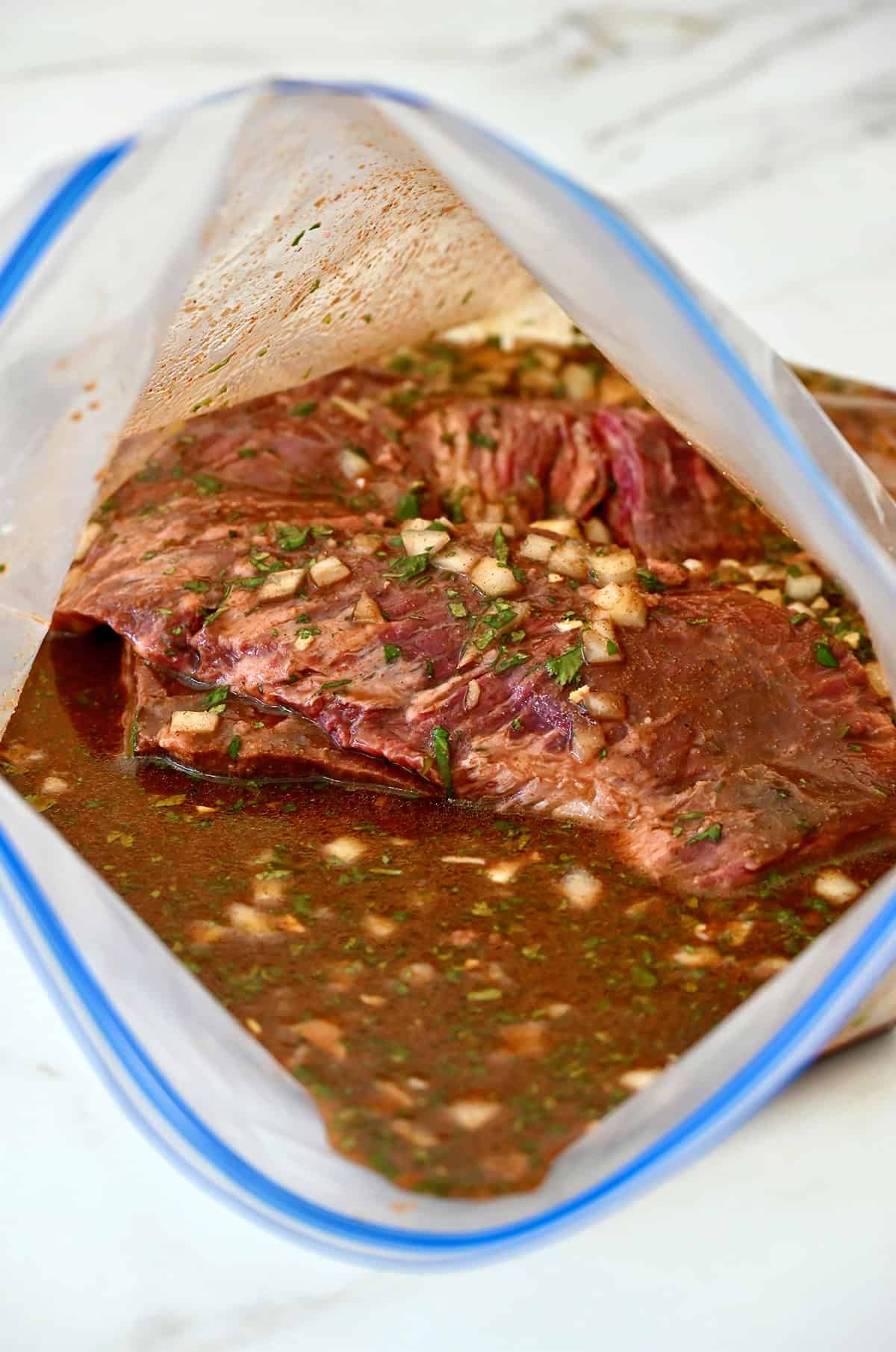
Marinating tip: The longer you marinate, the more flavorful your carne asada will be. A minimum of 1 hour works in a pinch, but I recommend closer to 4 to 6 hours for the best results. Because this marinade leans citrus-heavy, don’t go longer than 6 hours or the acid will start to break down the meat and turn it mushy. You may see other recipes suggest marinating overnight, but those typically use less acidic marinades—trust the timing here.
Traditionally, carne asada is grilled, but if you don’t have an outdoor grill (same!), a grill pan on the stovetop works perfectly here. It gives you better control over the heat and helps you achieve that signature char. You can also use a cast-iron or stainless steel pan, but skip nonstick. You won’t get the same sear. (Check out my guide on cooking steak on the stovetop for all my best tips.)
The key is heat. Preheat your pan over medium-high heat for a few minutes until it’s nice and hot, then grease it generously with oil. You should hear a sizzle when the steak hits the pan—that’s how you know you’re set up for a good sear.
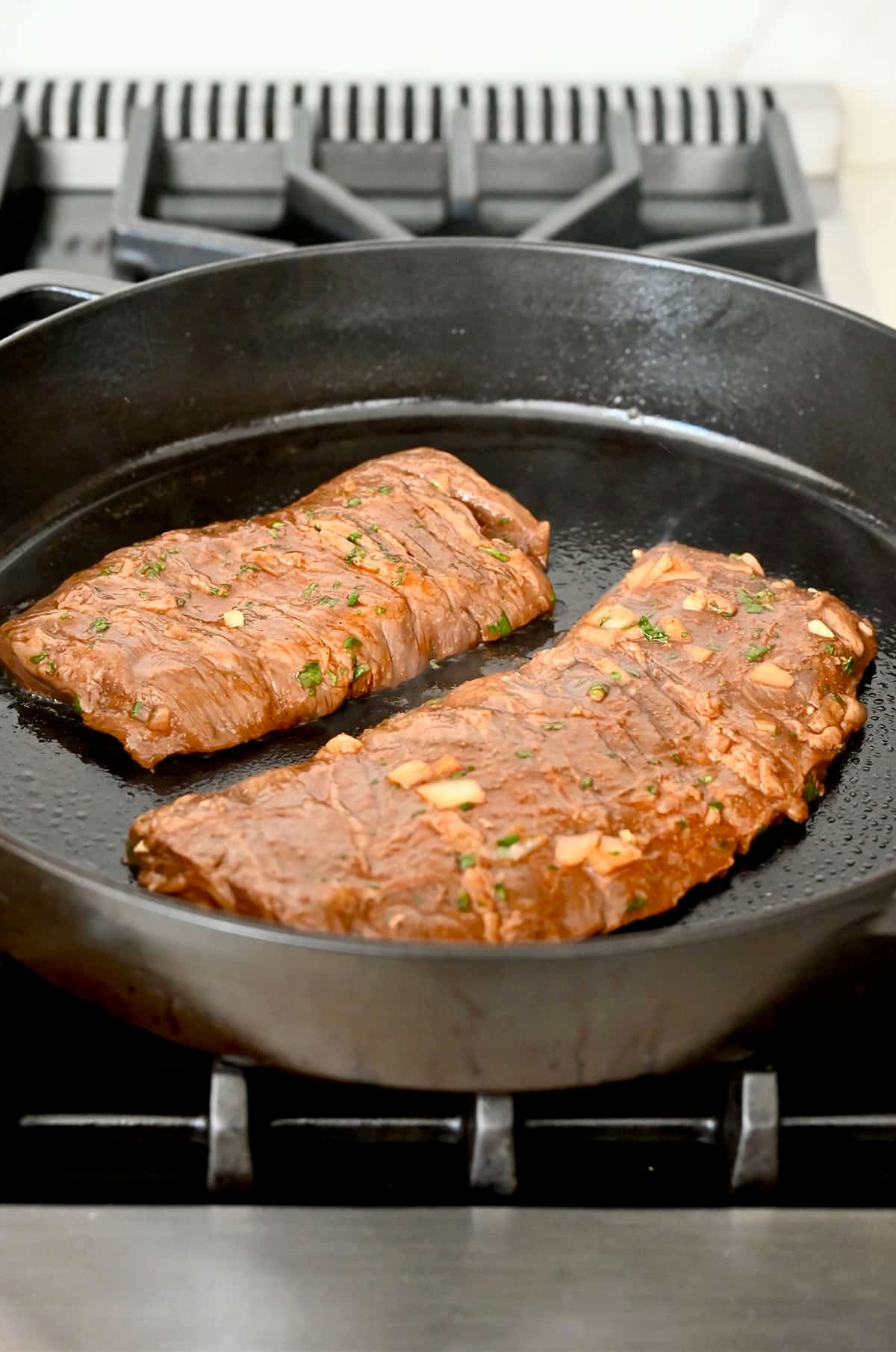
Remove the marinated steak from the bag, scrape off any onions and add it to the pan. Let it cook undisturbed until it naturally releases and develops a nice crust. If it’s sticking, it’s not ready. Flip once and continue cooking to your desired level of doneness.
The exact time depends on the thickness of your steak and whether you like it rare or well done. For medium-rare (my preference), pull it when an instant-read thermometer reads 120°F. Carryover cooking while it rests will bring it to about 130°F.
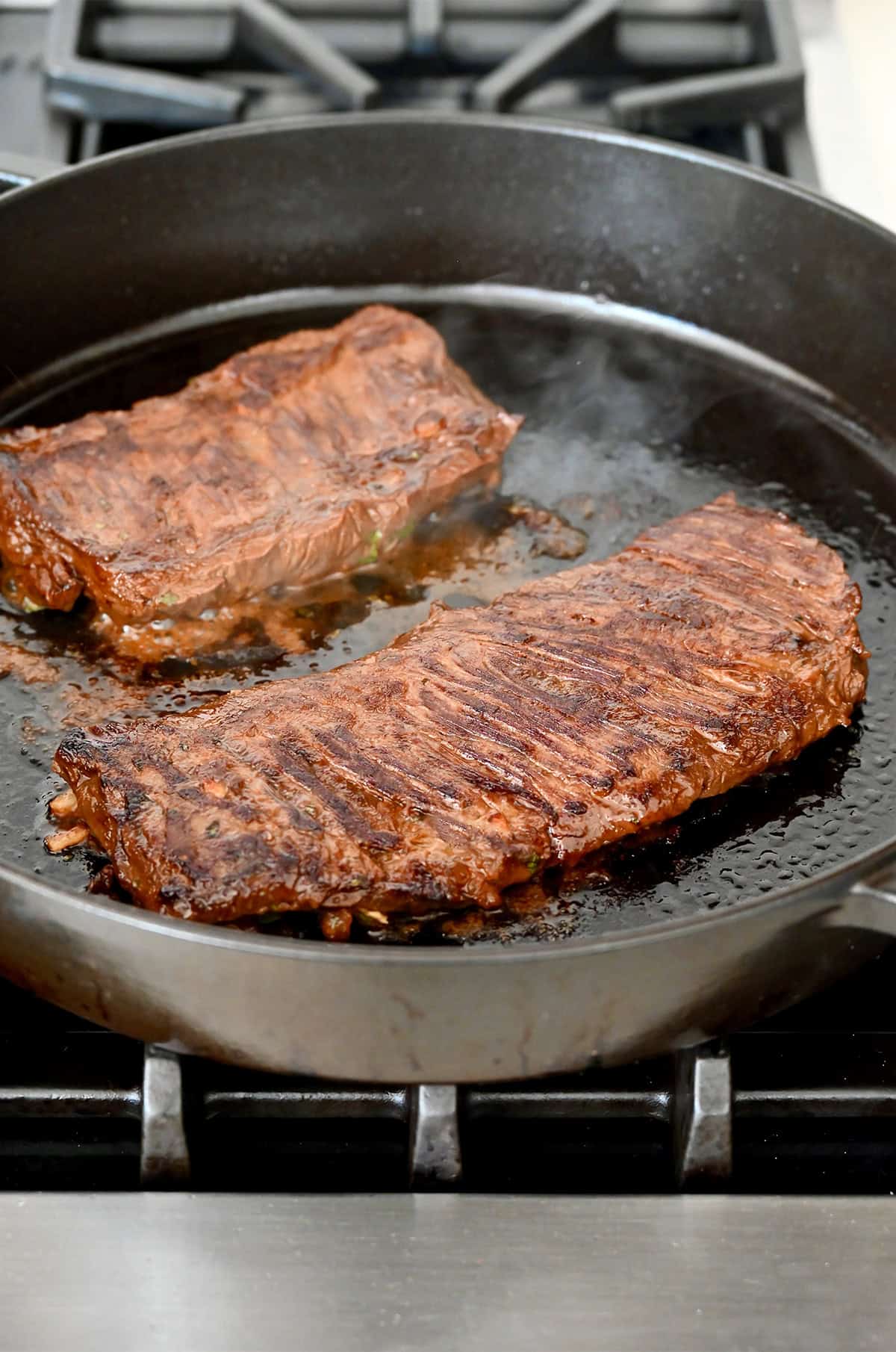
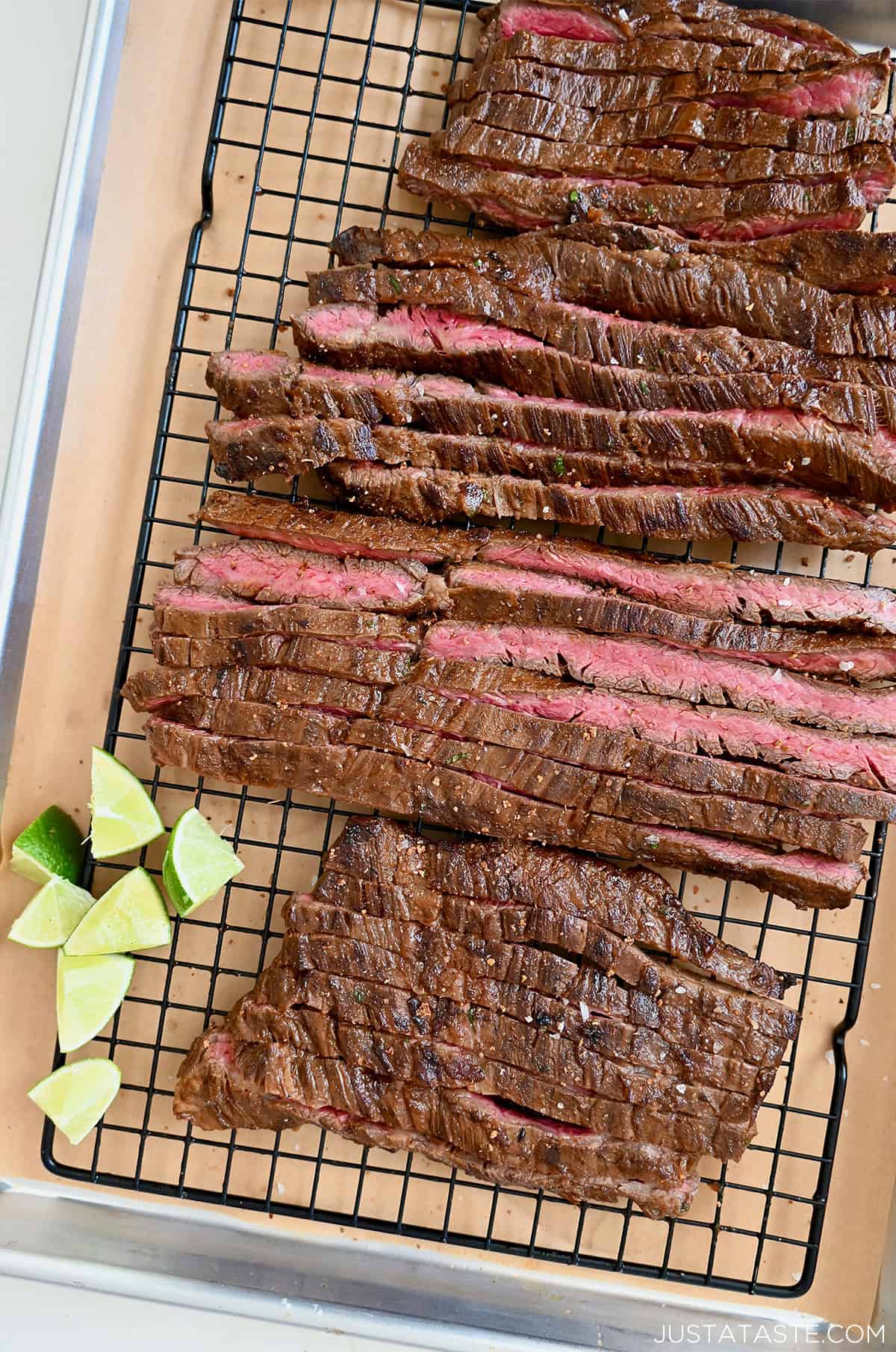
Once your steak is cooked, let it rest for 5 to 10 minutes before slicing to seal in those juices. Then slice thinly against the grain and serve.
FAQs
Look at your steak and find the direction the muscle fibers run. Those are the long lines you can see across the surface. Slicing against the grain means cutting perpendicular to those fibers, not parallel to them. It shortens each fiber so every bite is tender.
This is almost always a heat issue. If the pan isn’t hot enough, the steak will steam rather than sear. Give your pan at least 3 to 4 minutes to preheat over medium-high heat, then grease it generously with oil right before adding the steak. You should hear a loud sizzle the moment the meat hits the pan.
Turn This Into Tacos, Bowls and More
When it comes to dinners in my house, anything that allows everyone to build their own is a big win. And carne asada is so versatile. A few ideas to get you started:
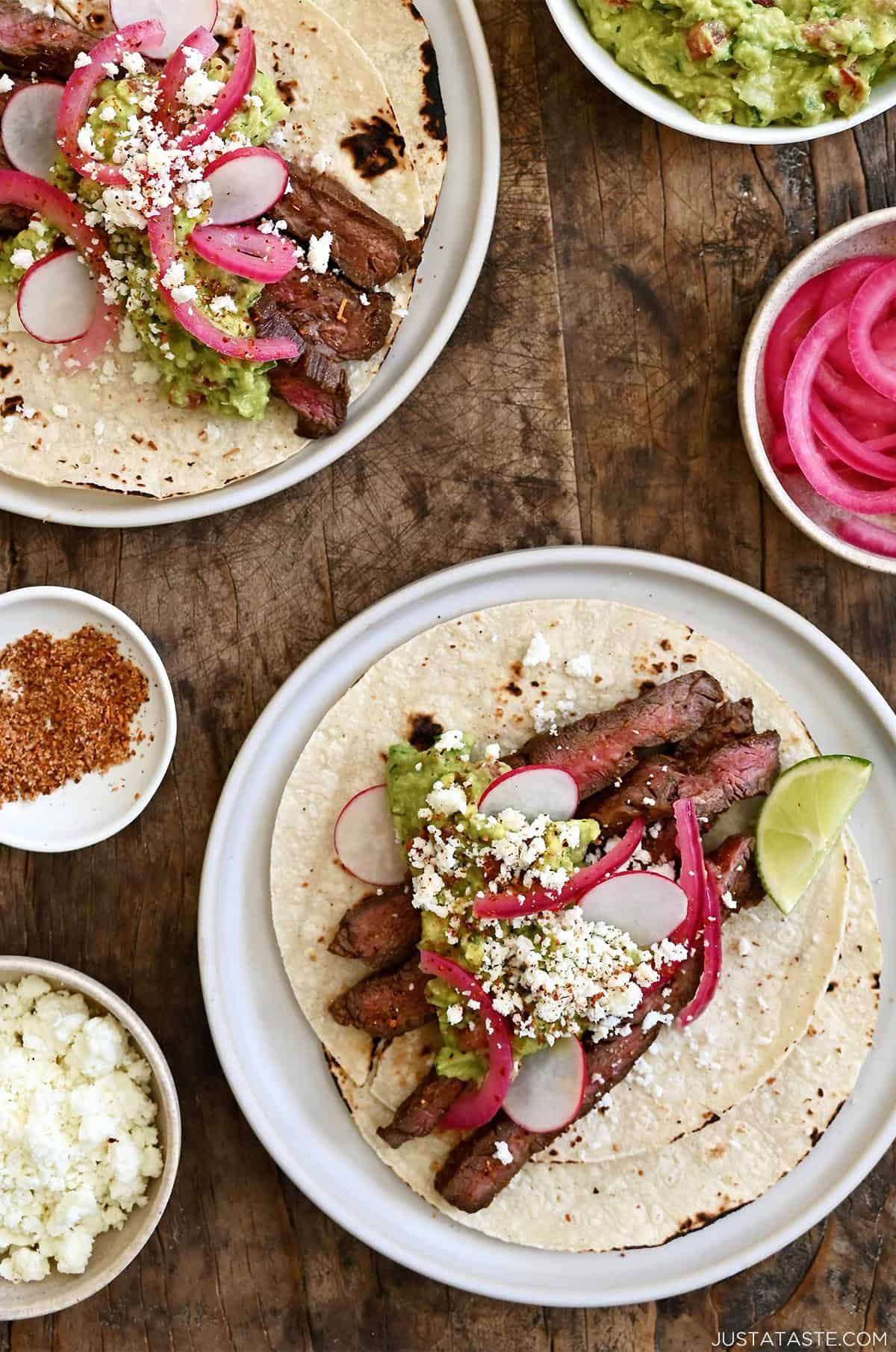
- Carne asada tacos: Load up warm corn tortillas or flour tortillas with sliced carne asada, pickled red onions, cotija cheese, guacamole and a squeeze of fresh lime.
- Carne asada fries: A San Diego staple. Pile sliced carne asada over homemade French fries with guacamole, sour cream, and your favorite salsa or salsa verde.
- Burrito bowl: Start with a big ol’ scoop of authentic Mexican rice, then top with elote salad, Cuban black beans, sliced carne asada, shredded romaine lettuce, sour cream and pico de gallo.
- Straight off the cutting board: Honestly underrated. A little flaky salt right after slicing, and this steak needs nothing else.
For a full Mexican-inspired spread, don’t miss my Cinco de Mayo recipes roundup.
Ingredients
- 2/3 cup fresh orange juice
- 1/2 cup fresh lime juice
- 1/2 cup soy sauce
- 1/4 cup olive oil
- 3 Tablespoons apple cider vinegar
- 3 cloves garlic, minced
- 1/2 cup finely chopped white onion
- 1/4 cup finely chopped cilantro leaves
- 2 teaspoons cumin
- 2 teaspoons paprika
- 2 teaspoons dried oregano
- 1/2 teaspoon chili powder
- 1 (2-pound) flank steak or skirt steak
- Vegetable oil, for cooking
Instructions
- In a large sealable plastic bag or bowl, whisk together the orange juice, lime juice, soy sauce, olive oil, apple cider vinegar, garlic, white onion, cilantro, cumin, paprika, dried oregano, chili powder and 1 teaspoon kosher salt.
- Add the meat to the marinade then seal the bag and refrigerate it for a minimum of 1 hour and up to 6 hours.
- When ready to cook, preheat a grill pan over medium-high heat then grease it generously with oil.
- Remove the steak from the bag, scrape off any onions and discard the marinade. Arrange the steak on the pan and let it cook until it naturally releases from the pan. (The time will depend on how thick your steak is.) Flip the steak once and continue cooking it until it reaches your desired level of doneness. (For medium-rare, aim for about 120°F since carryover cooking while the steak rests will get it to about 130°F.)
- Remove the steak from the pan and let it rest for 5 to 10 minutes before slicing it across the grain and serving.
Kelly’s Notes
- Marinating: I like to marinate the steak in a large zip-lock bag for easy cleanup and it squeezes into a crowded fridge much more easily than a bowl. A 13×9-inch baking dish works great too, since the shape fits the long, thin steak perfectly and forces maximum marinade contact with the meat.
- Marinating time: Don’t go longer than 6 hours. The citrus and apple cider vinegar in this marinade are acidic enough that an overnight soak will start to break down the proteins and turn the texture mushy.
- Cooking: You can cook this on an outdoor grill, grill pan, cast-iron or stainless steel pan on the stovetop. Skip nonstick. You won’t get the same crust. For a full temperature guide, check out my How to Cook Steak on the Stovetop post.
- Storage: Keep leftovers in an airtight container in the refrigerator for up to 3 days. Reheat in a hot skillet for 1 to 2 minutes, just enough to warm through without overcooking.
- ★ Did you make this recipe? Don’t forget to give it a star rating below!
Nutrition
Did you try this recipe?
Leave a comment below with your star rating!
This post may contain affiliate links.