
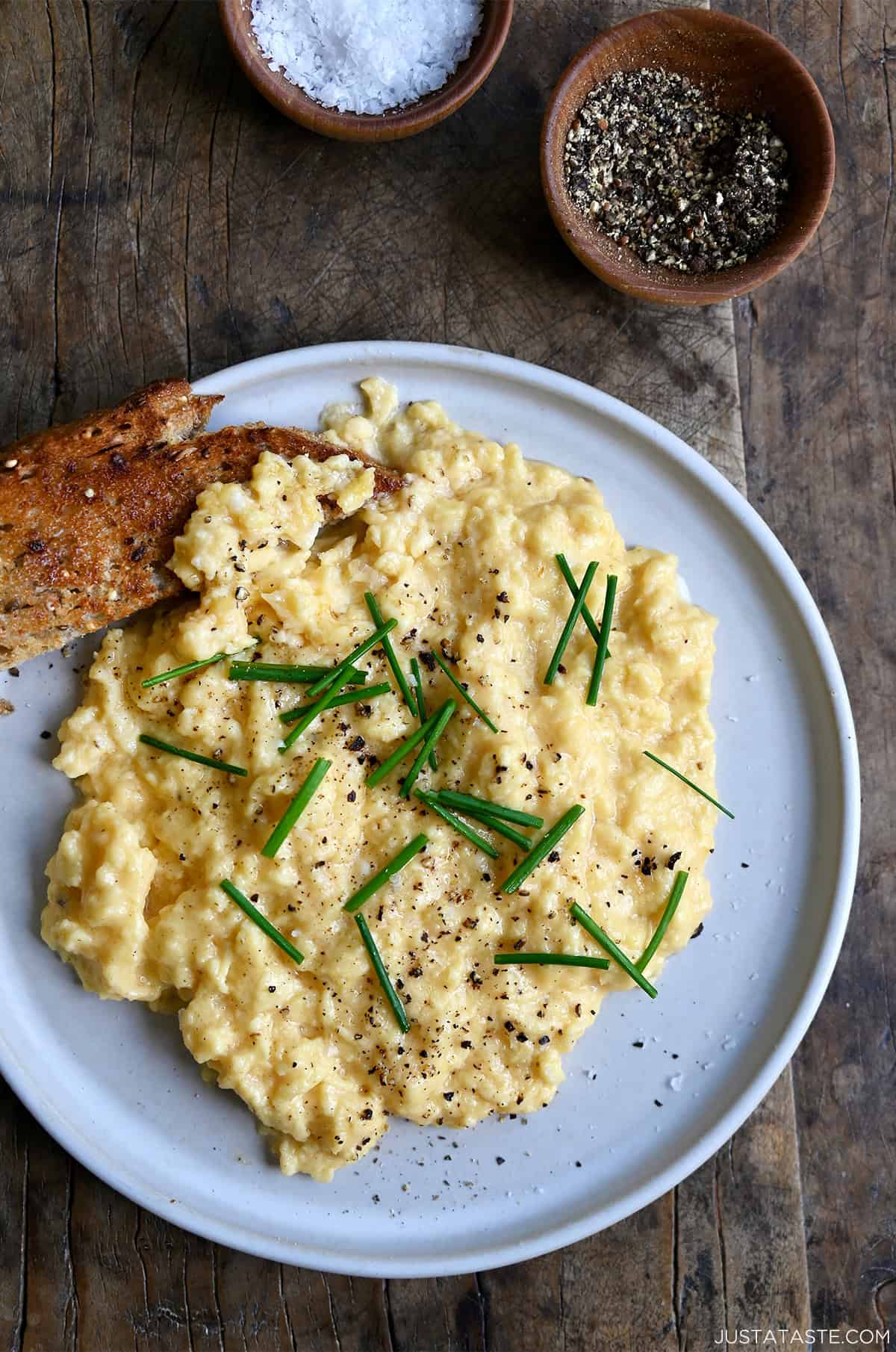
Soft scrambled eggs are all about low heat, gentle movement and knowing when to pull them from the pan. This simple recipe delivers creamy, custardy eggs every time.
I have a confession to make: I love breakfast foods… but I rarely eat breakfast at breakfast. As a mom of four, mornings are all about getting everyone else fed, packing lunchboxes and getting out the door. So breakfast tends to show up later in the day (or at dinner!), and no one complains.
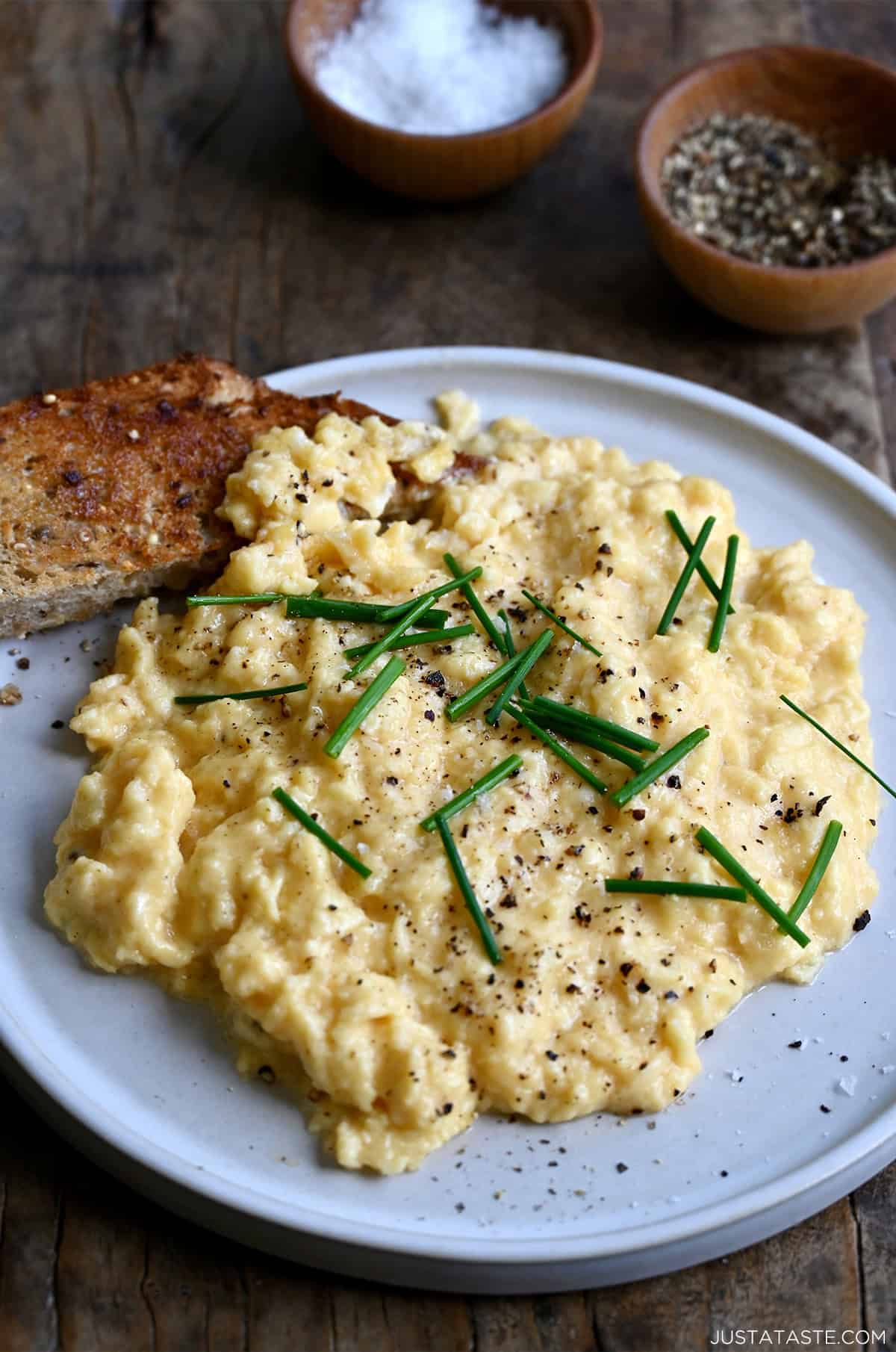
My ideal plate? A thick slice of sourdough toast topped with mashed avocado, crispy oven-baked bacon (IYKYK), and soft scrambled eggs. Pillowy, custardy and impossibly creamy.
Scrambled eggs are often one of the first things we learn to cook, but soft scrambled eggs are a different story. They’re cooked low and slow with gentle movement, resulting in tender curds and a creamy, almost custard-like texture. They are not the dry, rubbery eggs from your local diner.
Once you learn the technique, soft scrambled eggs are simple, reliable and incredibly satisfying, whether you’re making breakfast for one or serving brunch for a crowd.
5 Success Tips for Perfect Soft Scrambled Eggs
Soft scrambled eggs aren’t about fancy ingredients. They’re all about using the right tools and techniques.
- Use a nonstick pan. A high-quality nonstick skillet makes all the difference here. I love my Caraway pan, but any reliable nonstick will do. For 1 to 2 servings, a 10-inch skillet works perfectly. If you’re cooking for a family (hi, same), reach for a 12-inch skillet so the eggs have room to move without crowding.
- Use a little fat (butter is best). I use avocado oil for frying eggs most days, but for soft scrambled eggs, butter is always the answer. You don’t need much—just enough to coat the pan. It prevents sticking, encourages soft folds, and adds rich flavor you simply can’t get from oil.
- Use a flexible silicone spatula. This is a must. A silicone spatula lets you hug the curves of the pan and gently sweep the eggs into soft, custardy folds instead of breaking them up into clumps. Think folding, not stirring.
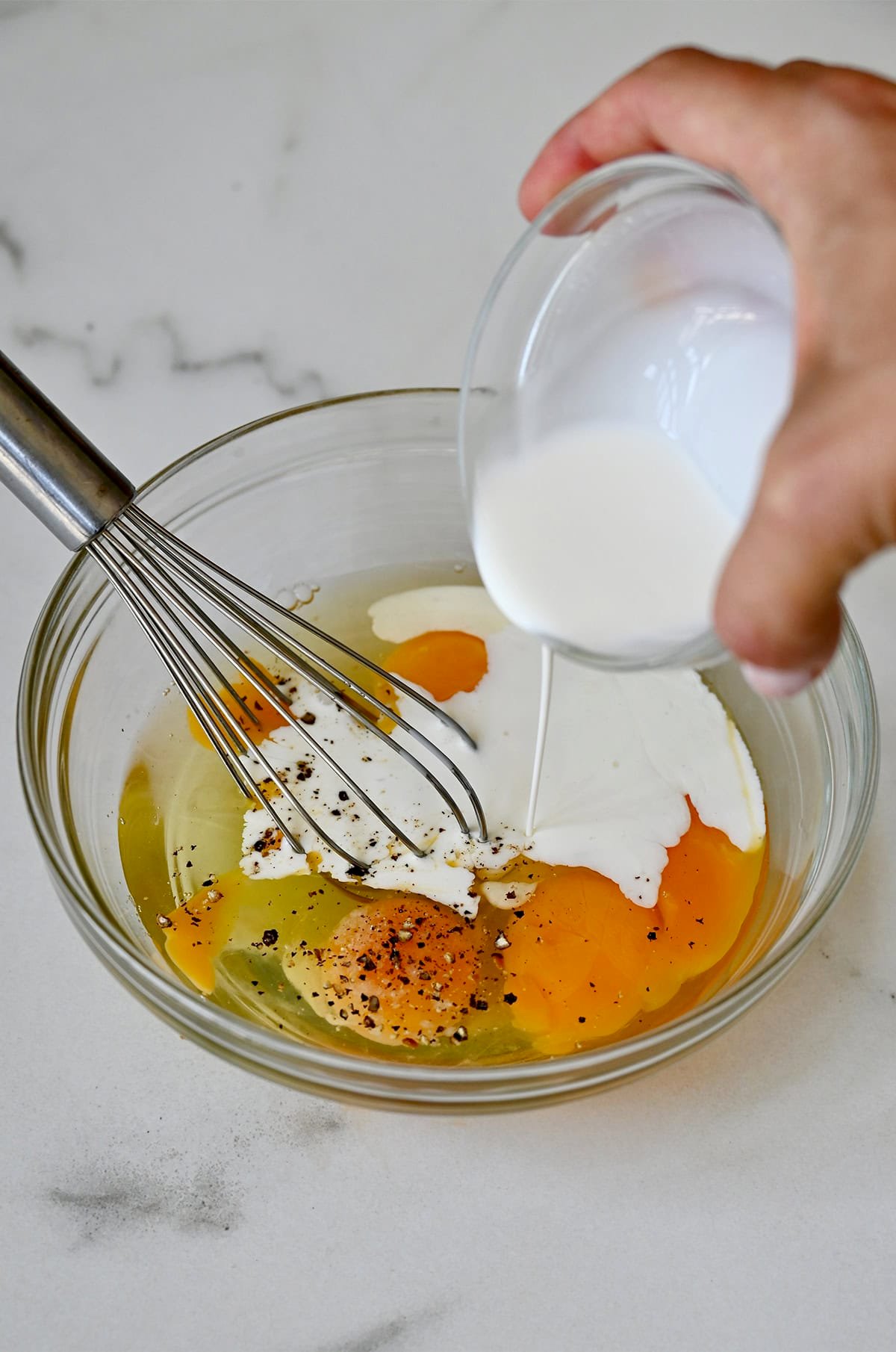
- Whisk well, and season before cooking. Whisk the eggs until the yolks and whites are fully emulsified into one smooth, golden mixture. I add a small pinch of salt at this stage, too. While this is endlessly debated, food science backs it up: salting eggs before cooking actually helps them stay tender and retain moisture, not the other way around. I finish with flaky sea salt at the table for texture and balance.
- Keep the heat low. Soft scrambled eggs cook over medium-low heat. High heat causes egg proteins to tighten too quickly, squeezing out moisture and leading to dry, rubbery curds. Low and slow is the secret to creamy, custardy eggs.
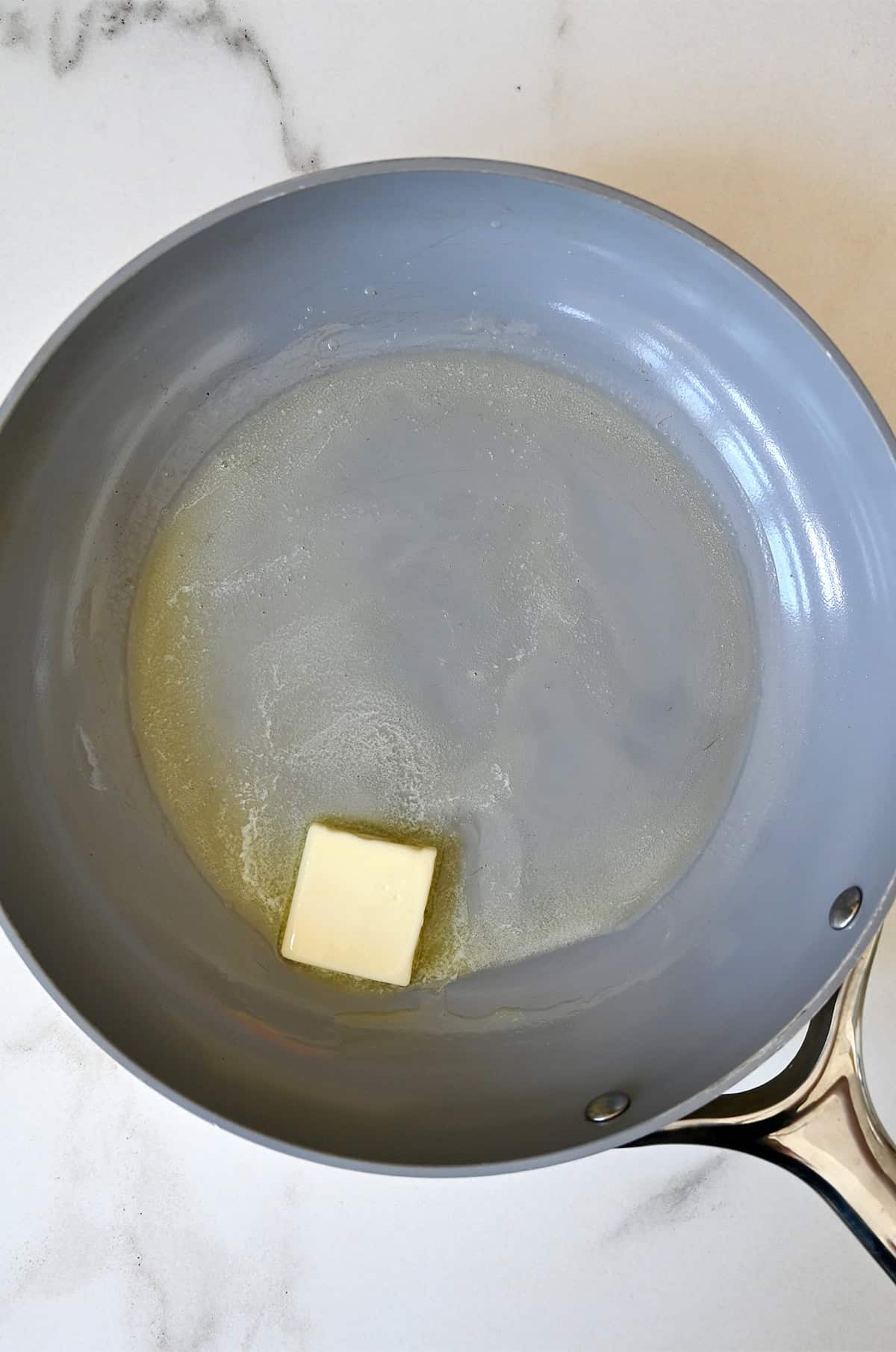
How to Make Soft Scrambled Eggs
Once your eggs are whisked and seasoned, the rest is all about gentle heat and patience.
Set a nonstick skillet over medium-low heat and add the butter. Let it melt slowly, swirling to coat the bottom of the pan. If the butter sizzles or browns, the pan is too hot. Pull it off the heat for a moment and lower the temperature.
Pour the eggs into the pan and let them sit undisturbed for about 30 seconds, until the edges just begin to set. Using your spatula, gently fold and sweep the eggs across the pan, scraping the bottom and sides. Think slow folds, not fast stirring. For smaller curds, stir more. For larger curds, stir less.
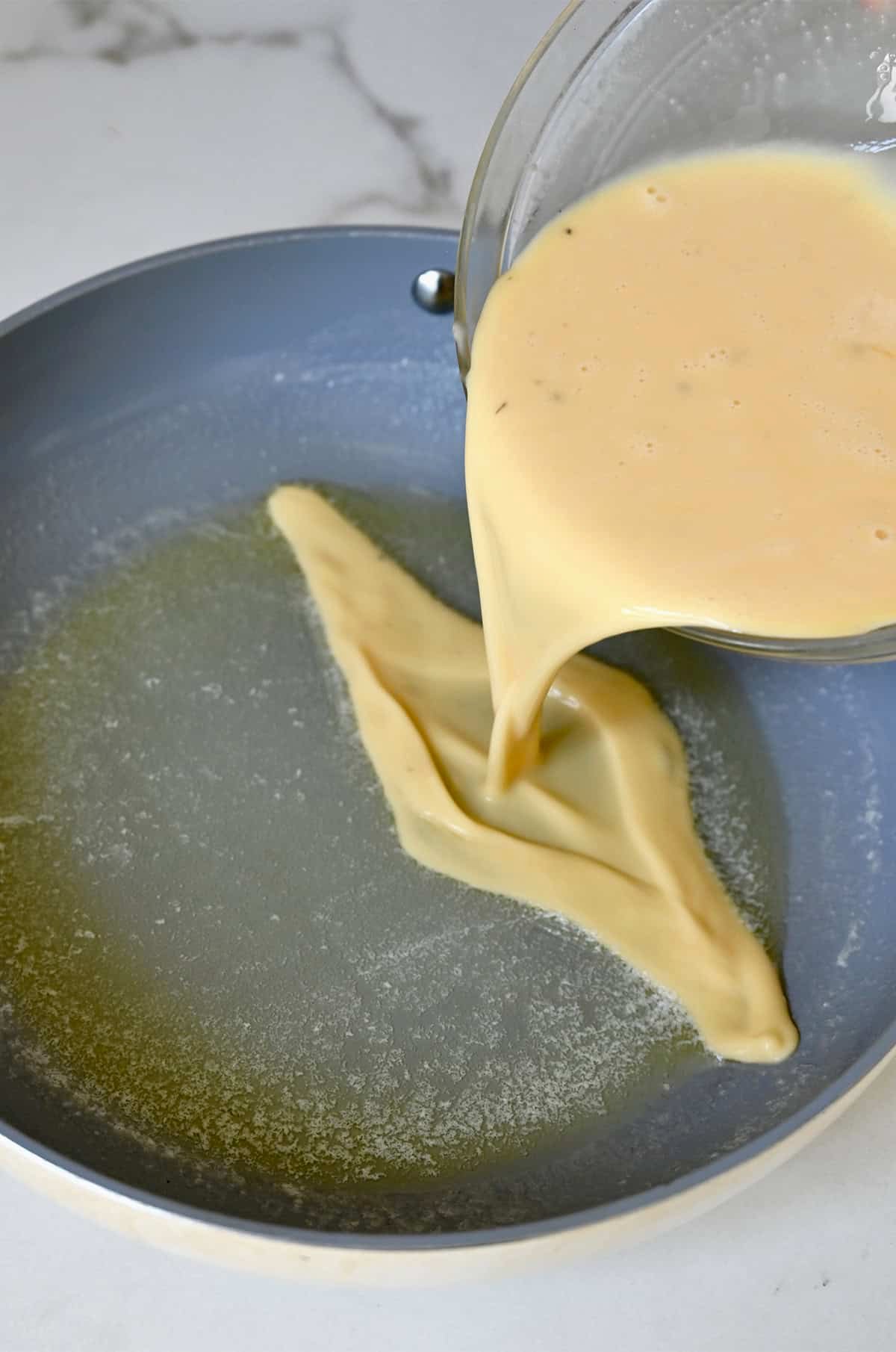
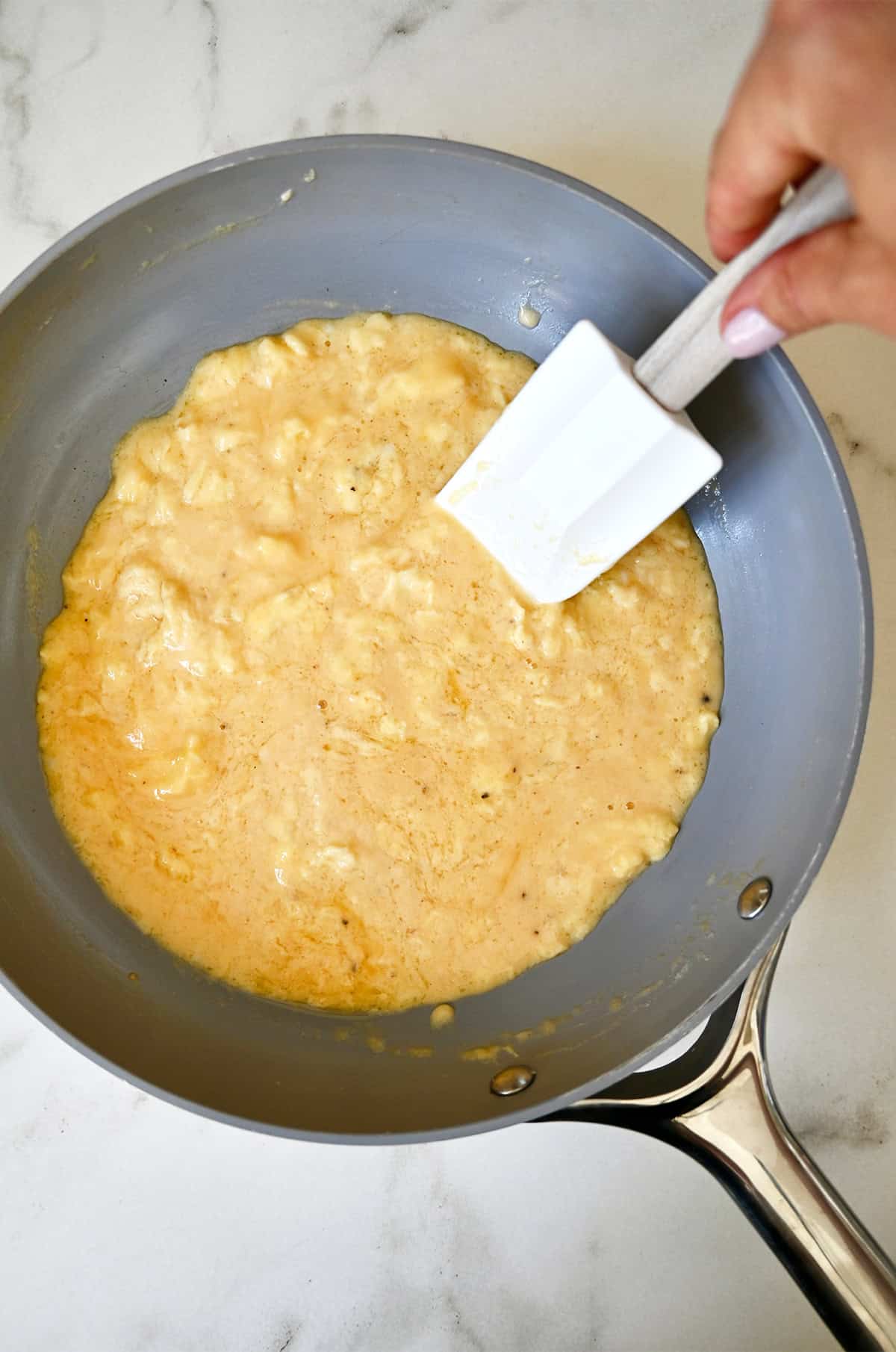
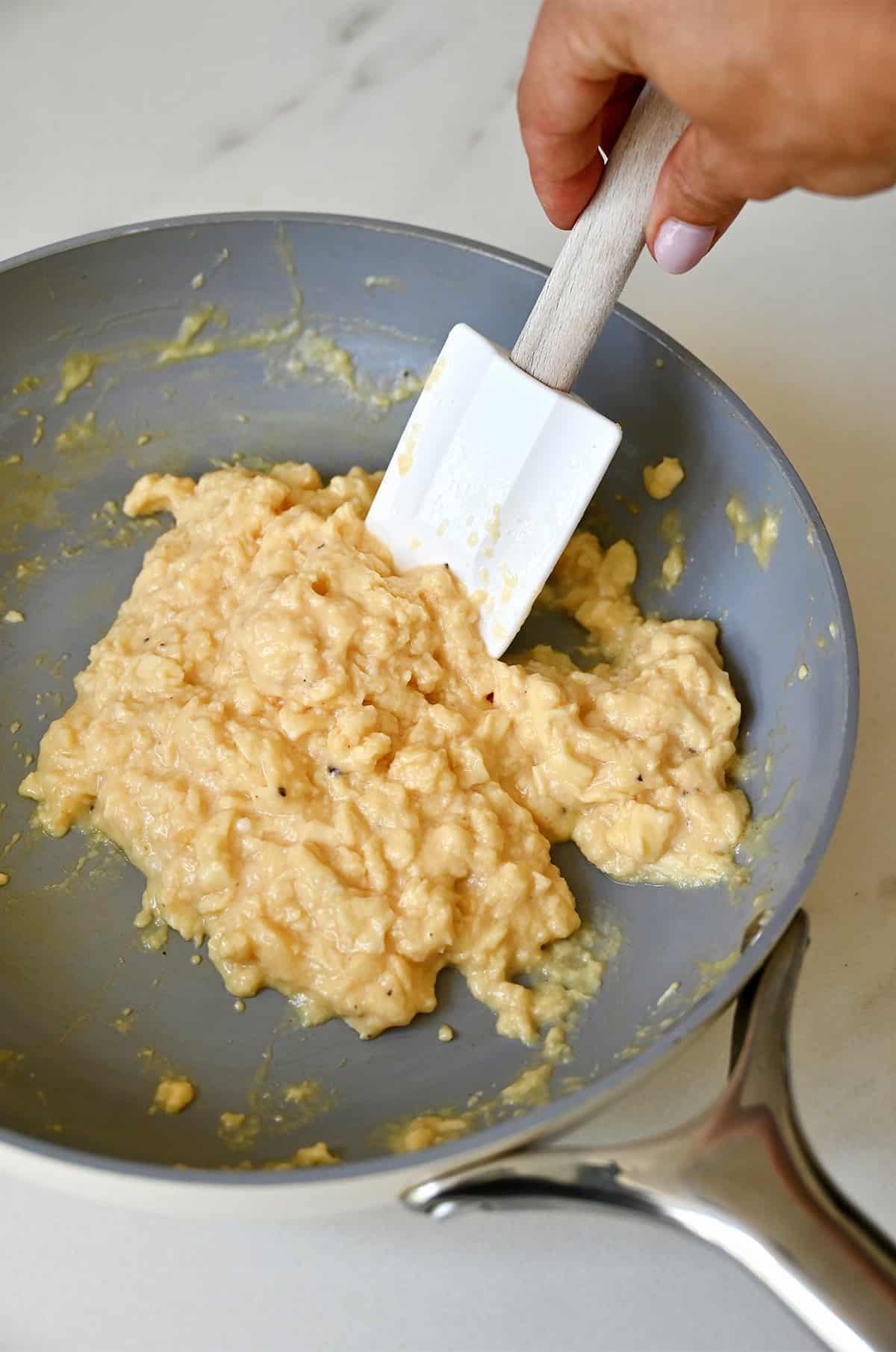
Remove the eggs from the heat when they look about 80% done—meaning they still look a little too “wet” for comfort. They’ll continue to cook off the heat (what’s called carryover cooking), so by the time they hit the table, they’ll be perfect.
Serve immediately. And here’s a pro tip I picked up in culinary school and professional kitchens: serve soft scrambled eggs on a warm plate so they stay creamy and custardy. To warm plates, pop them in a low oven for a few minutes or run them under hot water, then dry well before serving.
What to Serve with Soft Scrambled Eggs
I’m all about texture when I sit down to eat, and since these soft scrambled eggs are rich and creamy, I love pairing them with something crisp, toasty or fresh. Tucked into a homemade bagel sandwich or served alongside toasted sourdough are always at the top of my list, plus a side of roasted breakfast potatoes or crispy hash browns for contrast.
If I’m serving these as part of a weekend brunch spread, my fruit salad with honey-lime dressing and a tall stack of buttermilk pancakes are a must. And if Noni (my mom) is coming over for a leisurely brunch, a pitcher of Bloody Marys never hurts.
Ingredients
- 4 large eggs
- 1/4 cup milk, heavy cream or water
- 1 Tablespoon butter
Instructions
- In a medium bowl, whisk together the eggs, milk, and a pinch of salt and pepper. Whisk vigorously to incorporate the egg whites and yolks.
- Add the butter to a large non-stick skillet set over medium-low heat. Once the butter has fully melted, swirl it to coat the entire bottom of the pan.
- Add the eggs and let them cook, undisturbed, until they begin to set, about 30 seconds. Using a rubber spatula, gently fold and stir the eggs every 30 seconds, scraping down the sides of the skillet to ensure no eggs are setting (or overcooking) on the sides of the pan.
- Continue stirring until the eggs reach your desired doneness then serve.
Kelly’s Notes
- For smaller curds, stir more. For larger curds, stir less.
- This recipe is easy to scale. For best results, use a pan large enough to give the eggs room to move—about a 10-inch nonstick skillet for 2–3 eggs and a 12-inch skillet for 4–6 eggs. Avoid overcrowding the pan, which can lead to uneven cooking and less creamy eggs.
- ★ Did you make this recipe? Don’t forget to give it a star rating below!
Nutrition
Did you try this recipe?
Leave a comment below with your star rating!
This post may contain affiliate links.
Low and slow for the win! I didn’t use any milk, cream or water, but I did add some salt about 10 minutes prior to cooking and I think that made a big difference. Scrambled eggs seem so basic, but with your tips and tweaks, mine have never been better!
So glad you enjoyed the recipe!