
My tried-and-true method for making fresh berries last longer, plus delicious recipes to put them to use.

When it comes to fruit, berries are at the top of my list. From blueberry scones and strawberry shortcake to blackberry cream cheese pastries and mixed berry banana bread, berries find their way into just about everything I bake, not to mention my favorite dessert pairing of all time: fresh raspberries with chocolate (looking at you, chocolate raspberry cake!).
But even with four kids who love berries as much as I do, more than one carton has disappeared behind a wall of milk jugs and gone bad before I even remembered it was there. Eventually I got tired of throwing money in the trash, so I built a quick routine I run through the second berries come home from the store. None of it’s complicated, but doing all of it together is the reason I rarely lose a pint anymore.
Why Berries Go Bad So Fast
Berries are delicate by nature, with thin skin and high moisture content, and unlike apples or bananas, they don’t ripen further once picked, so what you bring home is as good as they’re going to get. The real enemy is moisture. Trapped water against the skin is what speeds up mold, which is why a quick rinse right before eating is usually safest, unless you’re using the quick vinegar soak method and drying thoroughly afterward, more on that below.
Pick the Best Berries From the Start
Before any of this matters, what you grab at the store or farmers market makes a real difference. Look for cartons without a lot of condensation or visible juice pooling at the bottom, both are signs the berries inside are already breaking down. Give the carton a gentle shake, berries should move somewhat freely rather than sticking together in a clump.
And the second you get home, dump everything out and sort through it. One soft or moldy berry left in with the rest will take its neighbors down with it, so pull anything bruised, leaking or fuzzy before it ever gets near your storage container.
Give Them a Quick Vinegar Bath
When I started researching the best way to store my berries so they’d stay fresher longer, I was surprised to find that the vinegar method is as polarizing as cottage cheese. But after testing the method myself, I’ve found it extends the shelf life of my berries by up to 1 week.
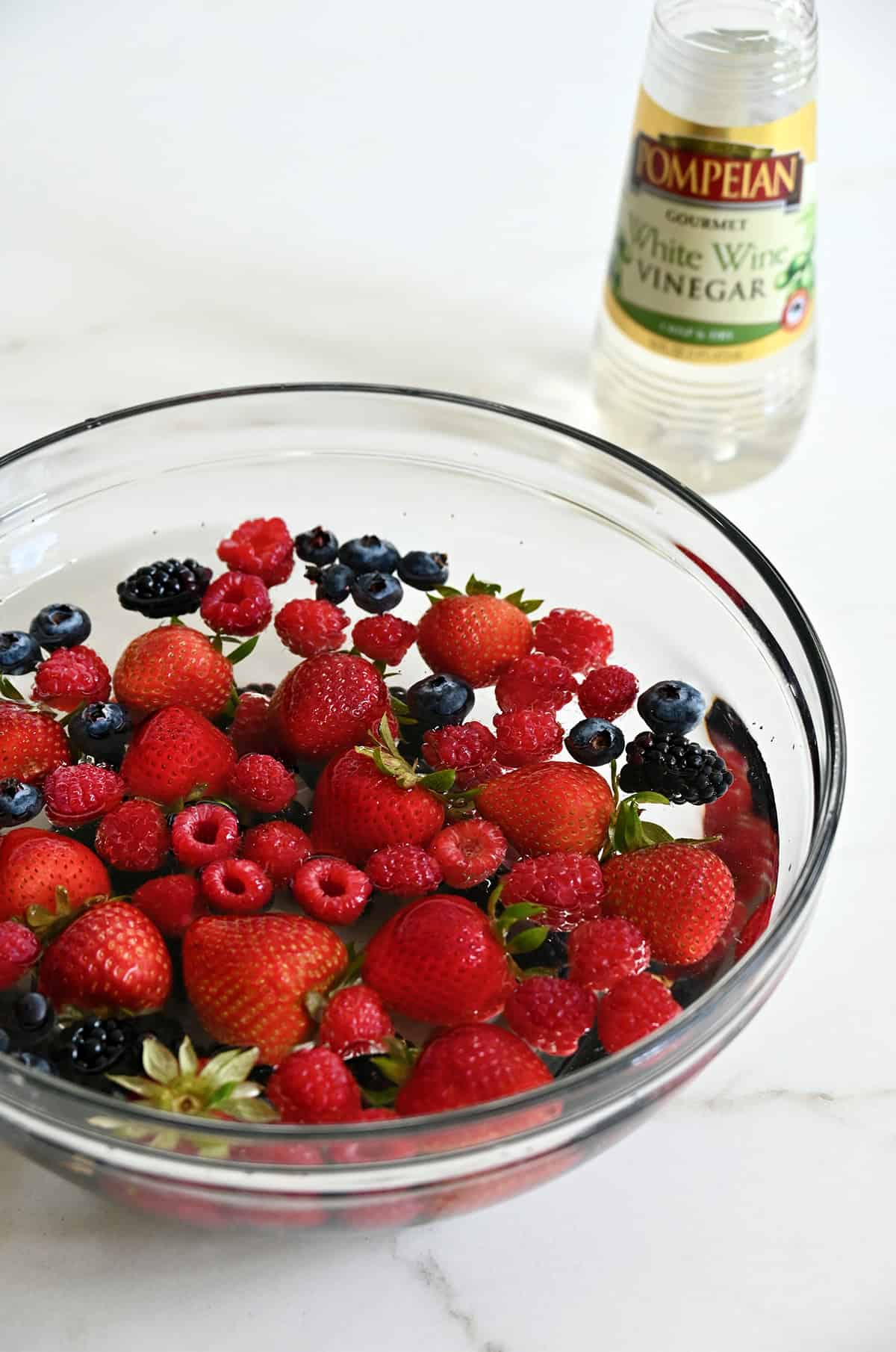
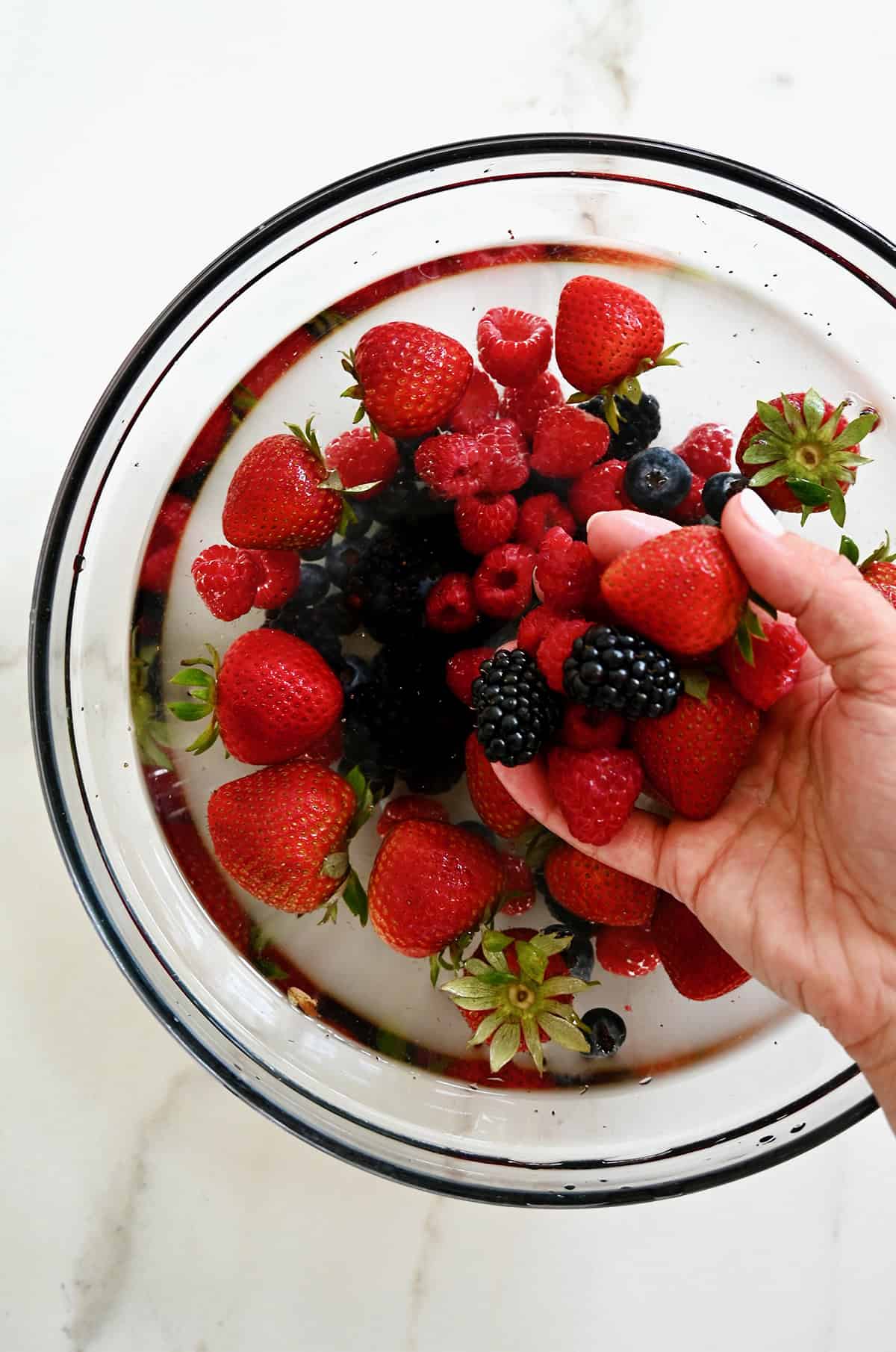
Once they’re sorted, here’s what I do every time: I give the berries a quick soak in a bowl of 1 part white vinegar to 3 parts cool water, swishing gently for about 30 seconds, then drain and rinse with plain water. You won’t taste it once it’s rinsed.
Success tip: Don’t soak longer than 30 seconds, berries with thinner skin can start absorbing the solution the longer they sit (read: you’ll taste the vinegar).
Dry Them Completely
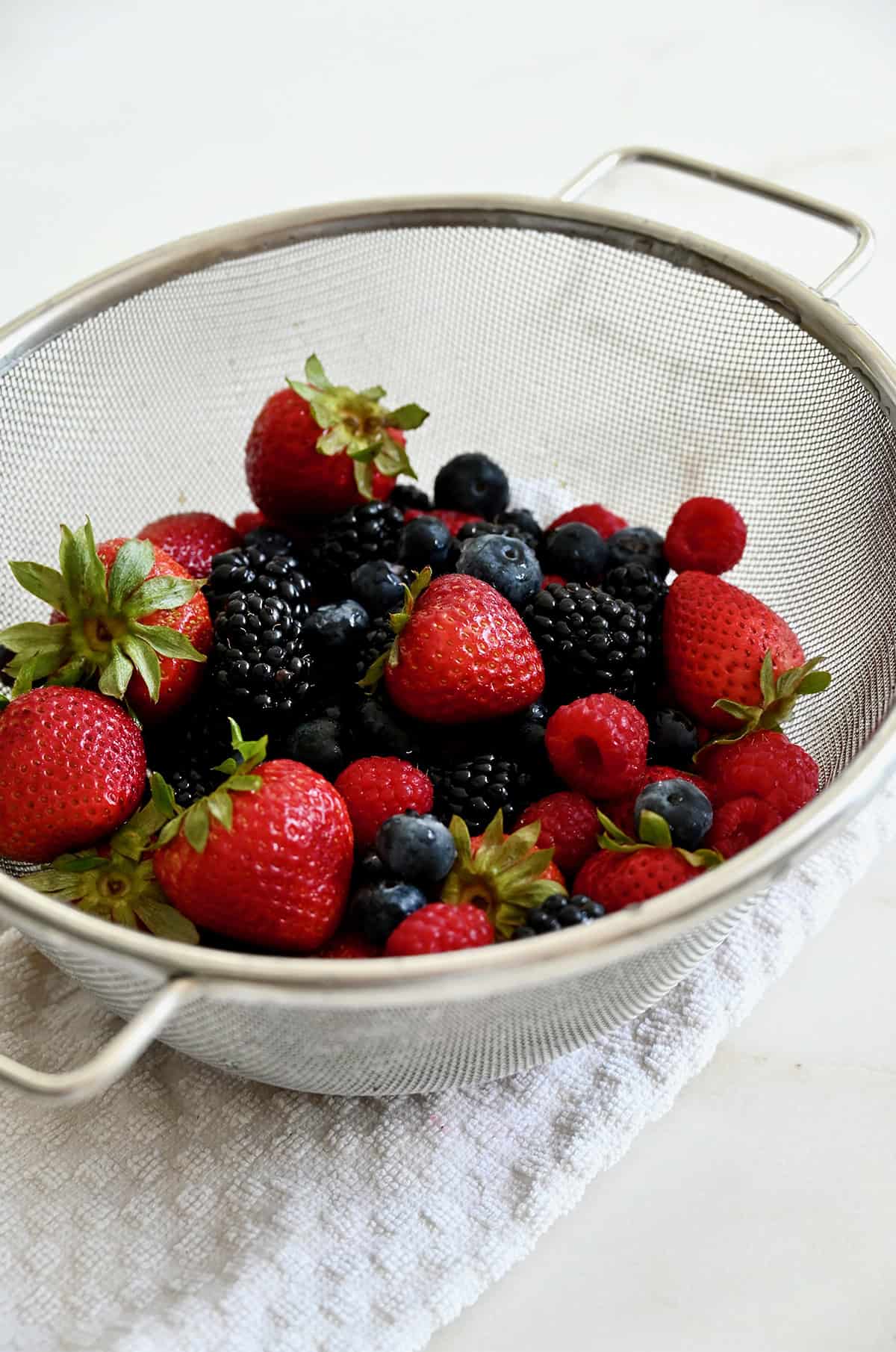
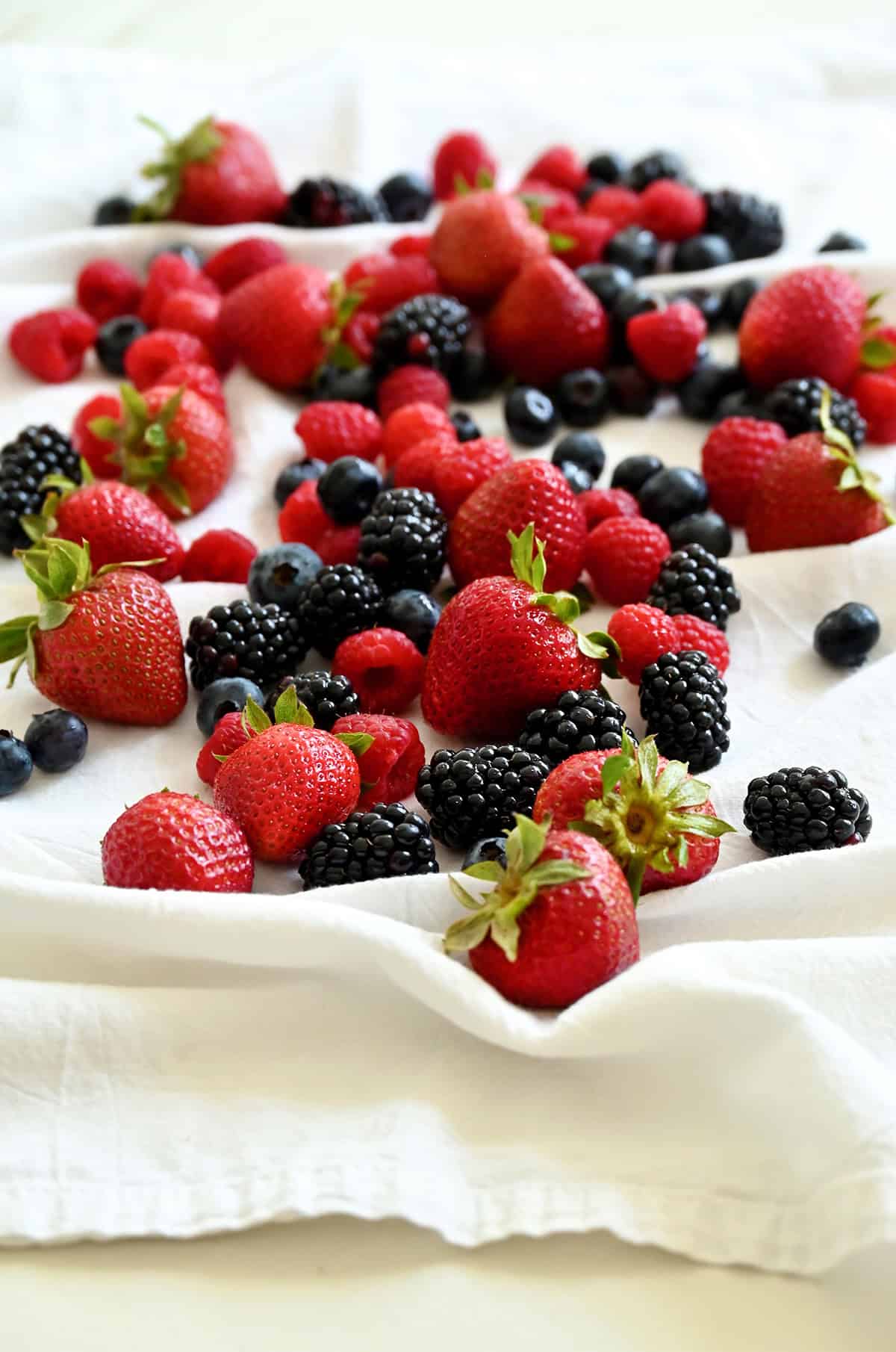
As I mentioned above, moisture is the enemy of fresh berries, so drying them completely after soaking them is essential. I like to spread the berries in a single layer on a clean dishcloth (paper towels work, too) and let them air dry for 10 to 15 minutes. Once they’re dry, they’re ready to move into their paper towel-lined storage containers.
Don’t rush this step. Any berries that are still damp when they go into your container will mold just as fast (if not faster!) as if you’d skipped the whole routine.
Skip the Airtight Container
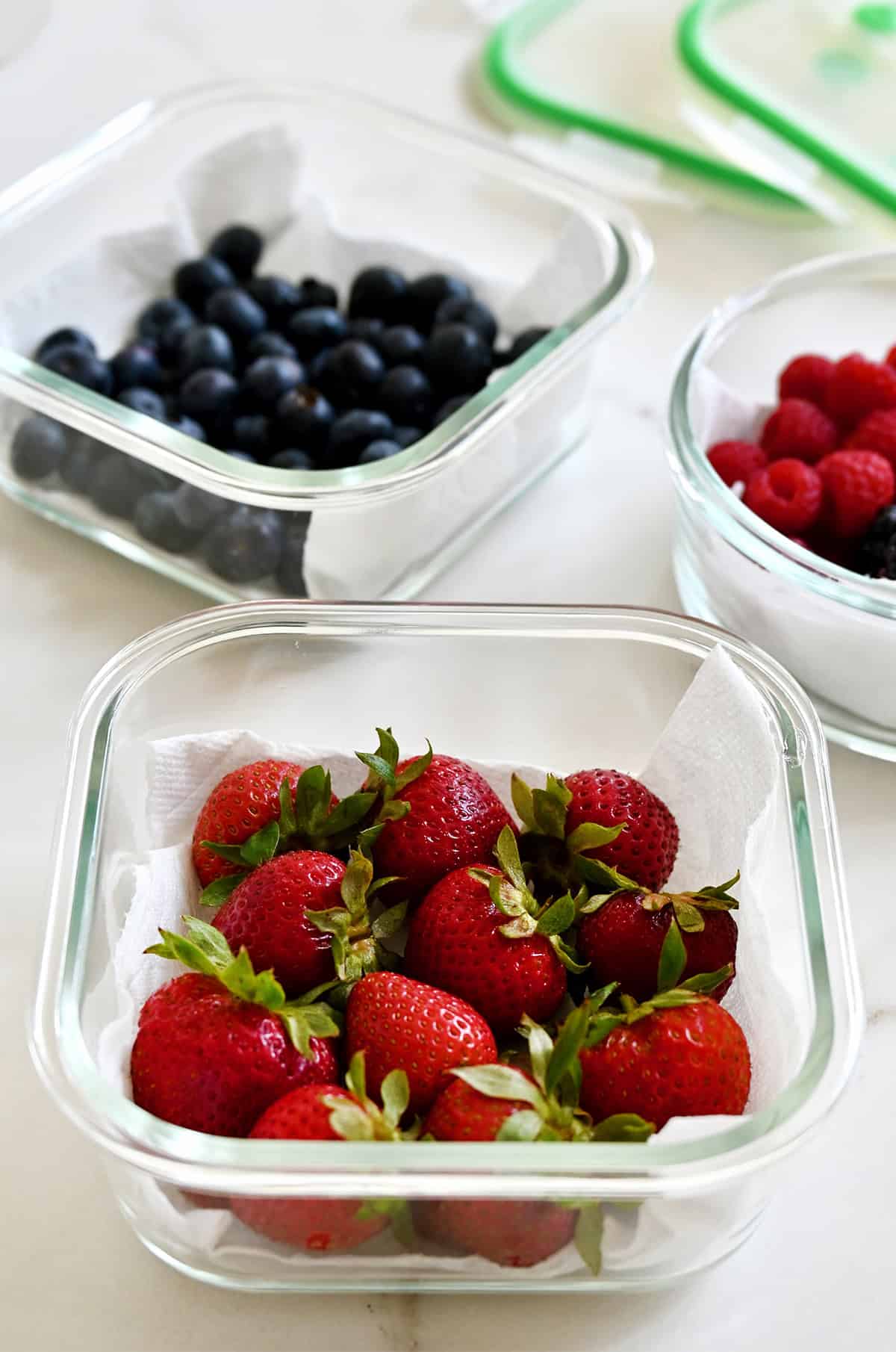
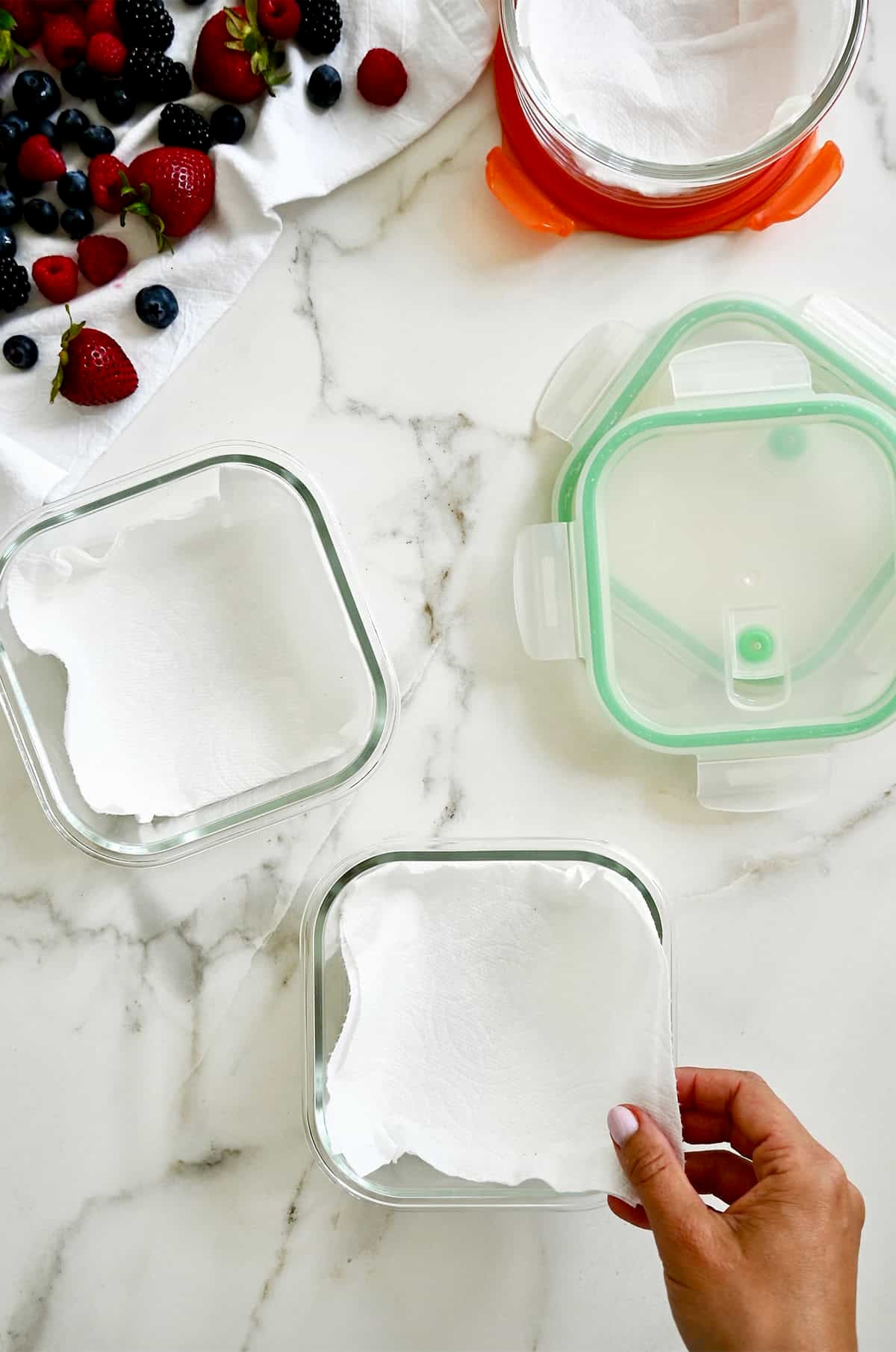
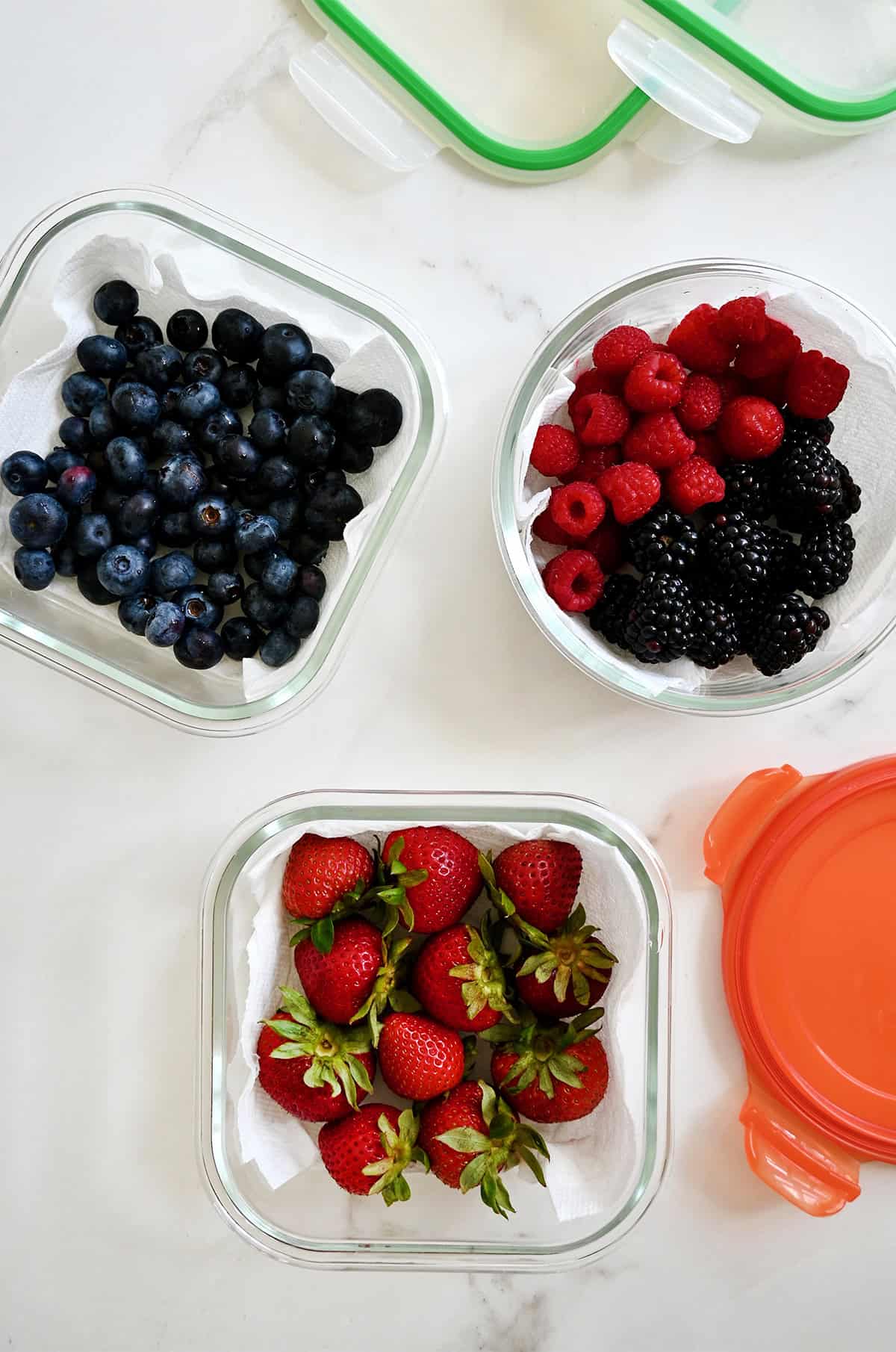
Once your strawberries, blueberries, raspberries and blackberries are totally dry, skip returning them to their original packaging or sealing them up tight. Trapped moisture is exactly what you’re trying to avoid at this point, so an airtight container works against everything you just did. Instead, line a shallow glass container with a paper towel on the bottom and keep the lid on loosely. Wide, flat containers work best as crowded berries get smushed easily, which leads to faster spoilage.
For easy storage without having to use paper towels, produce-specific storage containers that promote airflow, like the Oxo Good Grips GreenSaver Produce Keeper, are a great option.
Add the berries in a single layer, then store each type separately, the softer ones can speed up spoilage in the sturdier ones if they’re mixed together.
Fridge or Counter?
If you plan on eating your washed berries within a few hours, they’re fine left out on the counter. Otherwise, they belong in the fridge. One thing I’ve learned the hard way: skip the back corners, that’s usually the coldest spot, and berries can actually get a little frostbitten there. I keep mine front and center instead, which means they’re also the first thing my kids see when they open the fridge, so they get eaten as a snack instead of forgotten and tossed.
Don’t Toss Sad Berries, Freeze Them Instead
Even with these tips for keeping berries fresher for longer, you still might find yourself with a few looking a little worse for wear. Before they cross the point of no return, freeze them rather than letting them go to waste.
Spread the berries in a single layer on a parchment-lined sheet pan and freeze until solid; this keeps them from clumping into one giant frozen brick, then transfer to a freezer bag, pressing out as much air as you can before sealing. Label the bag with the date, and they’ll keep for 6 months to a year.
Frozen berries are perfect blended into a cottage cheese smoothie, made into Greek frozen yogurt, simmered down into homemade strawberry topping or homemade blueberry sauce, or baked into a fruit crumble.
Recipes to Make With Fresh Berries
Ready to put all those fresh summer berries to use? Don’t miss a few of my favorite fruit-filled recipes:
- Blueberry Galette
- Fruit and Cream Cheese Breakfast Pastries
- Raspberry Muffins
- Fruit Pizza
- White Chocolate Chip Raspberry Scones
- Blueberry Hand Pies
- Best Fruit Salad
Or, if it’s strawberries you’ve got on hand, don’t miss these easy strawberry desserts.
This post may contain affiliate links.