

This tender pork loin roast is the easy but impressive dinner I turn to again and again. A quick garlicky herb rub, a blast of high heat and an hour later you’ve got juicy, perfectly cooked pork roast with a golden crust. Pair it with mashed potatoes, roasted veggies and a drizzle of homemade gravy, and you’ve got a dinner that feels special—without any special effort.
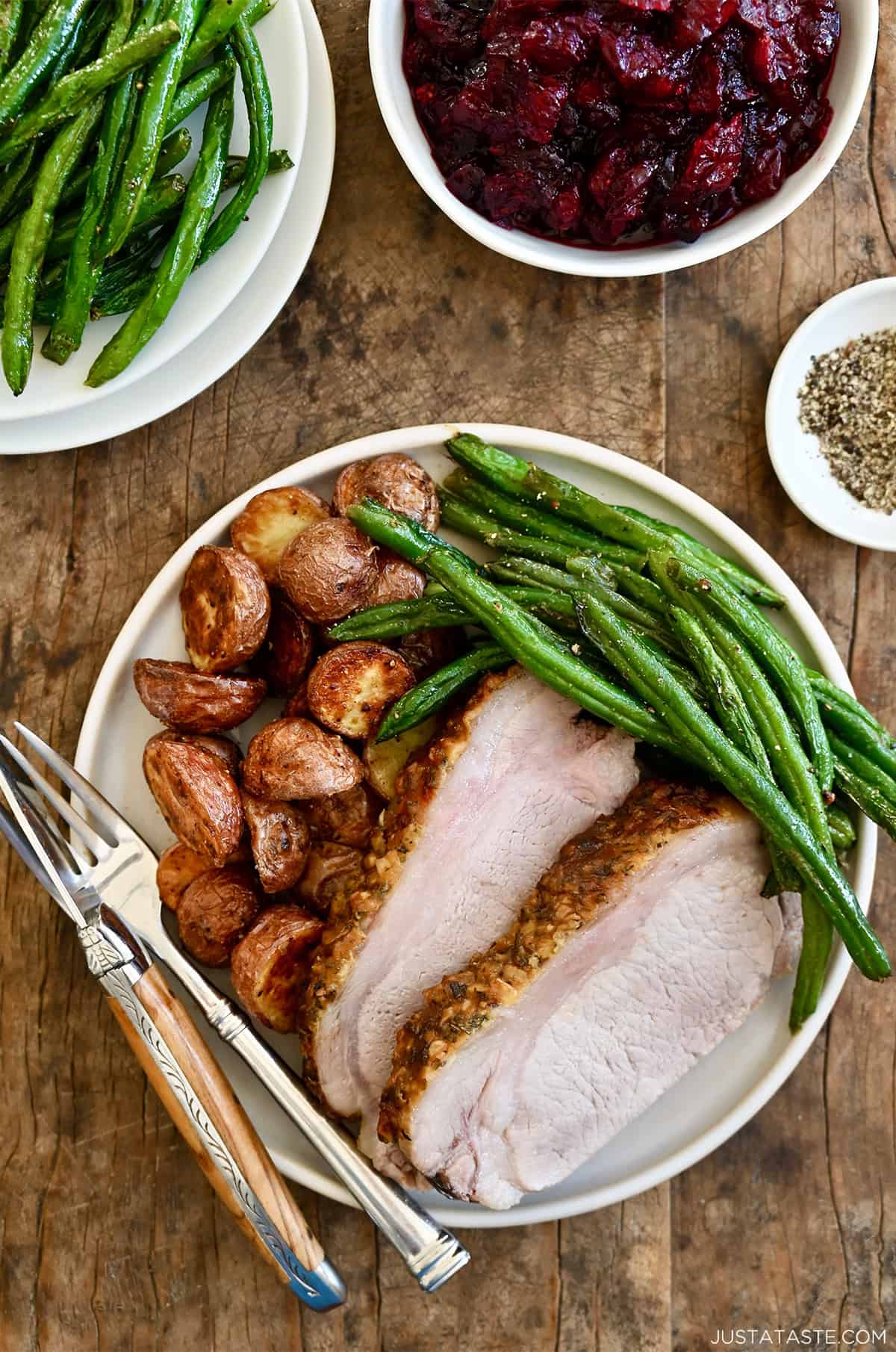
Table of Contents

There are few dinners more reliable, or more underrated, than a classic pork loin roast. It’s the kind of meal that looks impressive coming out of the oven but secretly couldn’t be simpler to make.
This pork loin roast recipe is my go-to because it checks every box: flavorful, juicy (thanks to a quick blast of high heat!), and made with pantry staples you probably already have. A garlicky rosemary-thyme Dijon rub takes minutes to mix together, and the oven does the rest.
Pair it with my favorite roasted potatoes and roasted green beans, and don’t forget to turn those pan drippings into homemade gravy (trust me, you’ll want to drizzle it on everything!).
Pork Loin vs. Pork Tenderloin (What’s the Difference?)
Before you preheat the oven, let’s clear up one very common confusion: pork loin and pork tenderloin are not the same cut. They cook differently, have different fat contents, slightly different textures and cannot be swapped 1:1 in this recipe.
Pork loins are a larger, wider cut that usually weighs 2 to 4 pounds and has a fat cap on top. It’s meant for roasting, slices beautifully and stays juicy when cooked to 145°F and rested.
Pork tenderloin, on the other hand, is a much smaller, narrow, very lean muscle that’s best for quick, high-heat cooking. Because it’s so lean, it will dry out quickly if cooked like a pork loin.
For this recipe, you’ll want a boneless pork loin roast so you get that perfectly seasoned crust and tender, juicy slices. If you want to cook pork tenderloin, check out my recipe for sweet and sour roast pork tenderloin or pork and broccoli stir-fry.
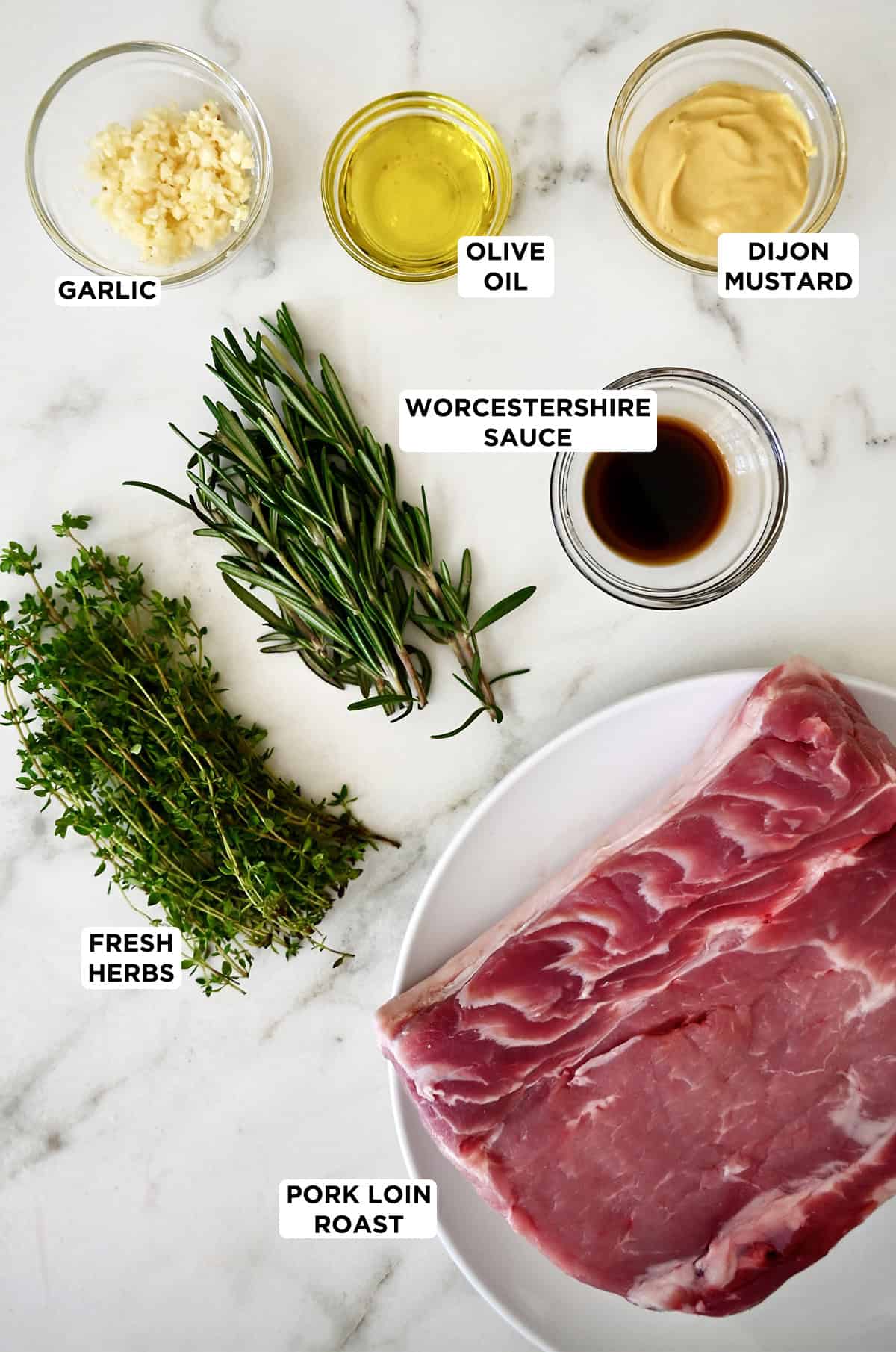
This pork loin roast recipe keeps things simple because when you start with a good cut of meat, you don’t need much to make it shine. Here’s what goes into the flavor-packed herb crust:
- Garlic: Adds savory depth to the roast as it cooks.
- Fresh rosemary & thyme: Fresh is best, but if you only have dried, use 1 teaspoon of each and rub them between your fingers to release their oils.
- Dijon mustard: This is the secret to that beautiful golden crust. It adds tang, moisture and helps all the herbs cling to the pork.
- Worcestershire sauce: A little umami magic! It deepens the flavor and balances the Dijon.
- Olive oil: Helps the rub spread easily and promotes browning.
- Pork loin roast: Make sure you’re using a boneless pork loin (2 to 3 pounds), not pork tenderloin (see above!). A little fat cap is a good thing—it bastes the meat as it cooks.
See the recipe card for full information on ingredients and quantities.
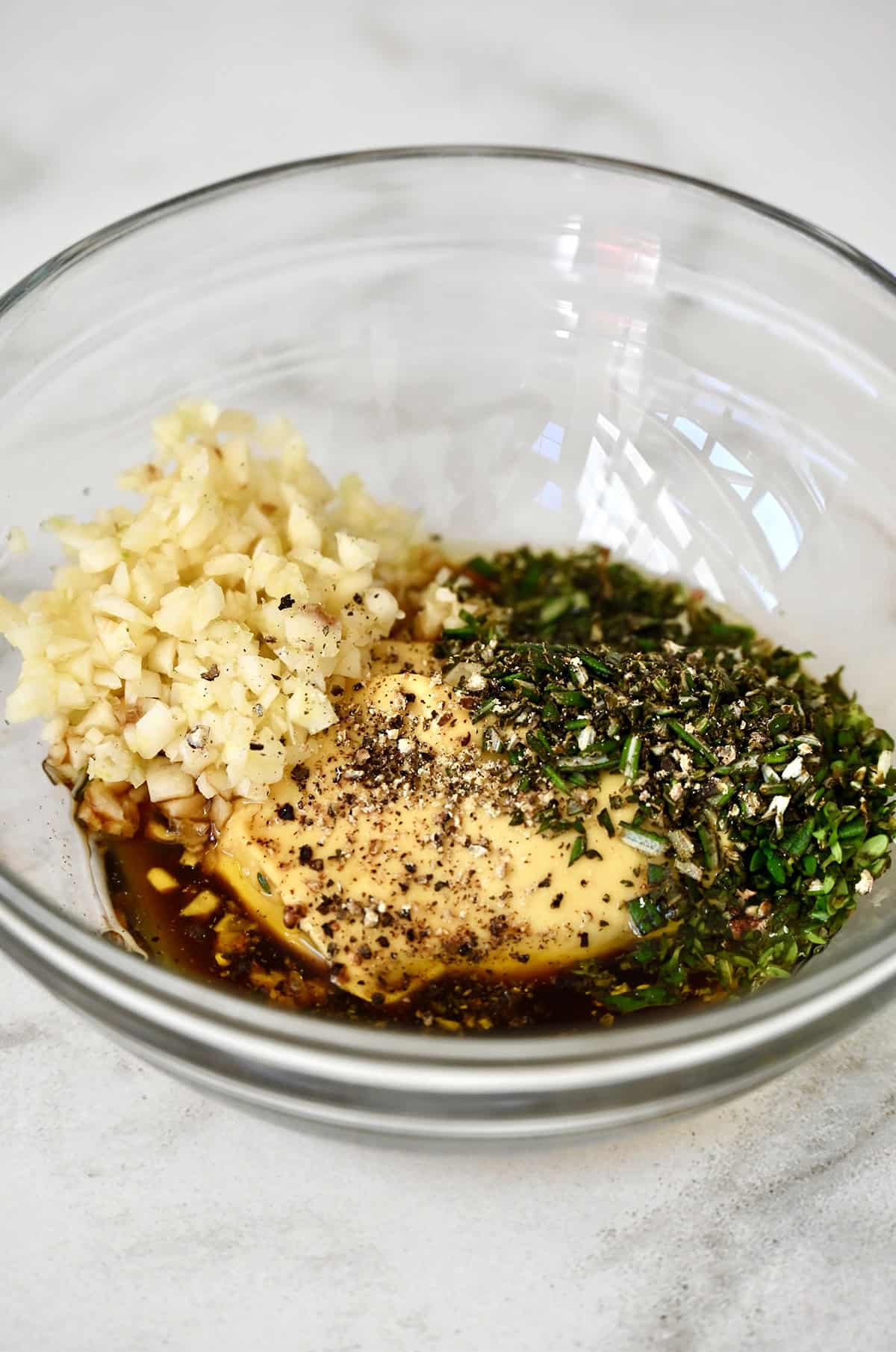
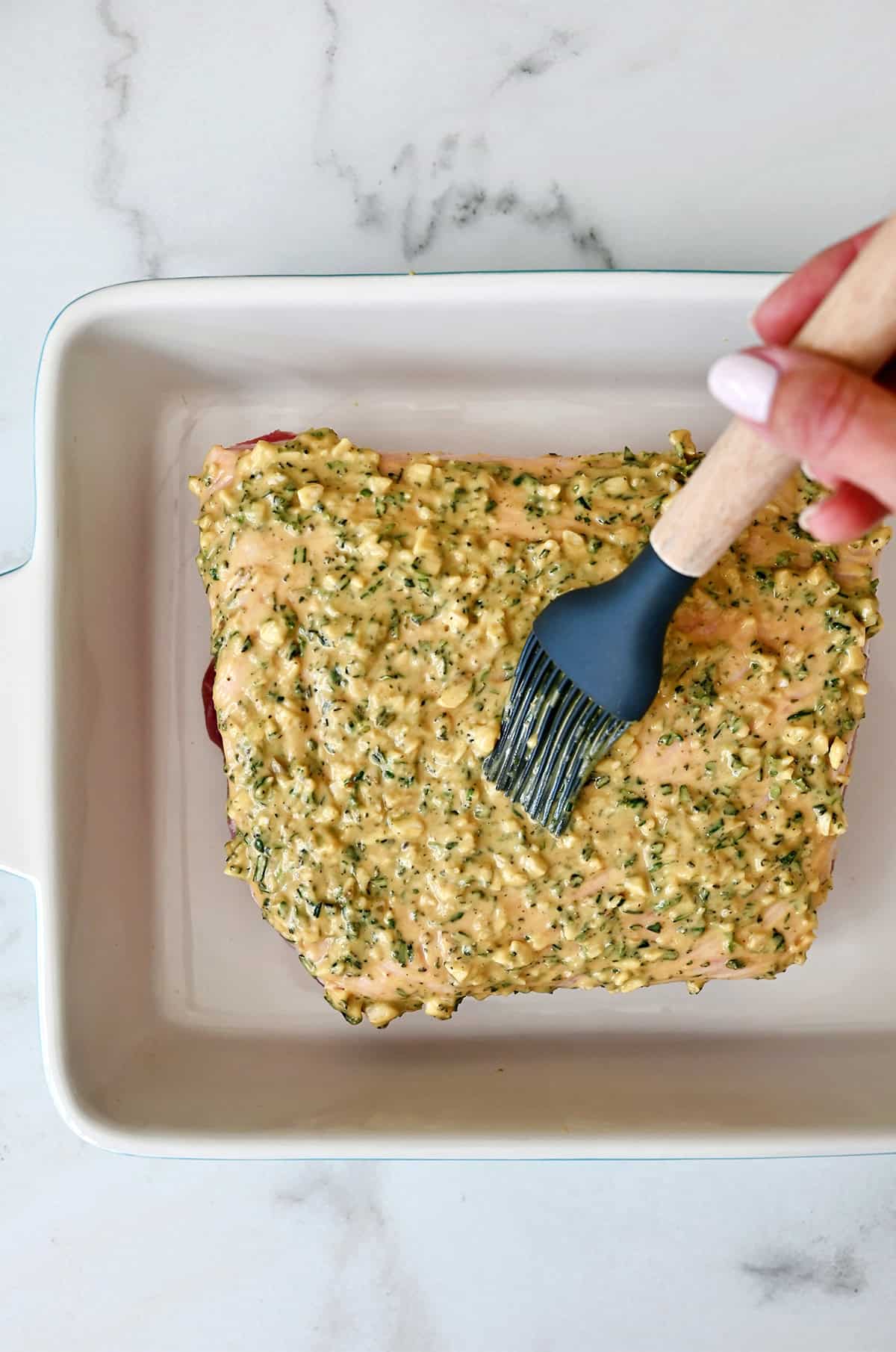
This is one of those dinner recipes that feels restaurant-level but is secretly so easy. Before you start, grab a cast-iron skillet or sturdy baking dish, plus an instant-read meat thermometer. (If you don’t have one yet, consider this your gentle nudge. A meat thermometer is a small, inexpensive tool that takes the guesswork out of cooking—pork, chicken, steak, you name it—and guarantees juicy, perfectly cooked results every time.)
You’ll start by stirring together a quick wet rub: garlic, rosemary, thyme, Dijon, Worcestershire and olive oil. Pat the pork loin dry (this helps the crust form), place it fat-side up in your baking dish, then slather that Dijon mixture all over the top.
Roast at 425°F for 15 minutes to give the outside a head start on browning. Then reduce the oven to 375°F and keep cooking for about 40–45 minutes. The actual cook time will depend on the size of your roast.
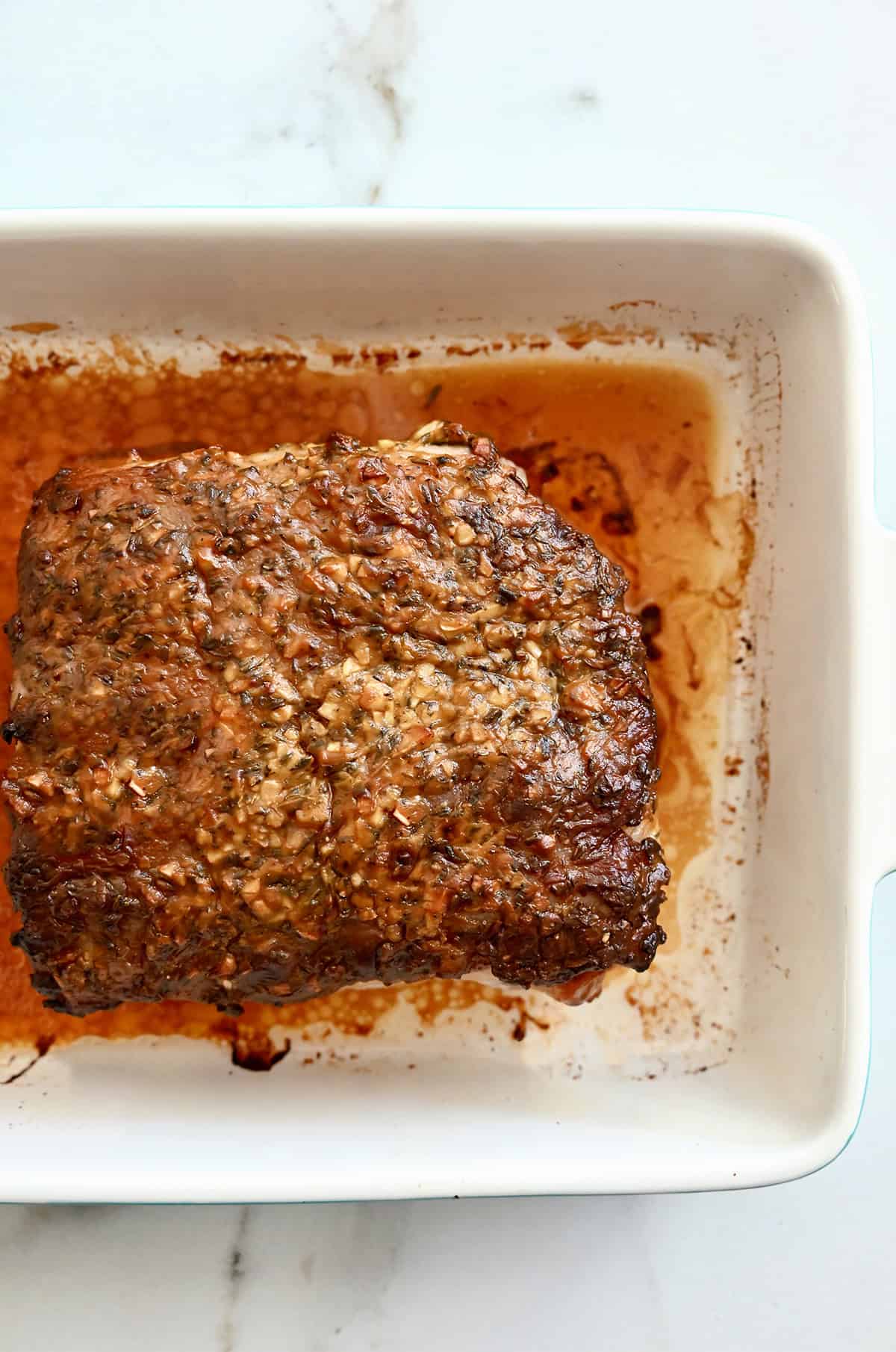
Once it comes out of the oven, don’t slice it yet—let it rest under a foil tent for 10 minutes. This allows the juices to redistribute so every slice is tender and juicy. And whatever you do, don’t toss those pan drippings! They make the best homemade gravy.
At What Temp Is Pork Loin Done?
The USDA recommends cooking pork loin to an internal temperature of 145°F, followed by a rest. A few quick tips to guarantee perfect, juicy slices every single time:
- Insert your meat thermometer in the thickest part of the roast (avoid any large pockets of fat).
- Start checking earlier than you think—every oven runs a little differently.
- The roast will continue cooking as it rests, rising 3–5 degrees thanks to carryover cooking. Pulling it at 145°F (not higher!) and letting it rest for a few minutes is the key to a juicy pork roast.
Favorite Sides to Serve
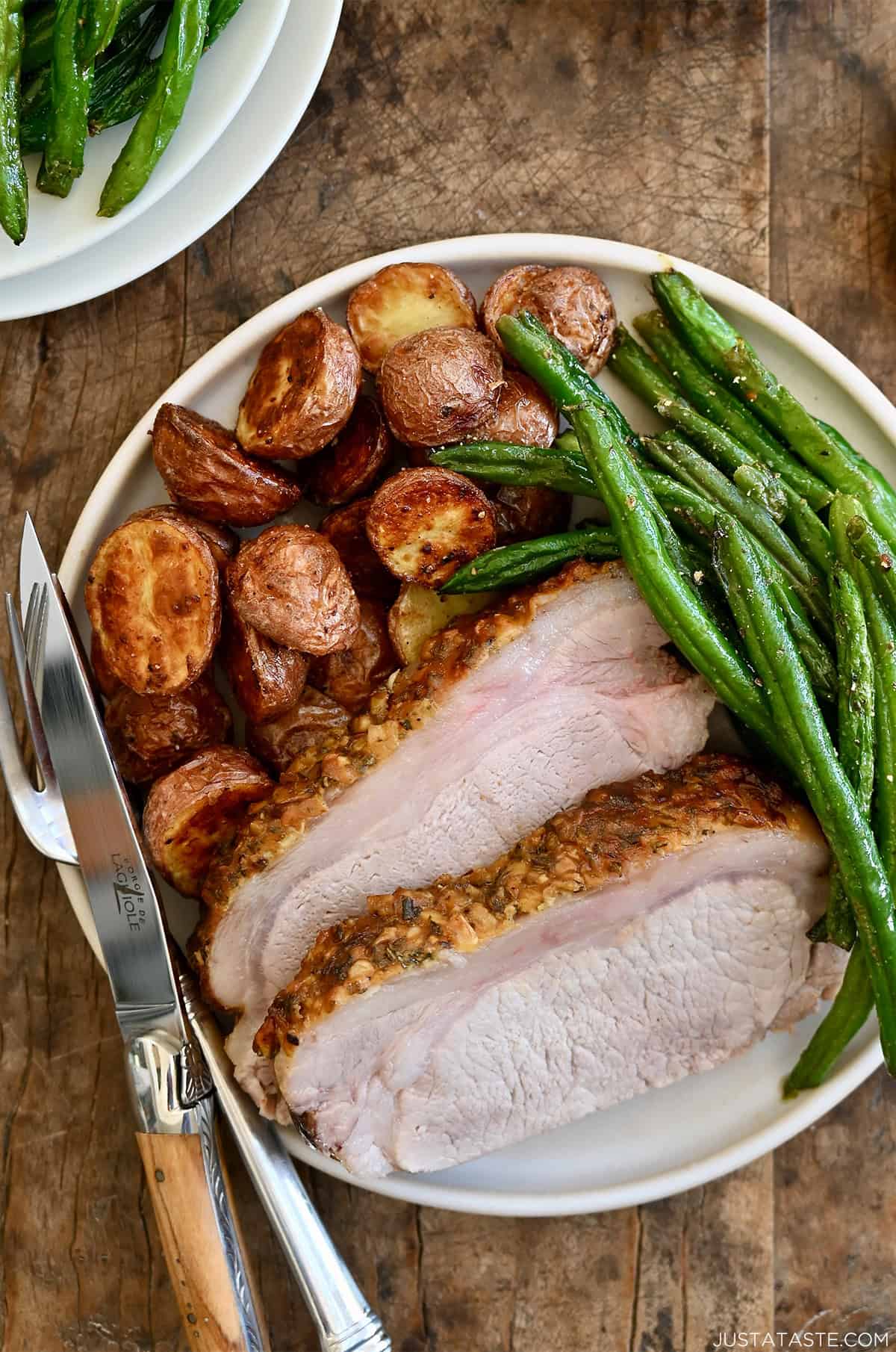
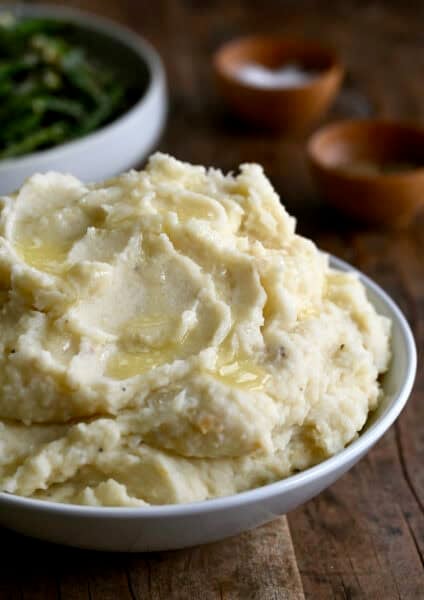
When it comes to the best sides to serve with roasted pork loin, you’ve got plenty of delicious options. Roasted green beans and extra-crispy roasted potatoes are always a hit with my crew, and my garlic mashed potatoes never disappoint either.
For holiday dinners, I love pairing this roast with cozy classics like homemade stuffing, green bean casserole and a spoonful of cranberry sauce. Mashed sweet potatoes, glazed carrots or roasted Brussels sprouts all pair perfectly, too. And soft dinner rolls? Always a good idea.
Storage and Reheating Tips
Store leftover roasted pork in an airtight container in the fridge for up to 3 days. For the juiciest results when reheating, warm slices gently in a covered skillet with a splash of broth or water, or place them covered in a 300°F oven until heated through. Avoid high heat, like your microwave on full power, as pork loin is lean and can dry out quickly.
To freeze, wrap the pork tightly in plastic wrap, then in foil (or place in a freezer bag) and freeze for up to 3 months. Thaw overnight in the refrigerator before reheating.
Ingredients
- 3 cloves garlic, minced
- 2 teaspoons minced fresh rosemary
- 2 teaspoons minced fresh thyme
- 2 Tablespoons Dijon mustard
- 1 Tablespoon Worcestershire sauce
- 1 Tablespoon extra-virgin olive oil
- 1 (2- to 3-pound) boneless pork loin roast, at room temperature
Instructions
- Preheat the oven to 425°F.
- In a small bowl, stir together the garlic, rosemary, thyme, Dijon mustard, Worcestershire sauce and olive oil with ¼ teaspoon black pepper.
- Pat the roast dry on all sides then place it in a baking dish, fat side up.
- Slather the dijon mixture all over the top of the roast then place it in the oven for 15 minutes.
- Reduce the oven to 375°F and continue cooking the roast until it reaches an internal temperature of 145°F (for medium-rare), 40 to 45 minutes.
- Remove the roast from the oven, tent it with foil and let it rest for 10 minutes before slicing and serving.
Kelly’s Notes
- A cast-iron skillet or sturdy baking dish works best for even browning and a beautifully caramelized crust.
- Don’t skip resting the roast. This helps guarantee your pork loin will be juicy.
- Use an instant-read thermometer for the most accurate results. Pull at 145°F for the juiciest pork.
- Turn the pan drippings into homemade gravy. It’s delicious poured over the roast and your sides (especially roasted garlic mashed potatoes!).
- Leftovers make incredible sandwiches the next day! Thinly sliced pork + crusty bread + grainy mustard = perfection.
- ★ Did you make this recipe? Don’t forget to give it a star rating below!
Nutrition
Did you try this recipe?
Leave a comment below with your star rating!
This post may contain affiliate links.

Question. I am new, so you may have already addressed this. I’m impressed with the potato side dish on this plate. I want the well cooked all the way around type of potato. I call them burnt potatoes. Their flavor is so wonderful. We used to fight over who got them when mom made a roast.
Hi there! The recipe in the photo is my Extra Crispy Roasted Potatoes. You can find the recipe by searching in the search bar or clicking here: https://www.justataste.com/extra-crispy-roasted-potatoes-recipe/