

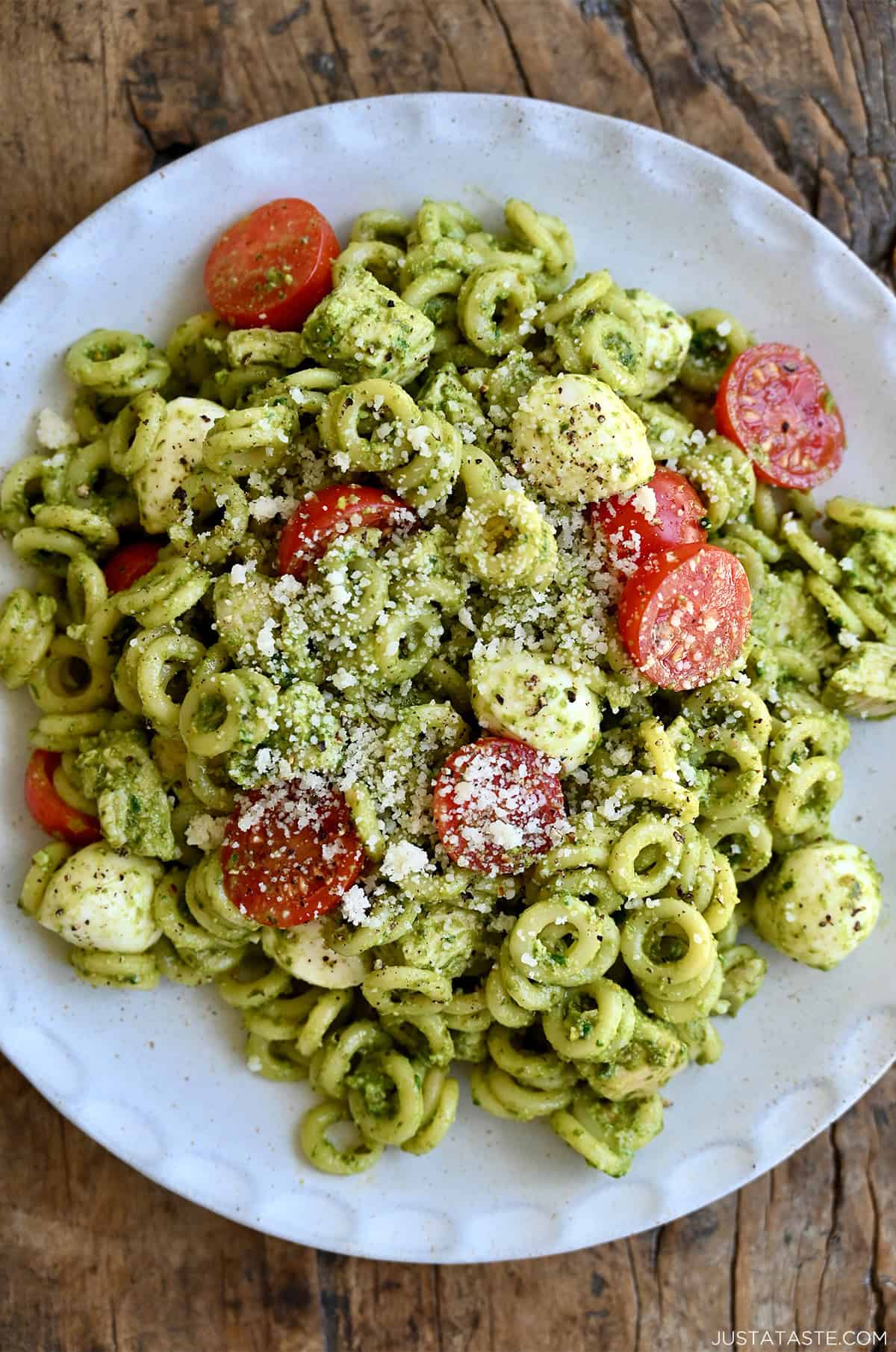
Ditch the deli counter in favor of this recipe for pesto pasta salad starring the best homemade basil pesto (a recipe I’ve been making for decades!), made with just five ingredients and tossed with juicy chicken, sweet cherry tomatoes and mini mozzarella balls.
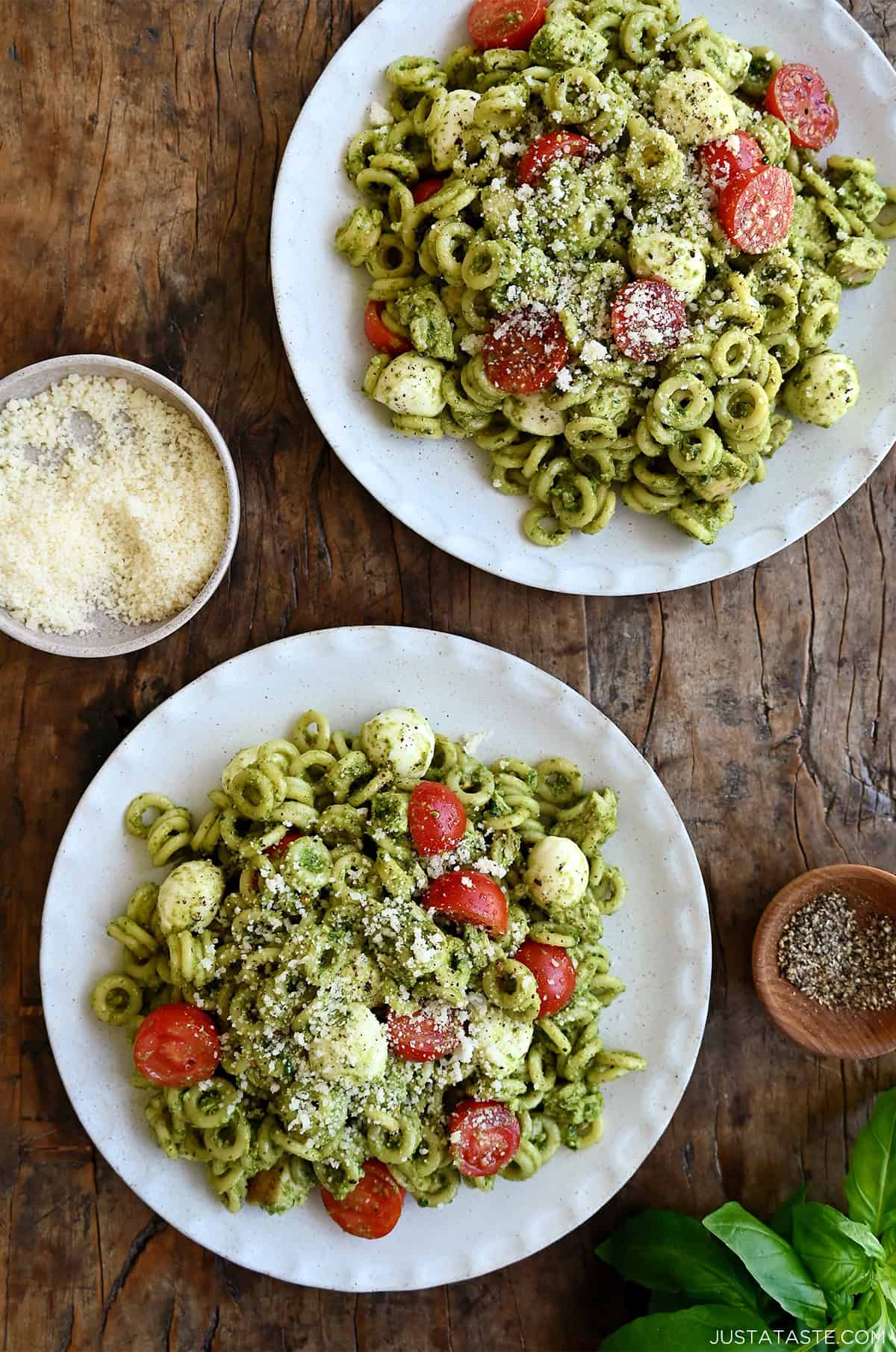
I originally shared this recipe in 2023 and have since updated it with cherry tomatoes and mini mozzarella balls for an even more well-rounded dish, plus new tips and photos.
Table of Contents

If you’ve spent any time around here, you know I love a good pasta salad (I have more than 18 pasta salad recipes to choose from!) and that my mom Noni’s basil pesto is legendary. Nine times out of ten, I’m eating her pesto pasta alongside her famous crispy chicken schnitzel. So combining my favorite flavors into one summery dinner felt inevitable: pesto pasta salad with juicy chicken, ripe cherry tomatoes and mini mozzarella balls. Say less.
My kids now ask for this on repeat, and it’s become my go-to on weeknights when I want something healthy and satisfying but, let’s be honest, as a tired parent, requiring very little effort. So grab a store-bought rotisserie chicken, a few fresh ingredients and whatever pasta you have on hand, and let’s make this easy pesto pasta salad. Best of all, it can be served warm, room temp or cold, which means leftovers for lunch on day 2 are always a good idea.
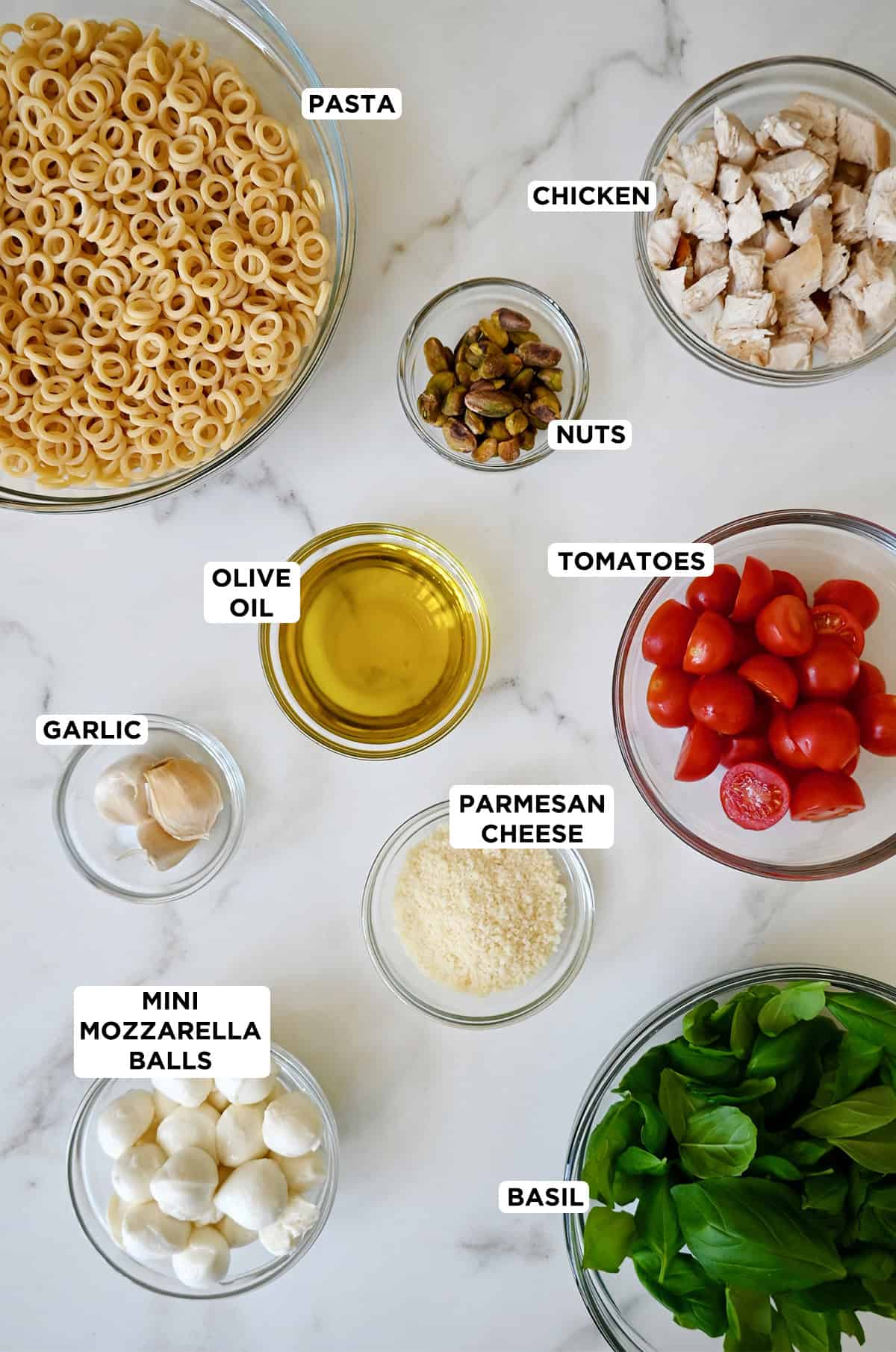
Pesto is one of those sauces where the quality of your ingredients really shines through, but it’s also incredibly forgiving when it comes to substitutions. Traditionally, pesto is made with pine nuts, but I’ll be honest: I almost always use whatever nuts I have on hand. For these photos, that meant pistachios, which add a slightly sweeter, more vibrant green color to the finished pesto. Use what you love or what’s in your pantry. The result will still be delicious. Here’s what you’ll need, plus a few substitutions:
- Pasta: With four kids at my house, I’m always looking for ways to mix up meal time. Enter, ring-shaped Anellini pasta! They’re also the star of my Homemade SpaghettiOs. However, any ol’ pasta will do so reach for whatever you have stashed in your pantry.
- Basil: Rinse the basil leaves under cool water to remove any dirt. Gently pat them dry with a paper towel or a clean kitchen towel to remove excess moisture. Wet basil leaves can dilute the pesto and affect its texture so it’s important to thoroughly dry them.
- Cheese: I used grated Parmesan cheese but any hard-grating cheese, such as asiago, Manchego, Pecorino Romano or Grana Padano can all be used.
- Garlic: Instead of adding whole garlic cloves to the food processor or blender, roughly chop them first. This helps distribute the garlic flavor more evenly throughout the pesto.
- Pine nuts: Toasting the pine nuts before adding them to the pesto enhances their nutty flavor. Place the pine nuts in a dry skillet over medium-low heat and toast them until they turn golden brown. Keep an eye on them as they can quickly burn! Other nuts, such as walnuts, pistachios or almonds, can all be substituted.
- Extra-virgin olive oil: Since this is the main flavor carrier in the pesto, it’s worth using one you actually enjoy the taste of. My go-to brand is Kosterina.
- Cherry tomatoes: I love the pop of sweetness they add against the garlicky pesto.
- Mini mozzarella balls: Also called ciliegine, these add a creamy, fresh bite throughout the salad. If you can’t find the mini size, regular fresh mozzarella cut into small cubes works just as well.
- Protein of choice: I used leftover cubed poached chicken breasts that I had on hand, but store-bought rotisserie chicken, pan-seared salmon, shrimp or even stovetop steak would all be delicious paired with this pasta salad. Prefer to keep it vegetarian? Simply omit the chicken. Chickpeas would be a delicious swap for added protein.
Homemade Pesto
In my family, we call this pesto “green gold,” and once you taste it, you’ll understand why. It’s herbaceous, garlicky and once you make a batch, you’ll find reasons to put it on everything (looking at you, pesto eggs!).
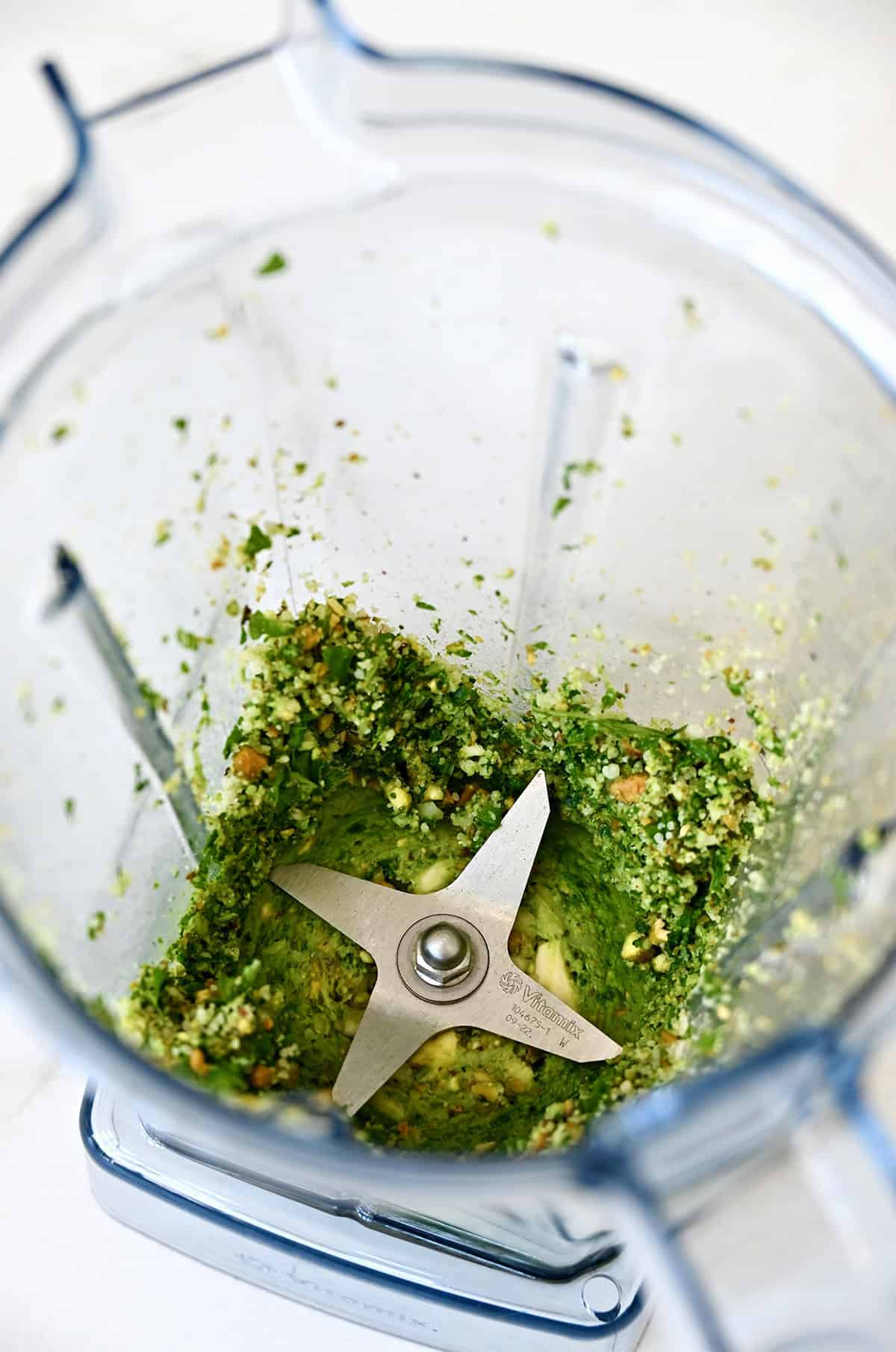
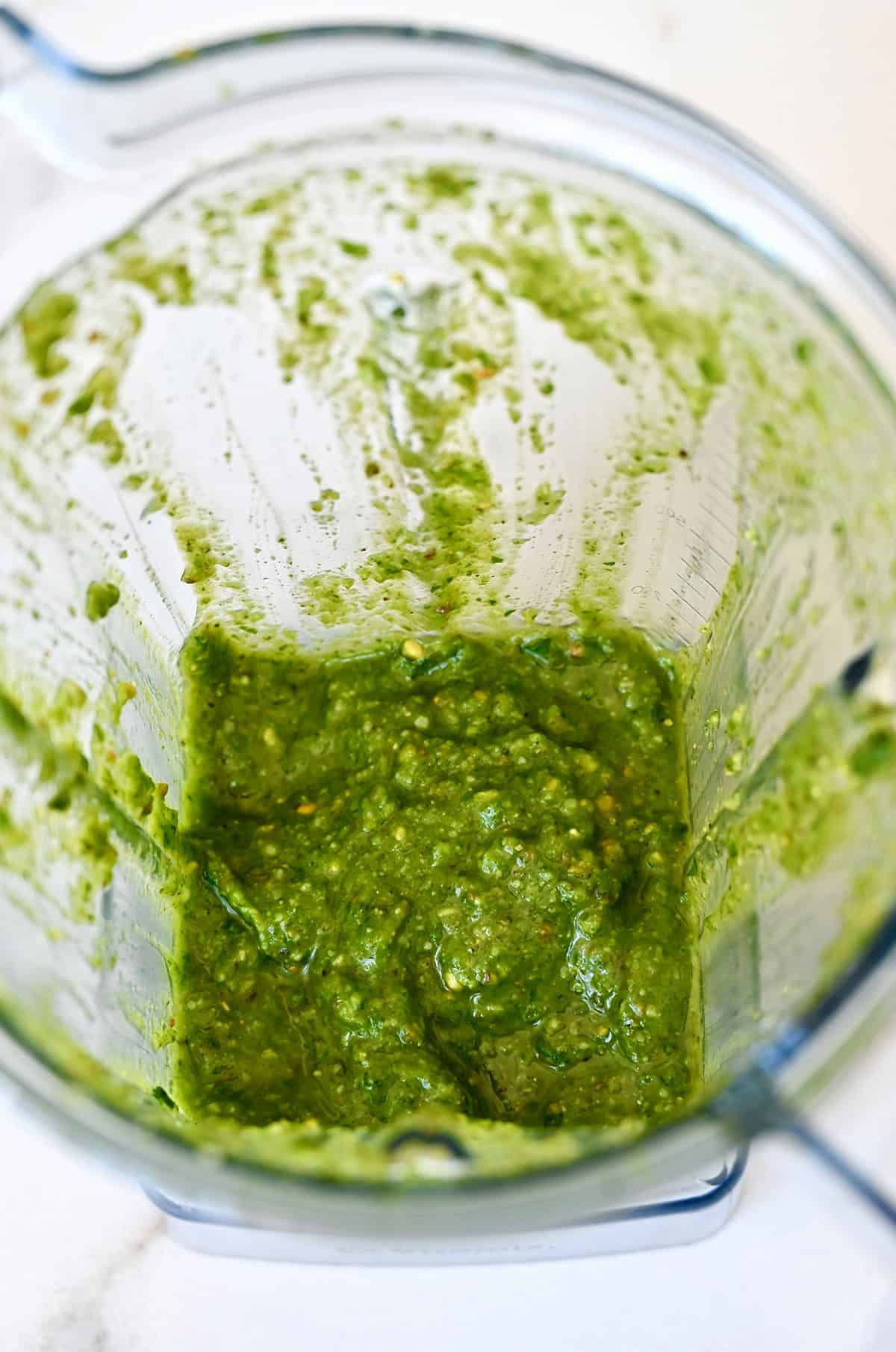
Best of all, making homemade pesto is easy and comes together in just a few minutes in a food processor or blender. Start by pulsing the basil, Parmesan, garlic and toasted pine nuts together until everything is medium-to-finely chopped. Like this:
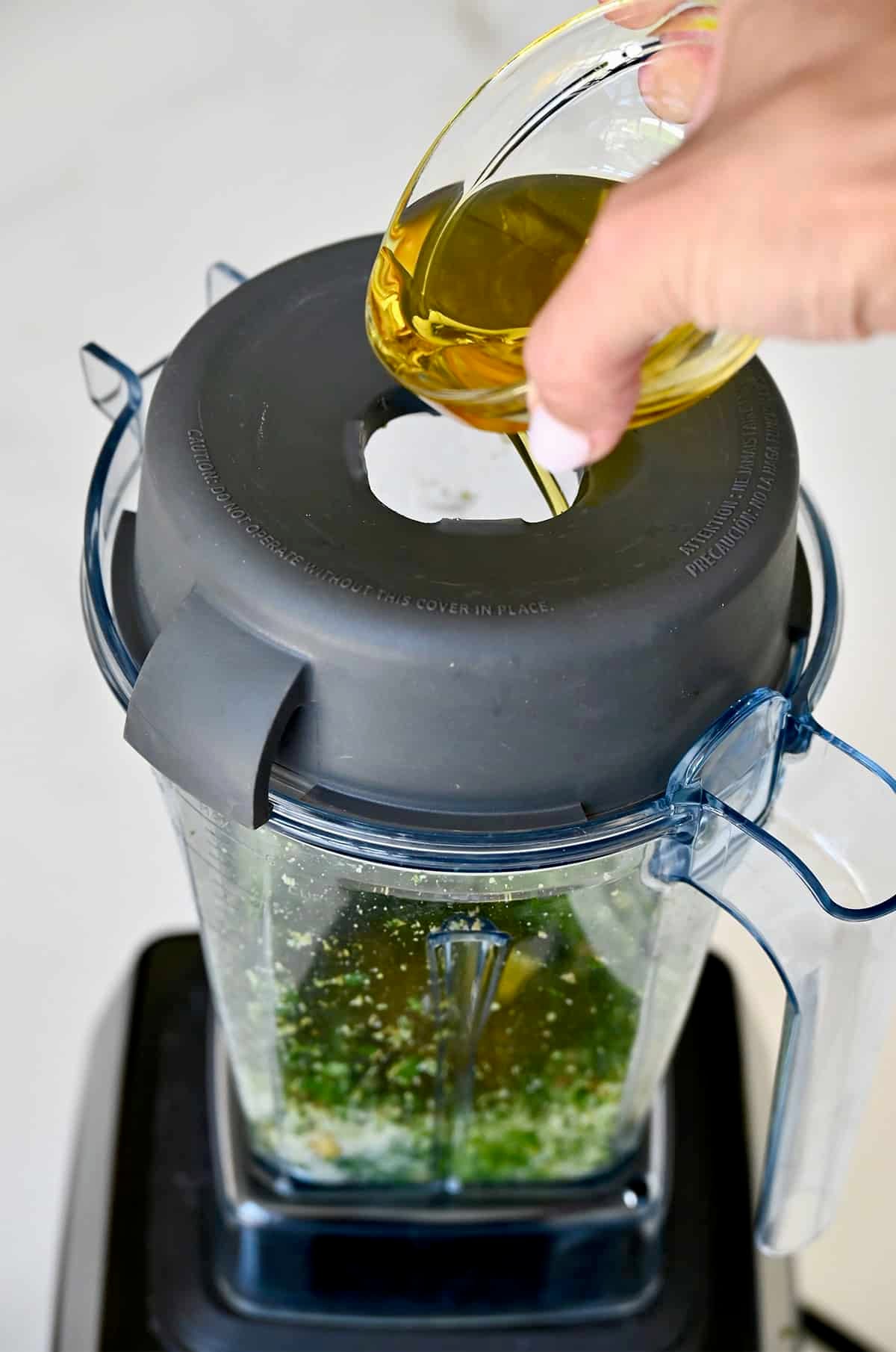
Then, with the machine still running, slowly stream in the olive oil. Streaming it in slowly (rather than dumping it all in at once) is what creates that smooth, emulsified texture. Scrape down the sides as needed, taste and adjust with salt and pepper, and voila! You have the perfect dressing for tossing with pasta.
This recipe makes about 1 cup of pesto, more than enough to coat every noodle with flavor to spare.
My #1 Tip for Pesto Pasta Salad Success
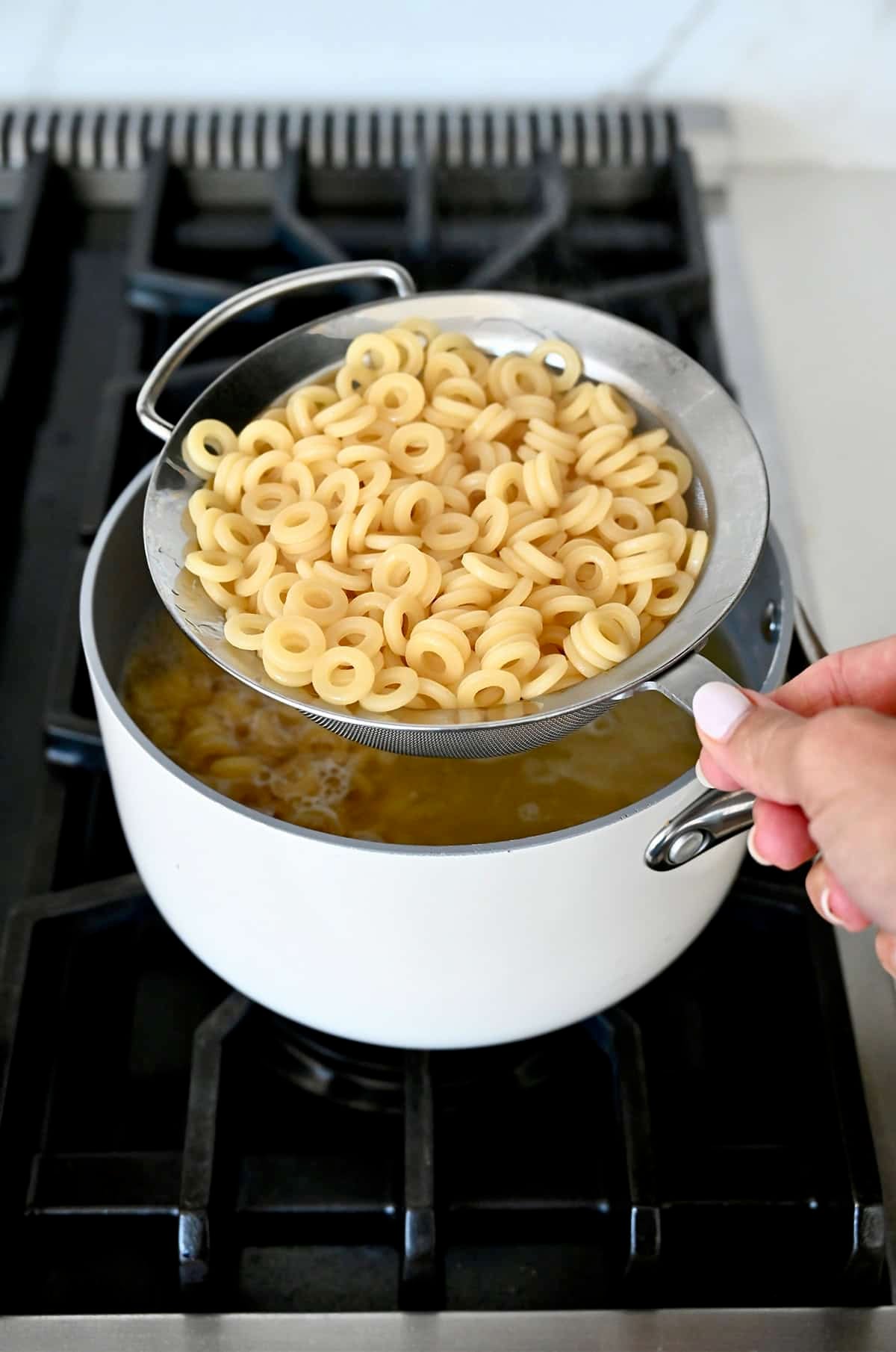
Before you drain the pasta, scoop out about ¼ cup of that hot, starchy water and set it aside. Once you’ve tossed the pasta with the pesto, add a splash of that reserved water to the bowl. The starch in the water helps loosen the pesto so it coats every piece of pasta evenly instead of clumping in spots. It’s the same trick I use in my cacio e pepe pasta and chicken tortellini alfredo.
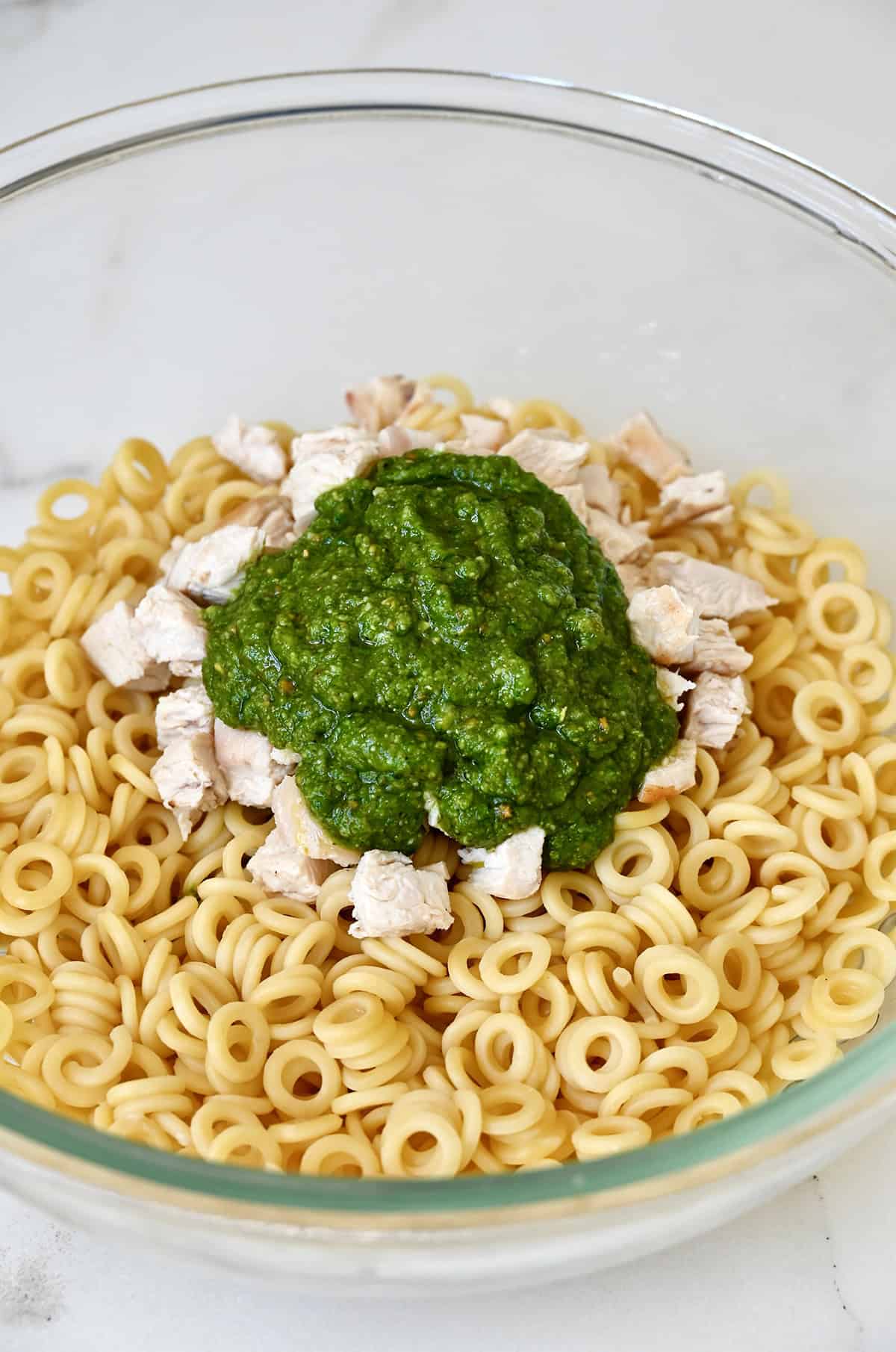
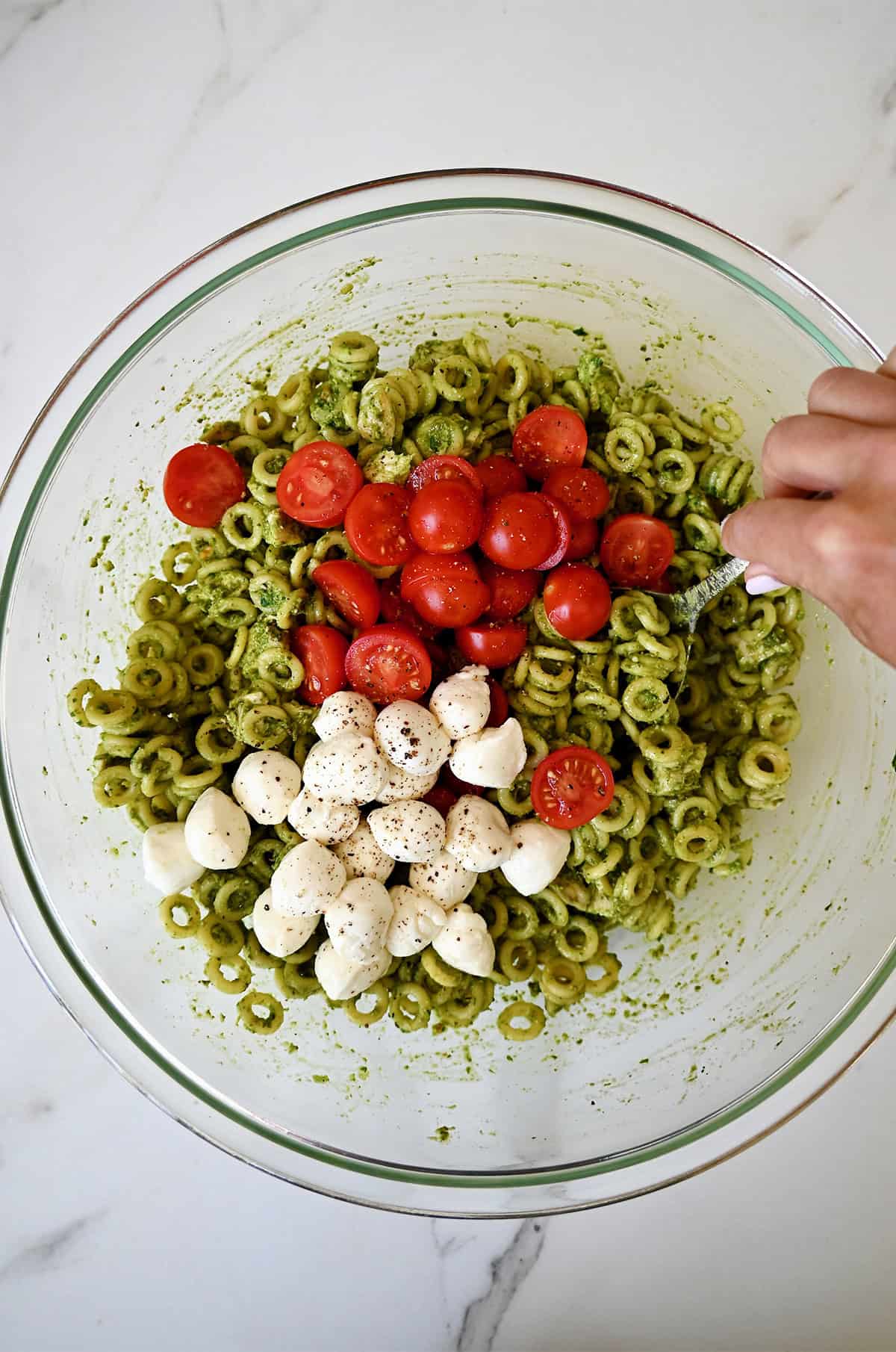
Place the warm pasta and cubed chicken in a large bowl, pour the pesto over the top and toss until everything is evenly coated. Fold in the cherry tomatoes and mozzarella last, then top with extra grated Parmesan before serving.
As the pasta salad sits, it will continue to absorb the pesto, so if you’re making this ahead to serve tomorrow, I recommend drizzling with a little olive oil and giving it a toss to loosen everything right back up.
This pesto pasta salad is delicious enough to stand on its own, but if Noni taught me anything, it’s that a meal is always better with a few more dishes on the table. I love rounding it out with no yeast focaccia or a refreshing watermelon salad for a sweet, summery contrast. And if you’re feeling extra, Homemade Choco Tacos make the perfect ending to the meal.
Frequently Asked Questions
Absolutely! This pesto pasta salad tastes great cold and can be made up to three days in advance. Store it in an airtight container in the refrigerator. If you prefer the pasta to be at room temp, you can let it sit on the counter for a short time before serving.
Absolutely. This dish is delicious served warm right after tossing, at room temperature or chilled. It’s one of the most versatile recipes on my site for that reason.
This is completely normal! It’s caused by oxidation, the same natural reaction that turns a sliced avocado brown. The basil reacts with the air, and once it’s mixed with pasta, the discoloration can happen even a little faster. It’s still completely safe to eat, just slightly less vibrant. To slow it down, store leftovers in an airtight container and drizzle a thin layer of olive oil over the top before sealing.
Ingredients
- 12 oz. uncooked pasta of choice
- 3 cups packed fresh basil leaves, washed and dried thoroughly
- 3 Tablespoons grated Parmesan cheese, plus more for serving
- 3 cloves garlic, roughly chopped
- 2 Tablespoons pine nuts, toasted
- 1/3 cup extra-virgin olive oil, plus more as needed
- 2 cups cooked, cubed chicken
- 1 cup halved cherry tomatoes
- 1 cup mini mozzarella balls
Instructions
- Bring a large pot of salted water to a boil. Add the pasta and cook until al dente, about 10 minutes. While the pasta is cooking, make the pesto.
- In a food processor or blender, combine the basil leaves, Parmesan cheese, garlic, toasted pine nuts, kosher salt and pepper. Pulse the ingredients together until well blended.
- With the food processor running, stream in the olive oil until the pesto is puréed, stopping to scrape down the sides as needed. (If needed, stream in additional olive oil until the pesto is a smooth consistency.)
- Drain the pasta and transfer it to a large bowl. Add the prepared pesto and cubed chicken and toss until well-combined.
- Fold in the tomatoes and mozzarella cheese. Top with additional Parmesan cheese and serve.
Kelly’s Notes
- Make ahead: This pasta salad can be made up to a day ahead. If serving later, drizzle with a little olive oil and toss before serving to loosen everything back up.
- To store: Keep in an airtight container in the refrigerator for up to 3 days. The pesto may brown slightly over time due to oxidation, the same reaction that turns a sliced avocado brown. It’s still completely safe to eat, just slightly less vibrant. A thin layer of olive oil drizzled over leftovers can help slow it down.
- Pasta: Any short pasta works here, from anellini to rotini to farfalle. Just make sure to cook it al dente since it will continue to soften slightly as it sits.
- Protein swaps: Poached chicken, rotisserie chicken, salmon, shrimp or steak all work beautifully here. For a vegetarian version, simply omit the chicken or swap in chickpeas.
- ★ Did you make this recipe? Don’t forget to give it a star rating below!
Nutrition
Did you try this recipe?
Leave a comment below with your star rating!
This post may contain affiliate links.

Really really good. My family loved it – thank you for the recipe!
I’m thrilled you and your family enjoyed the recipe, Marie!